Chest Strap vs. Wrist vs. Ring: Which Heart Rate Monitor Is Right for Your Application?
By
/ 2026 年 6 月 21 日
Heart rate monitoring has evolved far beyond the traditional chest strap. Today B2B buyers can choose from three form factors — chest strap, wrist-worn watch/band, and smart ring — each with distinct advantages for different applications. This guide breaks down the technical trade-offs to help you select the right form factor for your deployment.
The Three Form Factors at a Glance
Feature
Chest Strap
Wrist Watch/Band
Smart Ring
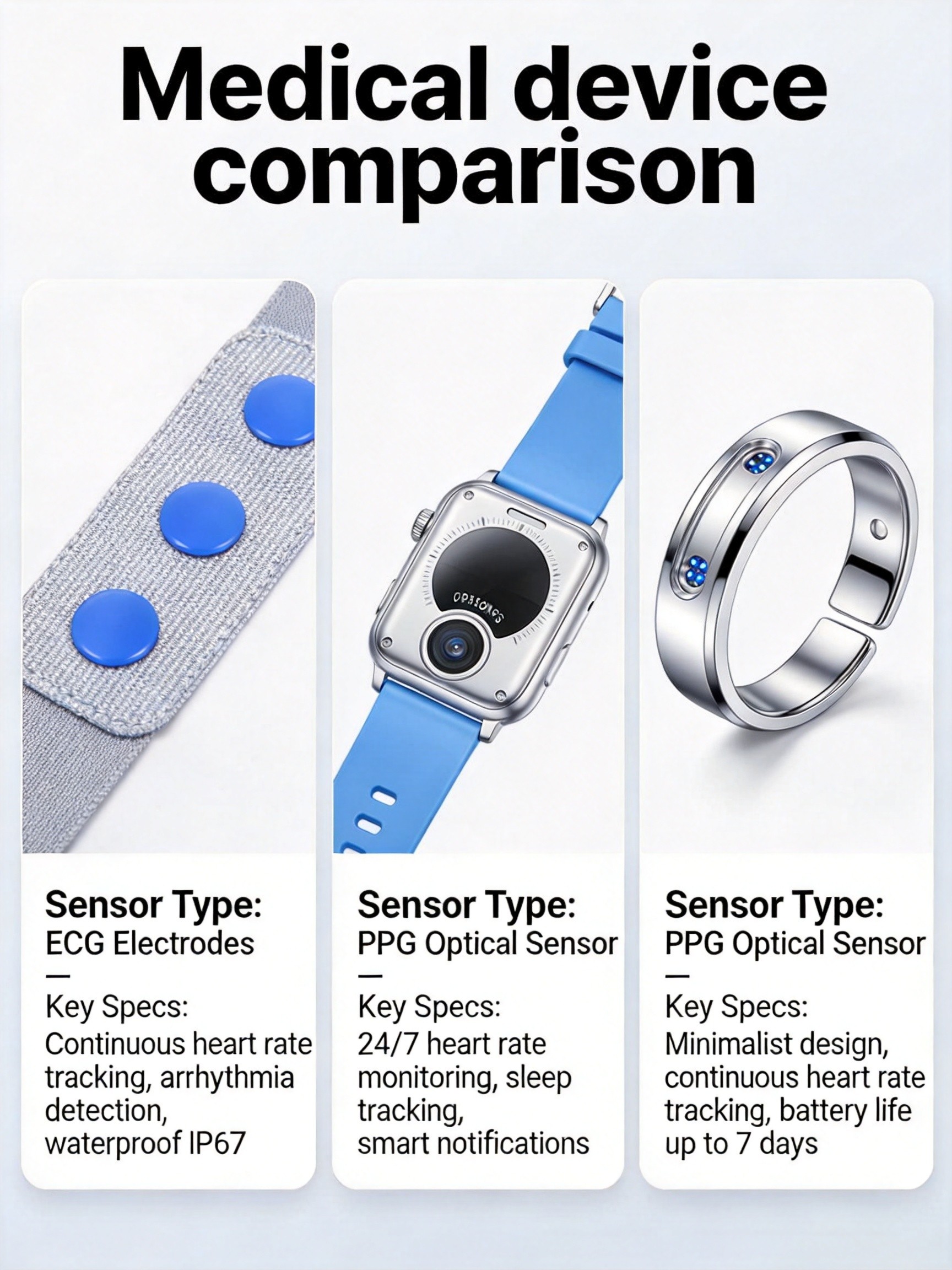
Sensor type
ECG (electrode)
PPG (optical) + optional ECG
PPG (optical)
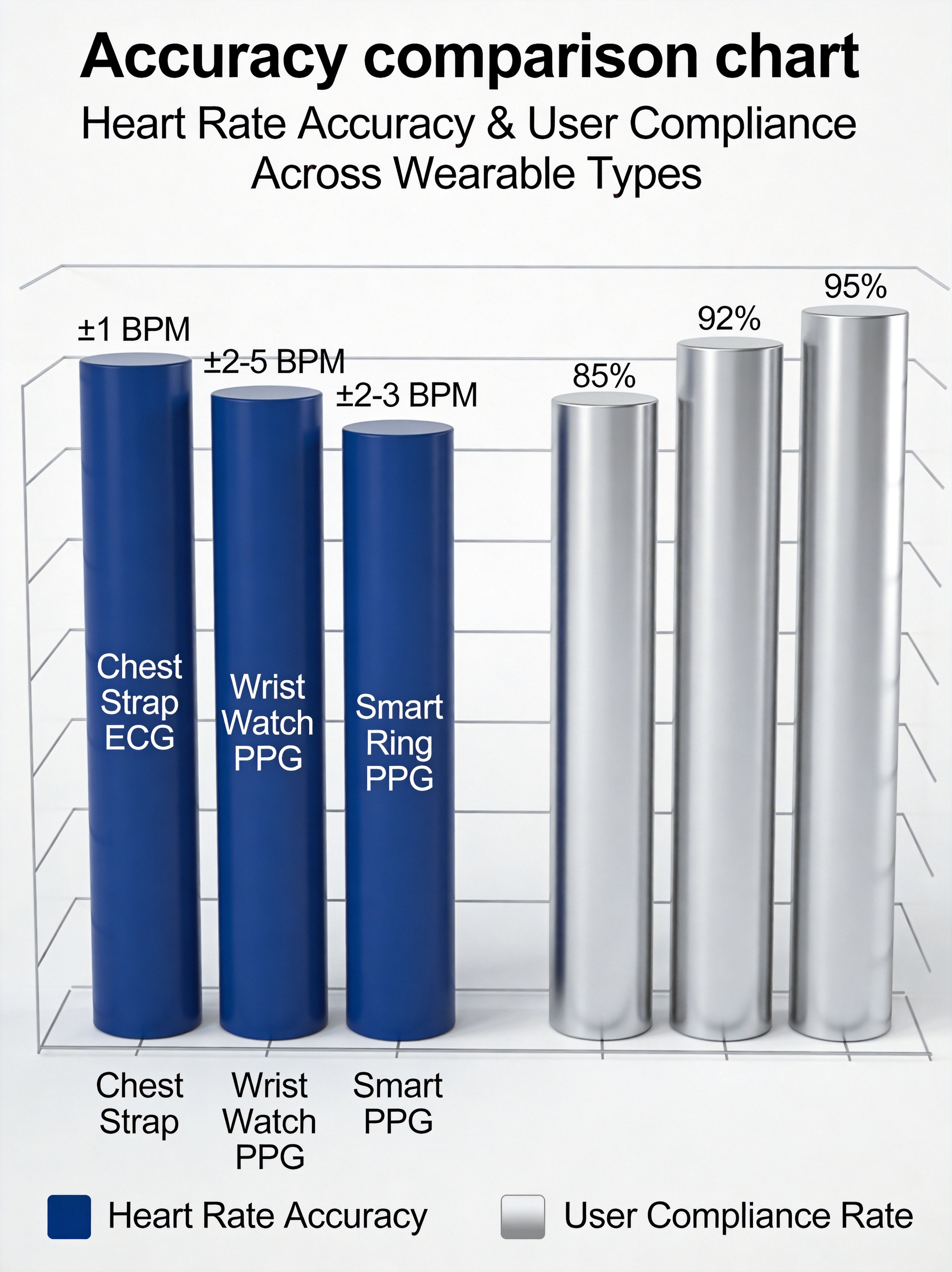
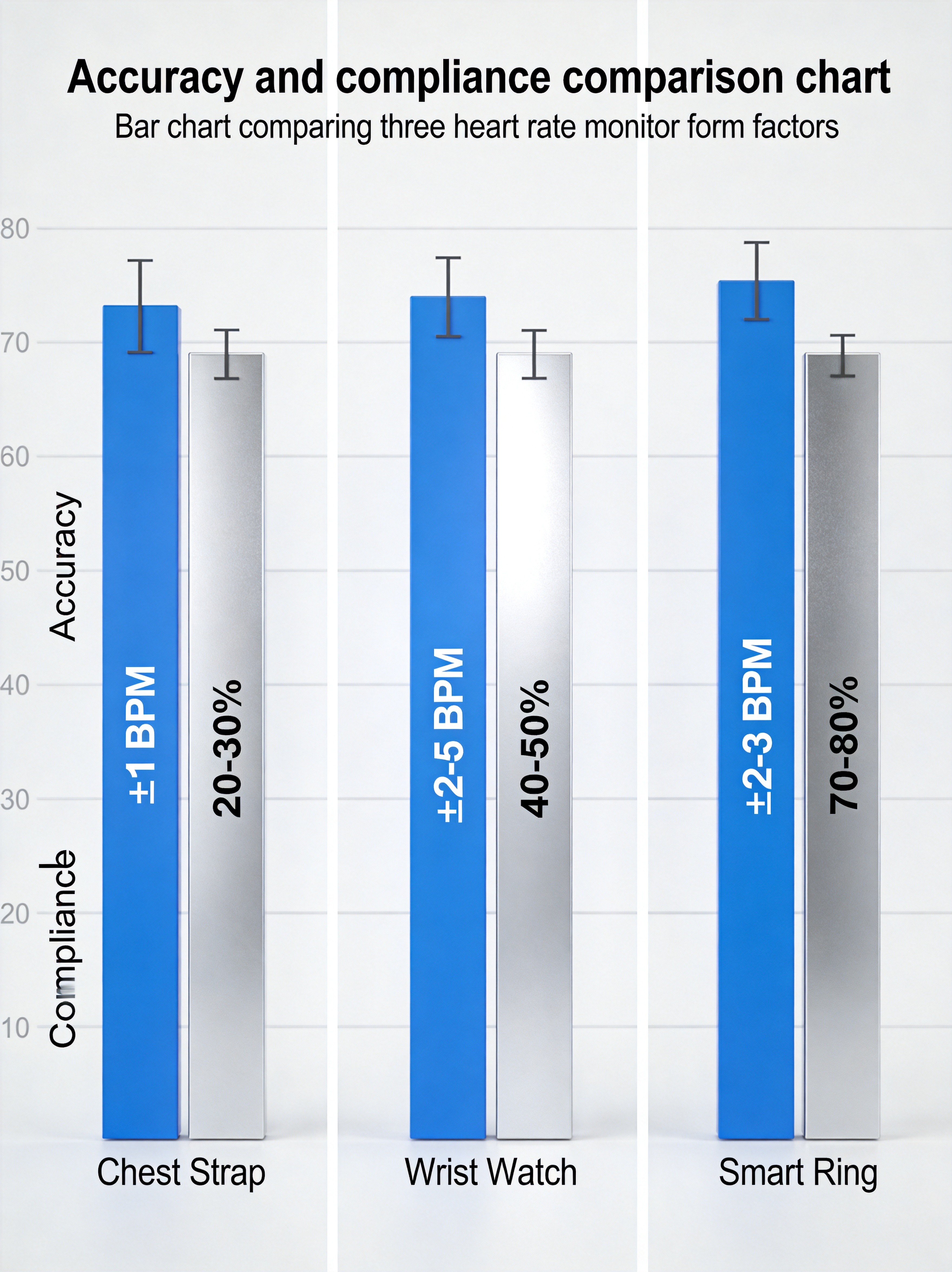
Heart rate accuracy
Gold standard (±1 BPM)
Good (±2-5 BPM resting)
Good (±2-3 BPM resting)
Continuous monitoring
Yes (during wear)
Yes (24/7)
Yes (24/7)
Comfort for long-term wear
Low (chest strap chafing)
High
Very high
Battery life
300-400 hours
5-14 days
5-7 days
SpO2 measurement
No
Yes
Yes
ECG waveform
Yes (continuous)
Yes (spot check, if equipped)
Limited models
Sleep tracking
Poor
Good
Excellent
User compliance (long-term)
Low (20-30% after 3 months)
Medium (40-50%)
High (70-80%)
Cost per unit (B2B)
$15-30
$25-80
$40-120
Chest Strap: The Accuracy Champion
How It Works
Chest straps use two electrodes placed across the chest to capture the heart electrical signal directly — essentially a continuous single-lead ECG. This is the same technology used in clinical holter monitors.
Best For
Sports medicine and athletic performance: Maximum accuracy during high-intensity exercise where PPG struggles with motion artifacts
Clinical research studies: Where heart rate data must meet research-grade standards
Cardiac rehabilitation programs: Where precise HR monitoring during exercise is safety-critical
Weaknesses
User compliance drops dramatically over time (chest straps are uncomfortable)
Cannot measure SpO2
No sleep tracking capability
No display or smart features
Requires wetting electrodes for good contact
Wrist Watch/Band: The Versatile All-Rounder
How It Works
Wrist-worn devices use PPG optical sensors (green/infrared LEDs) to measure blood volume changes. Premium models add ECG capability via a finger-touch electrode for on-demand clinical-grade readings.
Best For
Corporate wellness programs: Balance of features, comfort, and cost
Hospital patient monitoring: ECG-equipped models for outpatient cardiac screening
Elderly care: Large display, SOS features, GPS tracking alongside HR monitoring
Telehealth RPM: Reimbursable remote monitoring with clinical-grade ECG spot checks
Occupational health: Workplace safety monitoring in industrial settings
Recommended Xdun Medical Wrist Models
Model
Key Sensors
Best Application
GE52 ECG Smart Watch
ECG + PPG + SpO2
Hospital outpatient monitoring
TK67 Air Pump BP Watch
PPG + BP (cuff) + SpO2
Clinical BP monitoring
W01 Smart Band
PPG + SpO2
Corporate wellness (high volume)
Smart Ring: The Comfort Innovator
How It Works
Smart rings use miniaturized PPG sensors on the inner surface of the ring, in direct contact with the finger. The finger high vascular density provides excellent PPG signal quality — often superior to wrist-worn devices.
Best For
Sleep research and monitoring: Rings are the most comfortable form factor for overnight wear
Continuous health tracking: High compliance rates make rings ideal for long-term studies
Corporate executive wellness: Discreet, professional appearance
Post-operative monitoring: Comfortable for bedridden patients
Recommended Xdun Medical Ring Models
Model
Key Sensors
Best Application
R6 Smart Ring
PPG + SpO2 + Temp
Sleep and wellness tracking
Decision Framework
Step 1: Define Your Primary Use Case
Athletic performance / sports medicine → Chest strap
Clinical cardiac screening → Wrist watch with ECG
Sleep and wellness monitoring → Smart ring
Corporate wellness at scale → Wrist band (PPG only)
Elderly safety + health → Wrist watch with GPS + ECG
Step 2: Evaluate User Compliance Requirements
If your program requires 6+ months of continuous wear: Ring (70-80%), Wrist (40-50%), Chest strap (20-30%).
Step 3: Consider the Sensor Stack
Need
Chest Strap
Wrist Watch
Smart Ring
SpO2
❌
✅
✅
ECG waveform
✅ (continuous)
✅ (spot check)
✅ (limited models)
Blood pressure
❌
✅ (air pump models)
❌
GPS tracking
❌
✅
❌
Sleep staging
❌
✅ (basic)
✅ (excellent)
Conclusion
The “best” heart rate monitor does not exist — only the best monitor for your specific application. For most B2B health programs, wrist-worn devices with both PPG and ECG sensors offer the best balance of accuracy, compliance, features, and cost. Smart rings excel in sleep and long-term compliance scenarios, while chest straps remain unmatched for exercise accuracy.
Contact Xdun Medical at jine@xdunmedical.com or +86-13544254314 to discuss which form factor best fits your program requirements.
📋 Editorial Note This content was produced with AI assistance and reviewed by human editors for factual accuracy. All medical and health claims are verified against authoritative sources (WHO, CDC, FDA, peer-reviewed journals). Learn more about our content standards →