Wearable Devices for Stroke Rehabilitation: Remote Monitoring, Recovery Tracking & B2B OEM Solutions
Stroke doesn’t end when the patient leaves the hospital.
The real work—the months and years of rehabilitation, the daily struggle to regain movement, speech, and independence—happens at home. And for most of the 101 million stroke survivors worldwide (WHO, 2024), that’s where the healthcare system fails them.
Here’s the problem: physical therapy works. The American Heart Association recommends a minimum of 3 hours per week of task-specific training. But in practice, therapist availability and cost—$150 to $300 per session in the U.S.—constrain what most patients actually receive. Once discharged, the majority of stroke survivors are left navigating recovery with little more than a printed exercise sheet and a follow-up appointment in three months.
Wearable technology is closing that gap.
From smartwatches that detect atrial fibrillation before a stroke happens, to sensor-equipped wristbands that guide rehabilitation exercises at home, to IMU-based motion tracking that gives therapists objective data on recovery progress—wearables are rebuilding the stroke care continuum from end to end.
For medical device distributors, rehabilitation chains, and hospital procurement teams, the question isn’t whether to invest in stroke rehabilitation wearables. It’s which technologies deliver real clinical value, and how to source them.
The Stroke Rehabilitation Gap: Why Wearables Matter Now
Stroke is the third leading cause of disability worldwide. The CDC reports 795,000 new strokes annually in the United States alone—one every 40 seconds. Of the 7.6 million American stroke survivors, an estimated 50–60% live with chronic lower-limb motor deficits that affect gait, balance, and independent mobility.
The economics are staggering. Annual stroke-related medical costs in the U.S. exceed $56 billion, spanning acute care, rehabilitation, and lost productivity. Inpatient rehabilitation alone costs $17,000 to $35,000 per patient.
Yet the standard rehabilitation model is broken at scale. Each physical therapist can work with only one patient at a time during gait training. In rural and underserved areas, physical therapist vacancy rates exceed 20%. The result: patients receive a fraction of the therapy they need, and recovery outcomes suffer.
This is where wearables change the equation.
A 2023 randomized controlled pilot trial published in JMIR mHealth and uHealth demonstrated that a wearable remote rehabilitation training system for stroke patients significantly improved motor function compared to conventional home exercise programs. A 2024 systematic review and meta-analysis in Digital Health confirmed: digital home rehabilitation and supervision for stroke survivors is effective, with outcomes comparable to or exceeding traditional clinic-based therapy for certain patient populations.
The technology isn’t just promising—it’s delivering results.
The Stroke Care Continuum: Where Wearables Fit
Stroke care spans three phases. Wearables play a role in each.
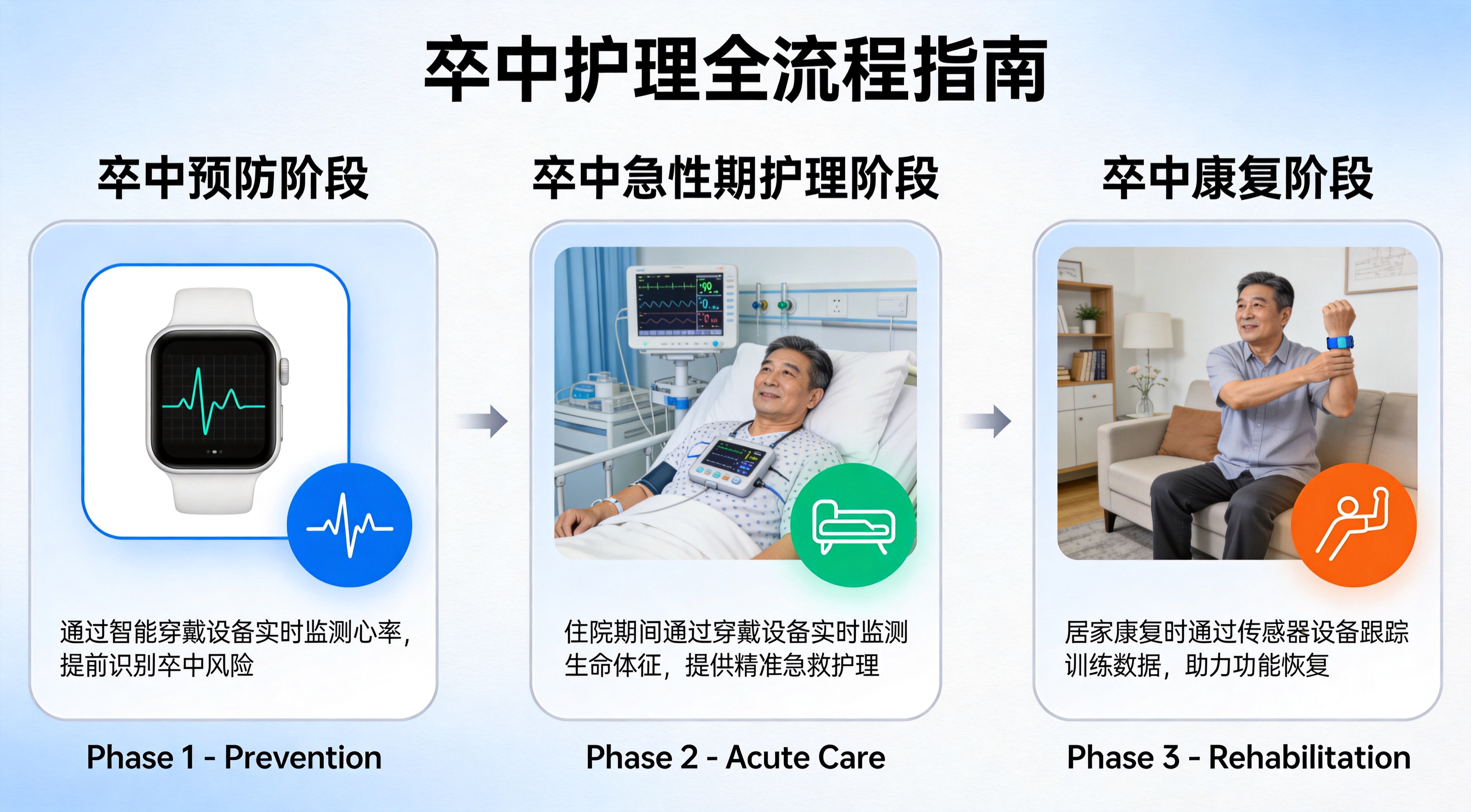
Phase 1: Prevention & Risk Monitoring
Atrial fibrillation (AFib) is responsible for approximately 1 in 4 strokes. The problem? AFib is often paroxysmal—it comes and goes, making it easy to miss during a single clinic visit. Medical-grade smartwatches and ECG patches with continuous heart rhythm monitoring can detect asymptomatic AFib, triggering intervention before a stroke occurs. To support this continuous tracking, solutions like the 4G ECG monitoring watch utilize medical-grade sensors to assist clinicians in capturing these transient arrhythmias in real time.
Blood pressure monitoring is equally critical. Hypertension is the single most important modifiable stroke risk factor, contributing to 54% of all strokes globally (WHO). Wearable blood pressure monitors—whether cuff-based smartwatches or PPG-enabled continuous tracking devices—enable the kind of long-term, real-world blood pressure data that spot checks in a doctor’s office simply can’t provide.
Phase 2: Acute Care & Early Mobilization
In the days and weeks following a stroke, continuous vital signs monitoring is essential. Multi-parameter wearable devices tracking SpO2, heart rate, temperature, and ECG can alert clinical staff to deterioration before it becomes critical. For hospitals, this means fewer adverse events and shorter ICU stays.
The global wearable medical device market is projected to reach $112.3 billion by 2035, growing at a 16.1% CAGR—and stroke care is a significant driver of that growth.
Phase 3: Rehabilitation & Long-Term Recovery
This is where wearables deliver the most transformative value. Post-discharge, patients need to perform repetitive, task-specific exercises to drive neuroplasticity—the brain’s ability to rewire itself around damaged areas. Without supervision, adherence drops dramatically.
Wearable sensors change the equation. Inertial measurement units (IMUs) embedded in wristbands, smartwatches, or sensor patches can track:
- Range of motion during upper limb exercises
- Gait symmetry and walking speed
- Arm use ratio (affected vs. unaffected limb)
- Exercise frequency and duration
- Tremor and spasticity patterns
The Hong Kong Polytechnic University recently unveiled a closed-loop “Remind-to-Move” sensory wristband that uses AI to compare movement patterns between the affected and unaffected limbs, automatically adjusting training parameters in real time. Research published in Wearable Technologies showed the closed-loop system significantly outperformed open-loop alternatives in both movement frequency and hand function improvement.
University of Houston engineers announced in June 2026 a paper-thin piezoelectric patch sensor—5mm by 5mm—that translates finger movements into on-screen game commands. Stroke patients play rock-paper-scissors while the sensors capture muscle deformation data with clinical precision. The result: rehabilitation that patients actually want to do.
Technology Deep Dive: Sensors That Drive Stroke Recovery
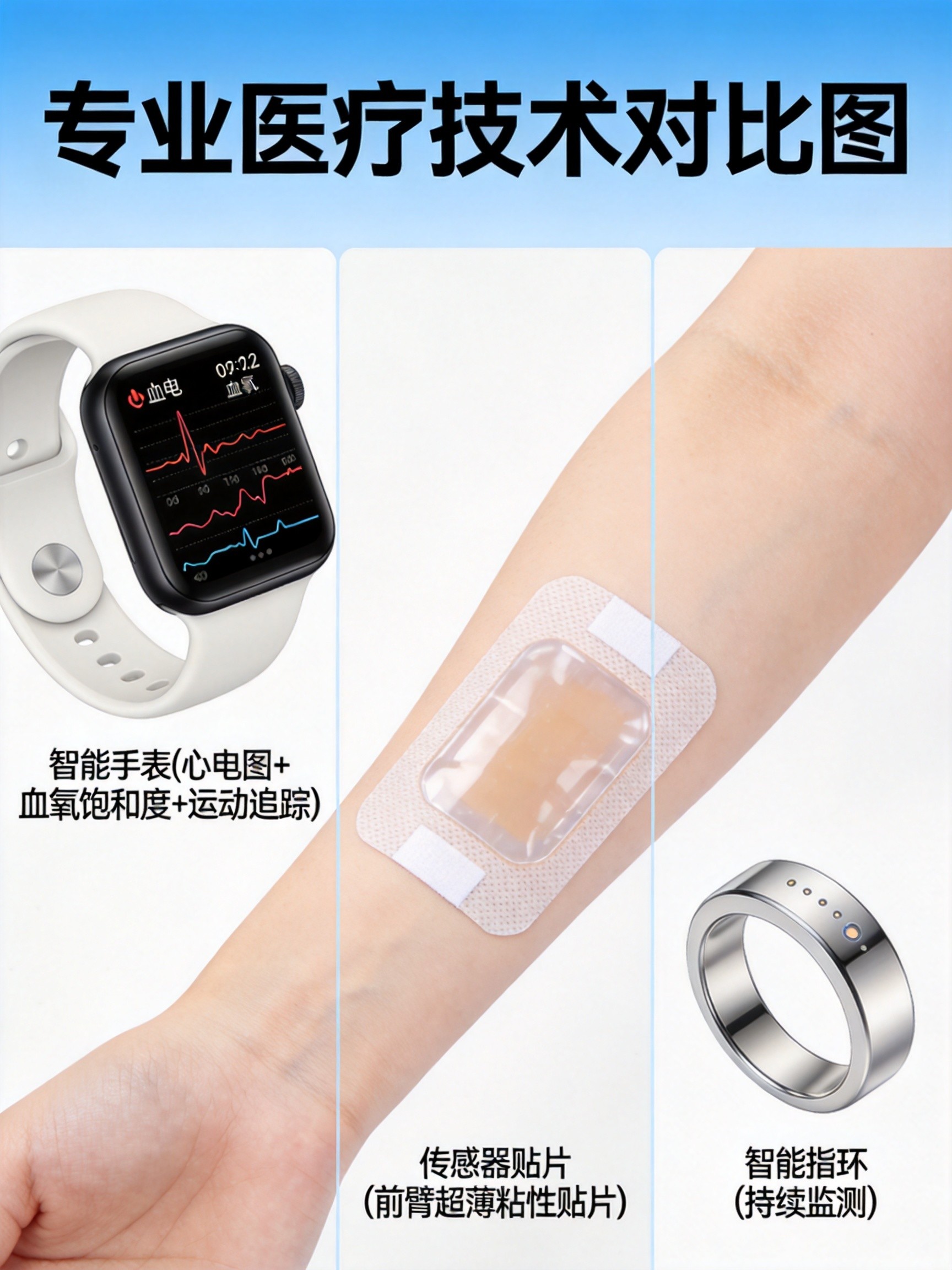
IMU-Based Motion Tracking
Inertial measurement units (accelerometer + gyroscope + magnetometer) are the backbone of wearable rehabilitation. A 2022 study in Frontiers in Physiology demonstrated that IMU data from wrist-worn sensors could classify functional vs. non-functional arm use in stroke patients with high accuracy.
Modern IMU-based systems can detect joint angles and range of motion, movement smoothness and coordination, compensatory movement patterns, and activity type classification (reaching, grasping, walking).
EMG & Bioimpedance Sensing
Electromyography (EMG) sensors measure muscle electrical activity, providing direct insight into motor unit recruitment. For stroke patients with hemiparesis, EMG data reveals whether the brain is successfully activating target muscles—even when visible movement is minimal.
Bioimpedance sensors add another layer, measuring tissue composition changes that correlate with muscle atrophy or edema—critical metrics for tracking recovery over weeks and months.
PPG & ECG for Secondary Prevention
Photoplethysmography (PPG) and electrocardiography (ECG) aren’t just for the prevention phase. Post-stroke patients are at elevated risk of recurrent stroke—26% within 5 years, according to AHA data. Continuous cardiac monitoring during rehabilitation provides an early warning system for arrhythmias, hypertension, and other cardiovascular events.
AI-Powered Analytics
Raw sensor data is noise. AI turns it into clinical insight.
A 2025 paper in Stroke (AHA Journal) outlined how AI-enabled wearable devices—smartwatches, smartphones, and ambient sensors—can create a “distributed precision stroke care” model. Machine learning algorithms applied to multimodal sensor data can identify subtle neurological impairments and support real-time triage decisions.
The clinical results are compelling. A multi-modal smart home platform integrating wearable pressure insoles and physiological wristbands achieved 94.1% classification accuracy in distinguishing mild, moderate, and severe stroke recovery stages—using only data from natural walking.
B2B Market: Who’s Buying Stroke Rehabilitation Wearables
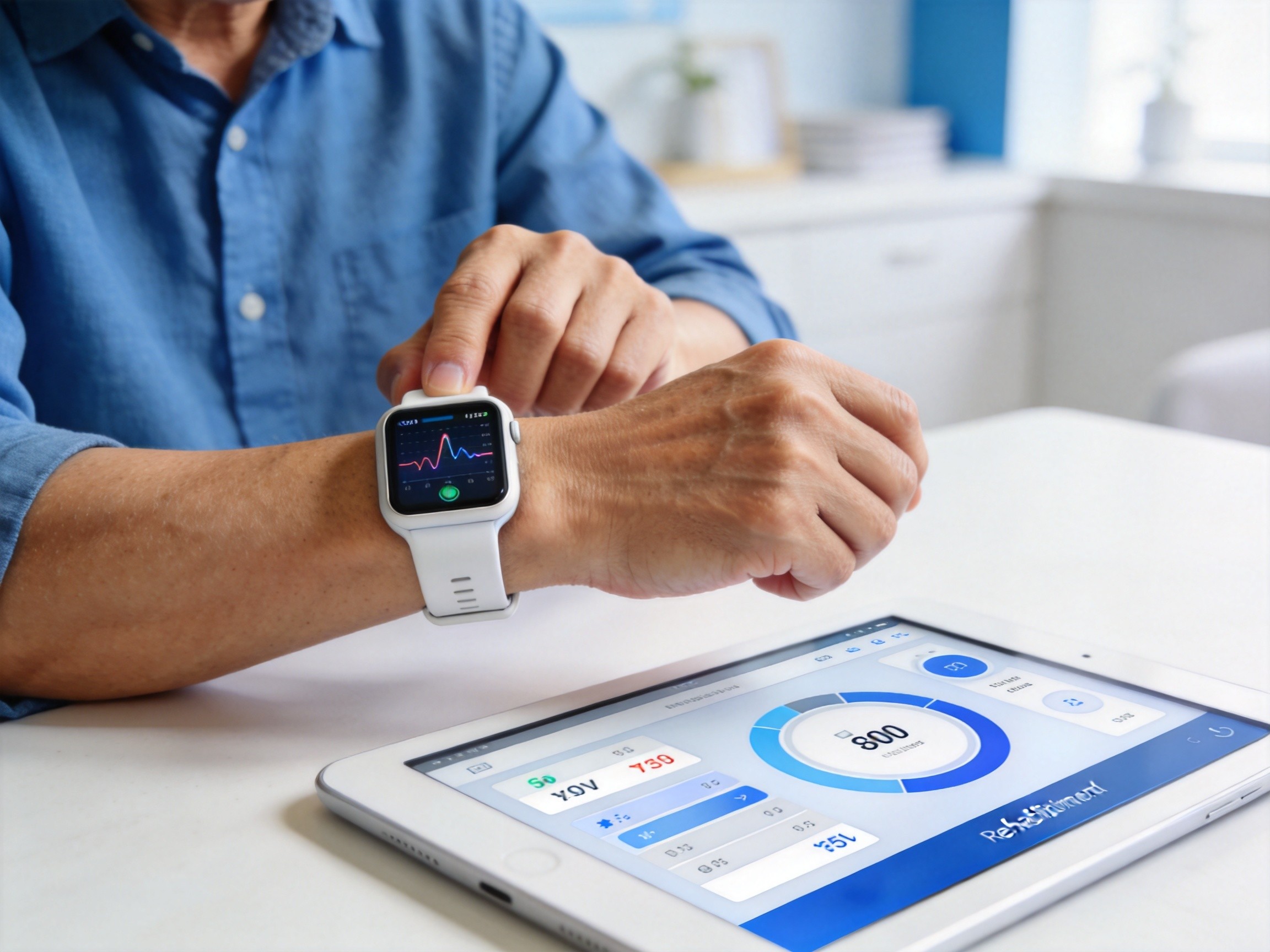
| Buyer Segment | Key Requirements | Preferred Form Factors | Buying Trigger |
|---|---|---|---|
| Rehabilitation Hospitals | Clinical-grade accuracy, EHR integration, multi-patient dashboard | ECG watch, IMU wristband, sensor patch | Reducing readmission rates, improving HCAHPS scores |
| Outpatient Rehab Chains | Cost-effective, easy patient onboarding, remote monitoring | Smartwatch, smart band, ring | Scaling therapist productivity, expanding patient capacity |
| Home Health Agencies | Cellular connectivity (no smartphone required), fall detection, SOS | All-in-one health watch, chest strap | Medicare RPM reimbursement (CPT 99453/99454) |
| Insurance Companies | Population-level analytics, ROI data, behavior change features | Smart band, ring | Reducing claims costs, member engagement |
| Pharma/CRO (Clinical Trials) | Validated endpoints, GCP compliance, data export API | ECG patch, multi-sensor wearable | Objective digital biomarkers for stroke drug trials |
The intelligent wearable robotics market—which includes rehabilitation exoskeletons and sensor systems—was valued at $43.64 billion in 2025 and is projected to grow at a 27.83% CAGR through 2034 (Data Insights Market). Within this, the medical rehabilitation segment is the dominant force, driven by the 15 million global stroke incidents annually and the aging population—1 billion people aged 60+ by 2030.
OEM/ODM Considerations for Stroke Rehabilitation Wearables
Not all wearables are built for stroke rehabilitation. Consumer fitness trackers lack the clinical accuracy, data granularity, and regulatory compliance that medical applications demand. Here’s what to look for in an OEM partner:
Sensor Accuracy & Validation
Stroke rehabilitation requires precise motion tracking. IMU sensors should deliver ≤2° angular error for joint angle measurement. PPG sensors need clinical-grade signal-to-noise ratios for reliable heart rate variability (HRV) analysis. Ask your OEM partner for validation data, not just spec sheets.
Form Factor Flexibility
Stroke affects different patients differently. Some need wrist-worn devices for upper limb tracking. Others need ankle-worn sensors for gait analysis. Still others benefit from chest-worn ECG patches. Your OEM partner should offer a modular platform that supports multiple form factors from a single hardware and software ecosystem.
Connectivity & Data Integration
The wearable is only half the product. The data pipeline is the other half. Look for Bluetooth 5.0+ for low-power continuous data streaming, cellular (4G/LTE) options for patients without smartphones, HL7/FHIR compatibility for EHR integration, RESTful API for custom dashboard development, and HIPAA/GDPR-compliant cloud architecture.
Battery Life
Stroke rehabilitation wearables need to last through a full day of therapy—and ideally longer to capture sleep and overnight recovery data. 3–7 days of continuous use on a single charge is a realistic target for wrist-worn devices. Chest patches should aim for 7–14 days.
Regulatory Support
Medical-grade claims require regulatory clearance. A strong OEM partner should support FDA 510(k) submission documentation, CE marking technical files, ISO 13485 quality management system compliance, IEC 60601 electrical safety testing, and clinical trial design consultation.
FAQ
Q: What’s the difference between a consumer fitness tracker and a medical-grade stroke rehabilitation wearable?
Consumer trackers estimate metrics. Medical-grade wearables measure them. The difference is in sensor quality, sampling rate, signal processing algorithms, and regulatory validation. A Fitbit might tell you how many steps you took; a medical-grade IMU wristband tells a therapist exactly how many degrees of wrist extension you achieved during a rehabilitation exercise—and whether you compensated with your shoulder.
Q: Can stroke patients use wearables independently?
It depends on the device and the patient’s impairment level. Simple wrist-worn devices with haptic feedback and minimal interface requirements are designed for independent use, even by patients with moderate hemiparesis. More complex systems may require initial caregiver setup. The best OEM solutions include both a caregiver-facing dashboard and a simplified patient interface.
Q: How do rehabilitation wearables integrate with existing hospital systems?
Most modern medical wearables support HL7 FHIR standards for EHR integration. Data flows from the wearable → cloud platform → hospital information system. Some platforms also offer direct API connections for custom integrations with existing rehabilitation management software.
Q: What’s the ROI for a rehabilitation hospital investing in wearable technology?
Research shows wearable-assisted rehabilitation can reduce hospital stays by 10–15% for neurological patients and improve therapy efficiency by allowing one therapist to oversee multiple patients simultaneously. The economic case is strongest when wearables are paired with remote monitoring CPT codes (99453, 99454) for post-discharge care, generating ongoing reimbursement revenue.
Q: How long does it take to bring a custom stroke rehabilitation wearable to market?
A typical OEM timeline: 4–6 weeks for industrial design and hardware customization, 8–12 weeks for firmware and app development, 4–8 weeks for regulatory documentation preparation, and 4–6 weeks for pilot production. Total: roughly 5–8 months from concept to first shipment. This accelerates if you start from an existing platform rather than a ground-up design.
Internal Linking Suggestions
- ECG Wearable Devices B2B Procurement Guide — for the cardiac monitoring aspect of stroke prevention
- Blood Pressure Monitoring Technology: OEM Selection Guide — for hypertension management, the #1 modifiable stroke risk factor
- Remote Patient Monitoring Wearable OEM Guide — for the post-discharge monitoring infrastructure
- How to Choose a Medical Wearable Manufacturer — for procurement decision-makers
- Medical Wearable FDA Clearance Guide — for regulatory pathway requirements
Get Started with Stroke Rehabilitation Wearables
Stroke rehabilitation is a $56 billion problem that wearable technology is uniquely positioned to solve. At Xdun Medical, we engineer clinical-grade wearables—ECG smartwatches, SpO2 monitors, blood pressure trackers, and multi-sensor platforms—that form the hardware backbone of modern stroke care. With 15+ years of OEM/ODM experience, ISO 13485 compliance, and full regulatory support, we help healthcare brands bring stroke rehabilitation wearables to market faster.
Request a Quote → View Products →