Mental Health & Stress Monitoring Wearables — A B2B OEM Guide for Medical Device Distributors
1. The Mental Health Market: A Procurement Opportunity No Distributor Should Ignore
The global mental health landscape has reached a critical inflection point. According to the World Health Organization (WHO), more than one billion people worldwide now live with a mental health condition — approximately one in every eight individuals on the planet. Anxiety disorders affect an estimated 359 million people globally, while depression impacts roughly 332 million. The economic toll is equally staggering: depression and anxiety alone cost the global economy an estimated US$1 trillion in lost productivity each year, per WHO analysis.
These numbers are not abstract statistics. They represent a structural shift in healthcare procurement priorities. Governments, insurers, corporate employers, and healthcare providers are actively seeking scalable, non-pharmacological tools to address this crisis. Wearable devices capable of continuous stress and mental health monitoring have emerged as a frontline solution — and the demand curve is steepening.
The global stress tracking devices market was valued at approximately US$2.84 billion in 2025 and is projected to expand at a compound annual growth rate (CAGR) of 6.4% through 2036, according to Future Market Insights. Meanwhile, the broader emerging mental health devices and platforms market — encompassing wearable sensors, digital therapeutics, and AI-powered monitoring — reached US$4.37 billion in 2025 and is forecast to hit US$12.67 billion by 2031, reflecting a 19.41% CAGR (TechSci Research). For B2B medical device distributors and OEM procurement managers, the message is unambiguous: the mental health wearables category is no longer a niche; it is a fast-scaling procurement vertical. For deeper analysis, see our comprehensive overview of mental health wearables, stress monitoring, and anxiety detection technologies.
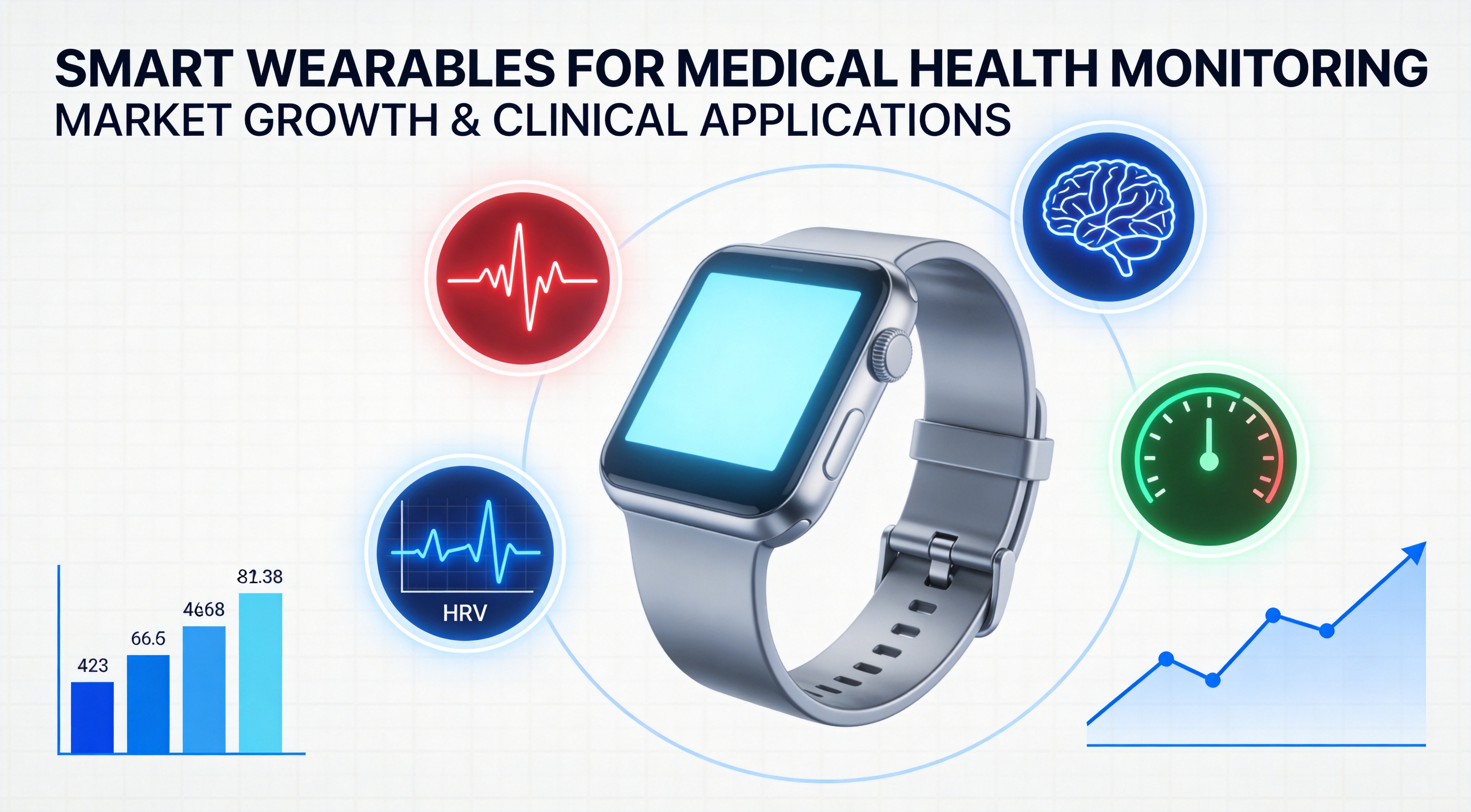
2. What Makes a Wearable “Mental Health Capable”? Core Technologies B2B Buyers Should Understand
For procurement professionals evaluating OEM partnerships, understanding the sensor stack and algorithmic backbone of mental health wearables is essential. These devices are not simple fitness trackers with a “stress score” label. Genuine mental health monitoring wearables integrate multiple physiological sensing modalities, each validated against clinical benchmarks.
2.1 Heart Rate Variability (HRV): The Foundation of Stress Quantification
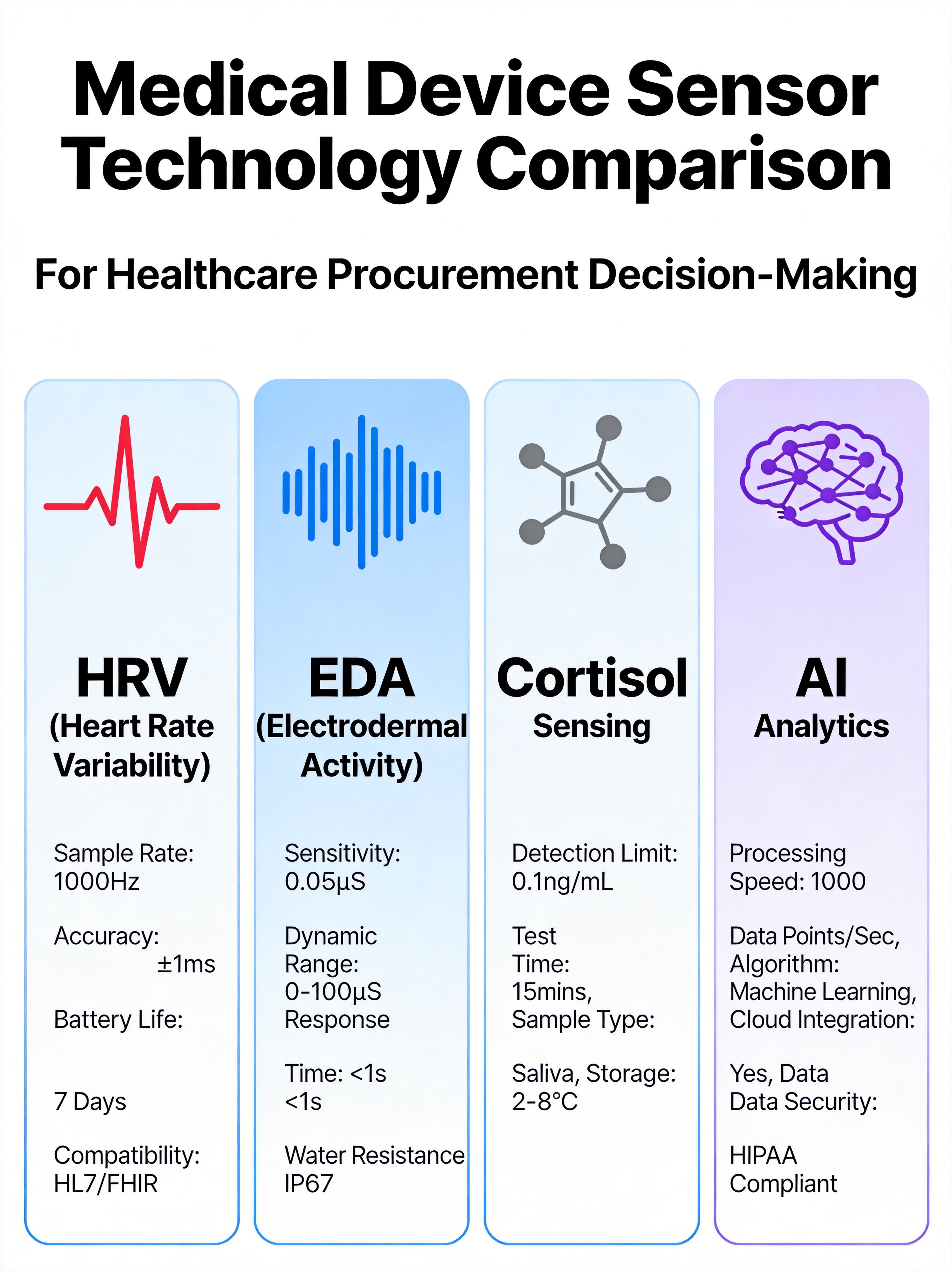
Heart rate variability — the beat-to-beat variation in cardiac intervals — is the most established biometric for autonomic nervous system assessment. A higher HRV generally correlates with parasympathetic dominance (relaxation and recovery), while suppressed HRV indicates sympathetic activation (stress response). Modern wearable PPG (photoplethysmography) sensors can capture HRV continuously at sampling rates sufficient for stress pattern analysis. Clinical research published through the National Institutes of Health (NIH) confirms that HRV metrics derived from wrist-worn devices correlate with laboratory-grade ECG measurements at accuracy levels exceeding 95% under resting conditions.
For B2B procurement, the key specification to verify is whether the OEM partner’s device captures raw inter-beat interval (IBI) data rather than pre-processed HRV aggregates. Raw IBI data enables clinical-grade downstream analysis and supports integration with hospital information systems and electronic health records (EHRs).
2.2 Electrodermal Activity (EDA) and Skin Conductance
Electrodermal activity sensors measure changes in the skin’s electrical conductance caused by sweat gland activity — a response directly controlled by the sympathetic nervous system. EDA provides a complementary stress signal to HRV, capturing emotional arousal with sub-second latency. Devices combining HRV and EDA sensors achieve considerably higher accuracy in stress classification than single-modality solutions. Research published in peer-reviewed biomedical engineering journals indicates that multimodal HRV+EDA systems can classify stress states with accuracy rates exceeding 88%. To help OEMs integrate these advanced capabilities, the 4G LTE smart watch features standalone cellular connectivity and medical-grade sensors to support continuous, real-time stress monitoring without relying on a paired smartphone.
2.3 Cortisol Sensing: The Emerging Frontier
Cortisol — the body’s primary stress hormone — has traditionally been measurable only through blood, saliva, or urine samples in a laboratory setting. Non-invasive, wearable cortisol monitoring is now entering commercialization. Platforms such as the CORTI system by EnLiSense use passive sweat-based biosensors to track cortisol trends continuously. While still an emerging technology rather than a mature diagnostic tool, sweat-based cortisol monitoring represents a significant differentiator for OEM products targeting premium B2B segments, including corporate wellness programs and clinical research institutions.
2.4 AI-Powered Predictive Analytics
The American Psychological Association’s 2025 Practitioner Pulse Survey reported that AI tool adoption among psychologists surged to 56% by late 2025, up sharply from prior years. Wearable mental health platforms that embed edge-AI inference engines can process multi-sensor data streams locally — detecting mood episode precursors, sleep disruption patterns, and stress anomalies 5 to 7 days before a patient self-reports symptoms. For B2B buyers, on-device AI processing also addresses GDPR and HIPAA compliance requirements by minimizing raw data transmission to cloud servers.
3. B2B Procurement Channels: Where the Volume Orders Are
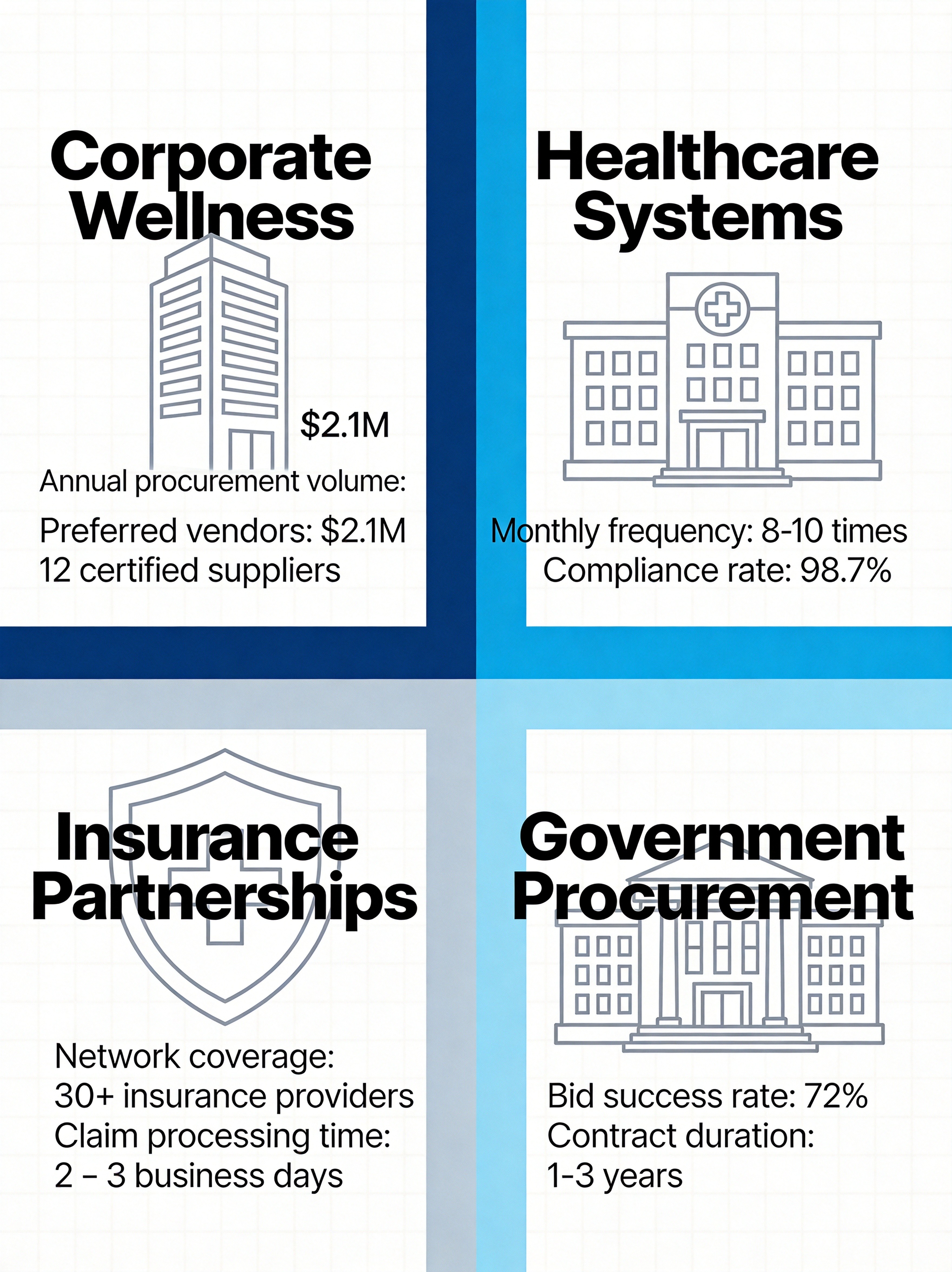
The mental health wearables market is structurally distinct from consumer fitness trackers. B2B procurement — rather than retail — drives the majority of volume orders. Understanding the primary procurement channels is critical for distributors positioning inventory and negotiating OEM terms.
3.1 Corporate Wellness Programs
Enterprise investment in employee mental health monitoring has surged. The Business Group on Health’s 2025 Employer Well-being Strategy Survey confirms that organizations are integrating digital therapeutic tools — including stress monitoring wearables — into employee benefits packages. The global enterprise health management custom solutions procurement market reached approximately US$62 billion in 2025, with a year-over-year growth rate of 52%. B2B corporate wellness contracts typically involve multi-year deployments of 500 to 50,000+ devices per order, making this the highest-volume channel for OEM distributors.
3.2 Healthcare Systems and Telemedicine Integration
The American Medical Association reported that 71.4% of physicians used telehealth platforms in 2024. Remote patient monitoring (RPM) reimbursement codes — particularly the U.S. CMS Remote Physiologic Monitoring codes — have created a sustainable reimbursement pathway for wearable mental health devices. Hospital procurement departments are increasingly specifying mental health wearables that support HL7 FHIR data exchange standards for EHR integration. Distributors who can supply OEM devices with validated FHIR API compatibility hold a distinct competitive advantage in this channel.
3.3 Insurance and Health Plan Partnerships
Insurance carriers are incorporating wearable health data into dynamic premium models. Approximately 23% of wearable device users in North America now receive premium discounts tied to health metric compliance. Mental health metrics — particularly HRV trends and sleep quality indices — are increasingly included in these actuarial models. B2B OEM devices that provide insurer-grade data reliability and API accessibility are positioned to capture this high-margin channel.
3.4 Government and Public Health Procurement
National health agencies are scaling mental health monitoring infrastructure. The WHO reported that by 2025, tele-mental health services had expanded to over 60% of countries globally. Public tenders for wearable health monitoring devices are increasing across the European Union, Asia-Pacific, and Middle Eastern markets. Government procurement typically requires ISO 13485 manufacturing certification, specific regional regulatory clearances, and local-language documentation — all areas where an experienced OEM partner adds measurable value for distributors.
4. Regulatory Landscape: What OEM Partners Must Navigate
The regulatory environment for mental health wearables is evolving rapidly, and B2B buyers must evaluate OEM partners based on their regulatory readiness across key markets.
4.1 United States — FDA
The U.S. Food and Drug Administration has classified a growing number of wearable monitoring devices as Class II medical devices requiring 510(k) premarket notification. In 2025 alone, the FDA cleared 9 wearable devices as Class II medical devices. For mental health wearables that provide stress assessment or mood-related analytics, the regulatory classification depends on the intended use claims. Devices positioned as “general wellness” products face fewer regulatory hurdles; devices making clinical or diagnostic claims require full FDA clearance. OEM partners with experience supporting the FDA premarket submission process — including design controls, risk management documentation per ISO 14971, and clinical validation study design — reduce time-to-market for distributors entering the U.S. market.
4.2 European Union — CE Marking under MDR
The EU Medical Device Regulation (MDR 2017/745) has extended its transitional provisions through 2027, but the compliance requirements remain stringent. Mental health monitoring wearables with software-based analytics components must demonstrate conformity with MDR Annex I General Safety and Performance Requirements. The number of MDR-compliant wearable health monitoring device models increased to approximately 420 in 2025, a 55% rise from 2024. OEM manufacturers that support the complete CE marking technical documentation package — including clinical evaluation reports (CERs) and post-market surveillance (PMS) plans — enable distributors to access the European market with reduced regulatory friction.
4.3 Asia-Pacific and Emerging Frameworks
Japan’s PMDA has introduced a fast-track review pathway for wearable health monitoring devices. China’s NMPA published clinical evaluation guidance for wearable devices in 2025. South Korea and Singapore are harmonizing their digital health regulations with international standards. For distributors targeting multi-region deployment, an OEM partner with regulatory affairs capabilities spanning North America, Europe, and Asia-Pacific is a strategic asset.
5. Evaluating an OEM Partner: Technical and Commercial Due Diligence Checklist
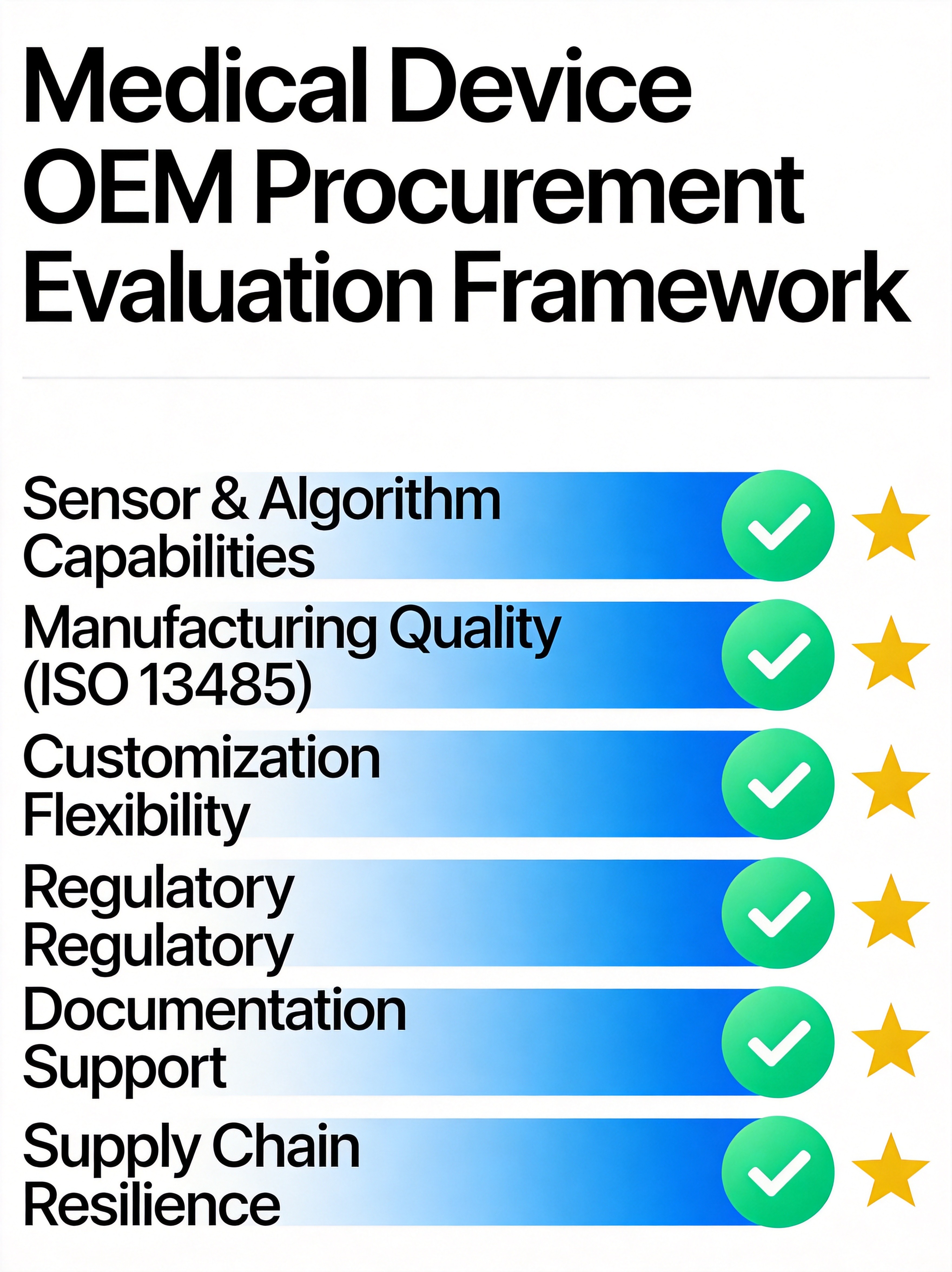
Selecting the right OEM partner for mental health wearables involves more than comparing unit costs. B2B procurement managers should evaluate partners across the following dimensions:
5.1 Sensor and Algorithm Capabilities
Does the OEM partner manufacture devices with multi-modal PPG sensors capable of capturing raw IBI data for clinical HRV analysis? Do their devices integrate EDA sensors for complementary stress detection? Does the firmware support on-device edge-AI inference for real-time stress classification without cloud dependency? These are the technical questions that separate wellness gadgets from clinically useful mental health monitoring tools.
5.2 Manufacturing Quality and Scale
The global medical device contract manufacturing market reached US$103.6 billion in 2025 and is projected to reach US$189.5 billion by 2032 (CAGR 9.1%, Report Prime). Within this landscape, the highest-quality OEM partners operate ISO 13485-certified production lines with automated assembly, in-line quality inspection, and batch-level traceability. For mental health wearables, additional manufacturing considerations include biocompatibility of skin-contact materials (ISO 10993), ingress protection rating (minimum IP67 for sweat and water exposure), and battery safety certification (IEC 62133).
5.3 Customization and Branding Flexibility
B2B distributors require OEM partners that offer flexible customization: private-label branding, custom packaging, firmware-level feature configuration, companion app white-labeling, and regional language localization. The ability to customize the industrial design — including materials, colorways, and strap options — to align with target market positioning is a key differentiator among OEM suppliers.
5.4 Regulatory Documentation Support
A competent OEM partner should facilitate the distributor’s regulatory submission process by providing: device master records (DMR), design history files (DHF), biocompatibility test reports, electrical safety test reports, software validation documentation per IEC 62304, and clinical performance study data. The OEM’s regulatory affairs team should be capable of supporting region-specific submission requirements across FDA, CE, NMPA, PMDA, and other notified bodies.
5.5 Supply Chain Resilience
The global wearable sensor module supply chain shipped over 1.2 billion units in 2025, with PPG sensors accounting for 43% of volume. However, supply chain concentration risks persist — particularly for advanced optical sensor arrays and low-power AI processors. OEM partners with diversified component sourcing strategies, safety stock policies, and transparent lead-time communication reduce procurement risk for high-volume B2B orders.
6. XDUN Medical: Your OEM Partner for Mental Health Monitoring Wearables
XDUN Medical specializes in the design, engineering, and contract manufacturing of wearable health monitoring devices for B2B distribution partners worldwide. Our OEM capabilities in the mental health and stress monitoring category are built on a foundation of precision sensor integration, regulatory-ready documentation, and scalable manufacturing.
6.1 Core OEM Capabilities
- Multi-Modal Sensor Integration: Our wearable platforms support simultaneous PPG (HRV), EDA, skin temperature, and accelerometer data acquisition — the complete sensor stack required for clinical-grade stress monitoring.
- Edge-AI Firmware: On-device machine learning inference for real-time stress classification, sleep stage analysis, and anomaly detection. No cloud dependency required for core analytics.
- ISO 13485 Manufacturing: Production lines certified to medical device quality management standards, with full batch traceability and in-line quality inspection.
- Regulatory Documentation Package: We support our distribution partners with comprehensive technical documentation aligned with FDA 510(k), CE MDR, and other regional regulatory frameworks.
- Flexible Customization: Private-label branding, custom industrial design, companion app white-labeling, and firmware-level feature configuration to match your target market requirements.
- Competitive Pricing: Volume-based OEM pricing structured to support healthy distributor margins across all procurement channels — corporate wellness, healthcare systems, insurance, and government tenders.
6.2 Why Partner with XDUN Medical
The mental health wearables market rewards speed, regulatory competence, and manufacturing quality. XDUN Medical provides distribution partners with the technical foundation and supply chain reliability needed to build market share in this rapidly expanding category. Whether you are a regional distributor entering the corporate wellness channel, a healthcare IT integrator building a telemedicine device portfolio, or a government procurement specialist responding to public health tenders, our OEM team is prepared to support your requirements from prototype to production-scale delivery.
7. The Bottom Line: Why Now
The convergence of four structural trends makes 2025–2026 an optimal window for B2B entry into the mental health wearables market:
- Unprecedented demand: Over one billion people affected by mental health conditions globally, with treatment gaps exceeding 70% in most regions.
- Regulatory maturation: Clear pathways now exist for wearable mental health devices across FDA, CE MDR, PMDA, and NMPA frameworks.
- Reimbursement infrastructure: Remote patient monitoring codes and corporate wellness budgets create sustainable revenue models for device procurement.
- Technology readiness: Multi-modal sensors, edge-AI processors, and validated physiological algorithms have reached production maturity.
Distributors who establish OEM partnerships now — with technically capable, regulatory-ready manufacturers — will be positioned to capture disproportionate market share as procurement volumes accelerate through 2030.
Contact XDUN Medical — OEM Partnership Inquiry
Email: jine@xdunmedical.com
Phone/WhatsApp: +86-13544254314
Website: xdunmedical.com
XDUN Medical — Precision Wearable Health Technology for B2B Distribution Partners Worldwide
References
- World Health Organization — Mental Health Statistics & Global Burden of Disease Reports
- American Psychological Association — 2025 Practitioner Pulse Survey
- American Medical Association — Telehealth Utilization Report 2024
- Future Market Insights — Stress Tracking Devices Market Report 2025–2036
- TechSci Research — Emerging Mental Health Devices and Platforms Market 2025–2031
- National Institutes of Health — HRV Wearable Validation Studies
- Report Prime — Medical Device Contract Manufacturing Market 2025–2032
- Business Group on Health — 2025 Employer Well-being Strategy Survey