Wearable Devices for Chronic Respiratory Disease Management: COPD & Asthma B2B OEM Guide
The global burden of chronic respiratory diseases has reached a critical inflection point. Chronic Obstructive Pulmonary Disease (COPD) now affects more than 400 million people worldwide and stands as the third leading cause of death globally, claiming approximately 3.4 million lives annually according to the World Health Organization (WHO) Global Burden of Disease data. Asthma, as reported by the Global Initiative for Asthma (GINA), impacts over 260 million individuals and contributes to more than 450,000 deaths each year. The economic toll is equally staggering — COPD alone generates an estimated global cost of $1.5 billion annually in direct healthcare expenditure and lost productivity.
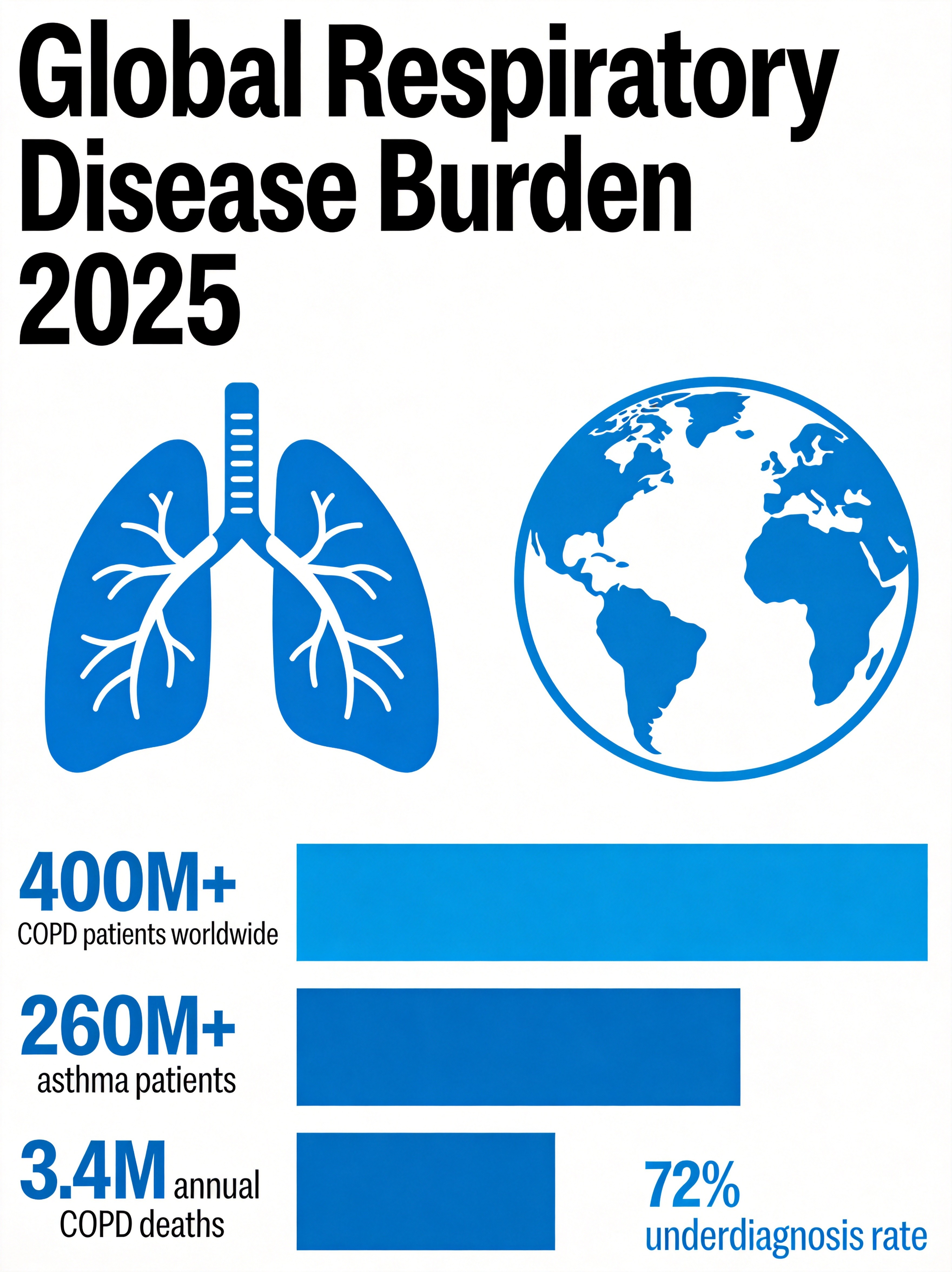
The underdiagnosis rate compounds these figures dramatically. Recent clinical data indicates that 72% of individuals living with COPD remain undiagnosed, with the majority of cases detected only at advanced stages. This diagnostic gap, combined with the growing preference for home-based care models, has created an unprecedented demand for wearable respiratory monitoring devices.
For medical device distributors, hospital procurement teams, and healthcare brands seeking OEM partnerships, the respiratory wearables segment represents one of the most consequential growth opportunities in the medical device industry. The global respiratory monitoring wearables market was valued at USD 4.86 billion in 2025 and is projected to reach USD 11.27 billion by 2033, expanding at a compound annual growth rate of 11.1%, according to Data Bridge Market Research. This guide provides a comprehensive overview of the landscape, technical requirements, and strategic considerations for B2B buyers evaluating OEM partnerships in this rapidly evolving sector.
The Disease Burden Driving Market Demand
The epidemiological trajectory of COPD and asthma reinforces the long-term viability of this market. WHO projections indicate that COPD prevalence has grown consistently over the past two decades, with particularly sharp increases among female populations in developing economies. The condition now kills more people than diabetes and breast cancer combined — a statistic that underscores both the clinical urgency and the commercial opportunity.
Several converging factors are accelerating adoption of wearable respiratory monitoring solutions:
Aging Populations and Multimorbidity: The prevalence of COPD in individuals over 60 years of age reaches 25%, and many patients present with comorbid cardiovascular disease, metabolic disorders, or sleep apnea. Wearable devices that capture multi-parameter data — respiratory rate, oxygen saturation, heart rate variability, and activity levels — provide a holistic view of patient health that single-parameter devices cannot match. For deeper analysis on how these multi-parameter capabilities apply to other complex metabolic comorbidities, see our B2B OEM guide on wearable devices for kidney disease management and remote CKD monitoring.
Post-Pandemic Care Delivery Models: The COVID-19 pandemic permanently altered expectations around remote care. Healthcare systems across North America, Europe, and Asia-Pacific have integrated telehealth and remote patient monitoring (RPM) into standard care pathways. The Centers for Medicare & Medicaid Services (CMS) in the United States has expanded reimbursement codes for RPM services, creating a sustainable economic model for device adoption.
Environmental Drivers: According to the National Institutes of Health (NIH), increasing exposure to air pollution, occupational irritants, and climate-related respiratory stressors continues to drive incidence rates upward. Urbanization in developing markets — particularly across Southeast Asia, the Middle East, and Latin America — introduces new patient populations that require accessible monitoring solutions.
Regulatory Tailwinds: The GOLD 2025 guidelines for COPD management emphasize the role of continuous monitoring and early intervention, while the WHO’s Global Action Plan for the Prevention and Control of Noncommunicable Diseases explicitly prioritizes respiratory disease management infrastructure. These policy frameworks translate directly into procurement decisions at the institutional level.
Wearable Technology Categories for Respiratory Care
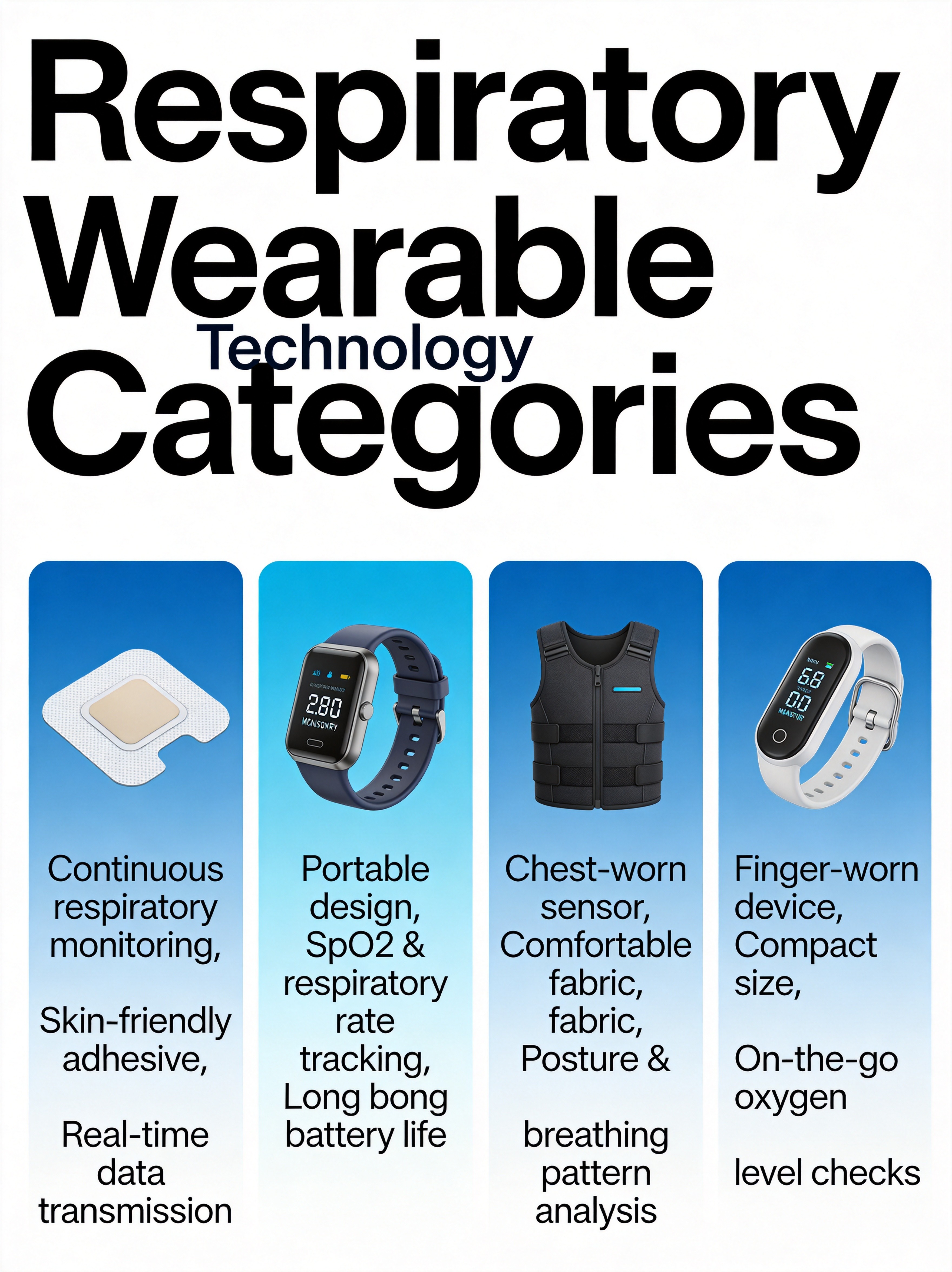
B2B buyers evaluating OEM partnerships should understand the distinct technology categories within the respiratory wearables segment. Each category addresses different clinical use cases and carries unique manufacturing requirements.
Smart Patch Biosensors
Smart patches represent the fastest-growing subsegment, driven by their non-invasive form factor and continuous monitoring capability. These adhesive-based devices typically integrate flexible printed circuit boards with biosensors that capture respiratory rate, thoracic impedance, oxygen saturation (SpO₂), and skin temperature. Advanced versions incorporate acoustic sensors for wheeze detection and cough counting — parameters with direct clinical relevance for asthma and COPD management. Complementing these patch-based solutions, standalone form factors equipped with medical-grade sensors, such as the 4G LTE connected respiratory watch, utilize built-in cellular connectivity to transmit continuous SpO₂ and breathing data directly to clinical dashboards without relying on a paired smartphone.
Key manufacturing considerations include biocompatible adhesive selection (supporting ISO 10993 compliance), sensor calibration protocols, and battery life optimization for multi-day wear cycles. The patch form factor demands expertise in flexible electronics assembly and medical-grade material science — areas where experienced OEM partners provide meaningful differentiation.
Wrist-Worn and Smartwatch-Integrated Monitors
Wrist-worn devices leverage photoplethysmography (PPG) sensors and accelerometers to derive respiratory metrics. While these devices offer strong patient compliance due to familiar form factors, the clinical accuracy of PPG-derived respiratory rate can vary by ±2-4 breaths per minute compared to capnography reference standards. For screening and trend monitoring applications, this accuracy threshold is generally acceptable; for diagnostic or acute care use cases, supplementary sensor modalities may be necessary.
The OEM opportunity in this category centers on sensor module integration, algorithm licensing, and regulatory submission support. Buyers should evaluate whether prospective partners have in-house algorithm development capabilities or rely on third-party IP — this distinction affects both time-to-market and long-term margin structure.
Smart Textile and Garment-Based Systems
Medical smart textiles — including sensor-embedded shirts, vests, and chest bands — constitute a USD 2.17 billion market as of 2025, projected to reach USD 8.97 billion by 2034 at a CAGR of 17.1%, per Straits Research. These systems use conductive fibers, textile-integrated electrodes, and embedded processing units to capture respiratory inductance plethysmography data, ECG, and motion artifacts.
The textile approach offers distinct advantages for continuous monitoring: full thoracic and abdominal expansion capture, multi-lead cardiac monitoring, and significantly higher patient comfort during extended wear periods. The manufacturing complexity is correspondingly higher — washable electronics, textile-sensor interface durability, and signal integrity through repeated mechanical stress cycles all require specialized engineering expertise.
Pulse Oximetry and Capnography Wearables
While traditional pulse oximetry is well-established, the wearable segment has evolved toward miniaturized, continuous-monitoring form factors. Devices such as the FDA Class II-cleared ProSomnus RPMO₂ integrate pulse oximeters into oral appliances, enabling overnight SpO₂ tracking for sleep-related breathing disorder screening. Capnography wearables — measuring end-tidal CO₂ — remain primarily in the clinical and research segments but are rapidly miniaturizing toward ambulatory use cases.
For OEM buyers, the pulse oximetry segment offers the most established regulatory pathway and the largest addressable market. The engineering challenge lies in motion artifact reduction, low-perfusion performance, and battery optimization — all areas where manufacturing experience directly impacts product quality.
OEM Partnership Strategy: What Buyers Should Evaluate
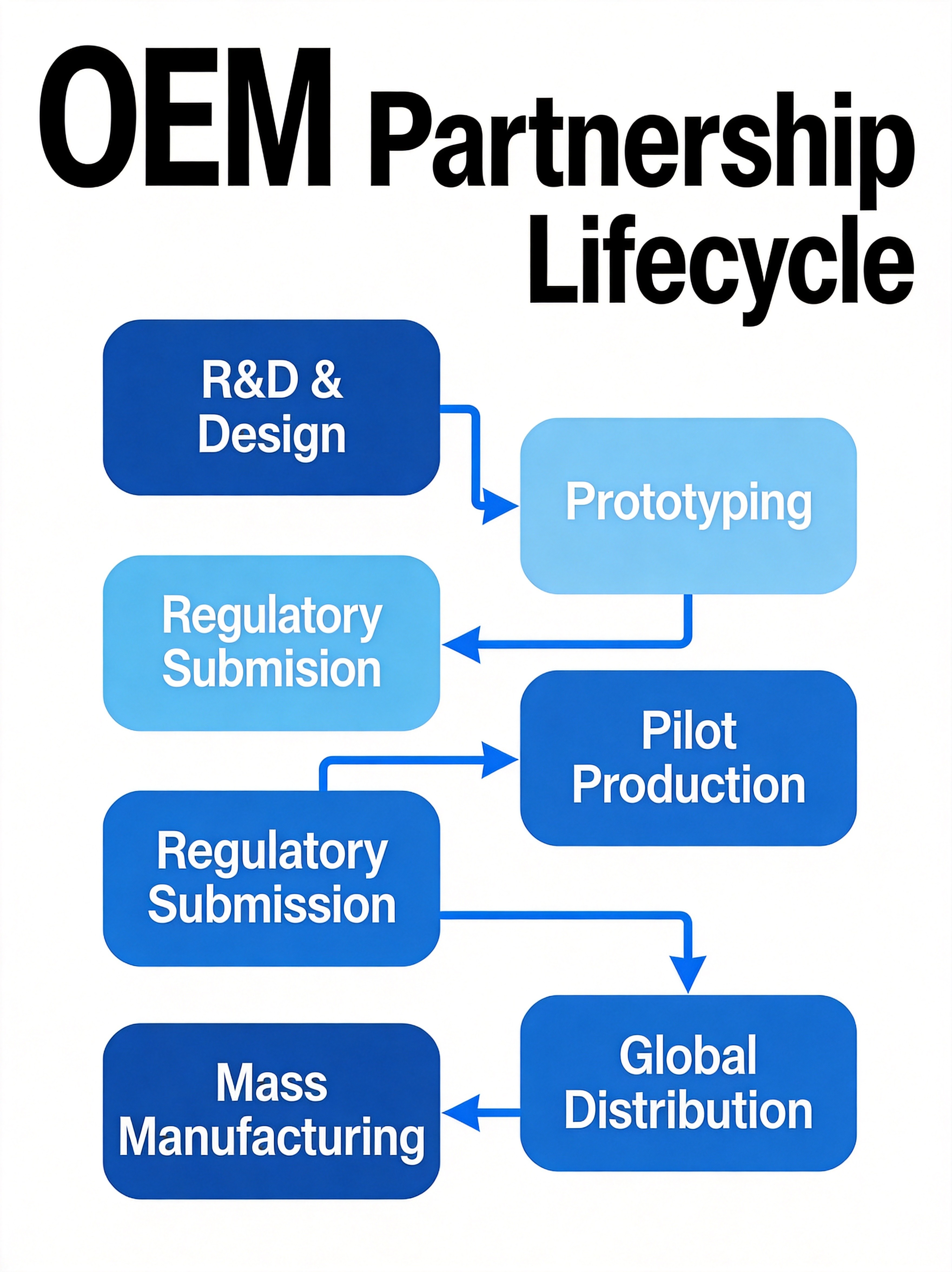
Selecting the right OEM partner for respiratory wearable devices requires a structured evaluation framework. The following criteria are foundational for procurement decisions in this category.
Manufacturing Quality Systems
ISO 13485 certification is the baseline requirement for medical device manufacturing. Buyers should verify that prospective partners maintain current certification with an accredited notified body and can demonstrate audit history. Beyond the certificate, the quality system should encompass design controls per ISO 14971 risk management standards, full material traceability, and documented process validation for all critical manufacturing steps.
Cleanroom capabilities — typically ISO Class 7 or 8 (Class 10,000 or 100,000) — are essential for sensor assembly and device packaging. Partners should maintain environmental monitoring programs and provide certificates of conformance for each production batch.
Regulatory Support Capabilities
The regulatory pathway for respiratory wearables varies by device classification, intended use, and target market. FDA 510(k) clearance, CE marking under the EU Medical Device Regulation (MDR) 2017/745, and UKCA marking each require distinct technical documentation packages. An experienced OEM partner should support:
- Device classification determination and regulatory strategy development
- Biocompatibility testing per ISO 10993 series
- Electrical safety testing per IEC 60601-1 and IEC 60601-1-2 (EMC)
- Usability engineering documentation per IEC 62366
- Clinical evaluation reports and post-market surveillance planning
The partner should demonstrate familiarity with the specific predicate devices and consensus standards relevant to respiratory monitoring — not simply generic medical device experience.
Sensor and Algorithm Competence
The performance of a respiratory wearable is ultimately defined by its sensing accuracy and algorithmic reliability. Buyers should request clinical validation data demonstrating correlation between the device’s measurements and gold-standard reference methods. For respiratory rate, comparison against capnography or calibrated respiratory inductance plethysmography is standard. For SpO₂, controlled desaturation studies with arterial blood gas validation provide the strongest evidence.
Algorithm development capability is equally important. Signal processing for respiratory waveforms — filtering motion artifacts, identifying apneic events, and calculating derived metrics such as the COPD Assessment Test (CAT) equivalent scores — requires specialized expertise that differentiates mature OEM partners from generalist contract manufacturers.
Supply Chain Resilience
Post-pandemic supply chain disruptions highlighted the vulnerability of medical device manufacturers dependent on single-source components. Buyers should evaluate whether prospective OEM partners maintain diversified supplier relationships, buffer inventory for critical components (particularly semiconductor chips and specialized sensors), and documented business continuity plans.
Geographic diversification of manufacturing capacity is increasingly valued by buyers serving multiple regional markets. Partners with production facilities in different regulatory jurisdictions can offer tariff optimization, reduced logistics risk, and faster response to regional demand fluctuations.
Regulatory Landscape: Navigating Compliance Requirements
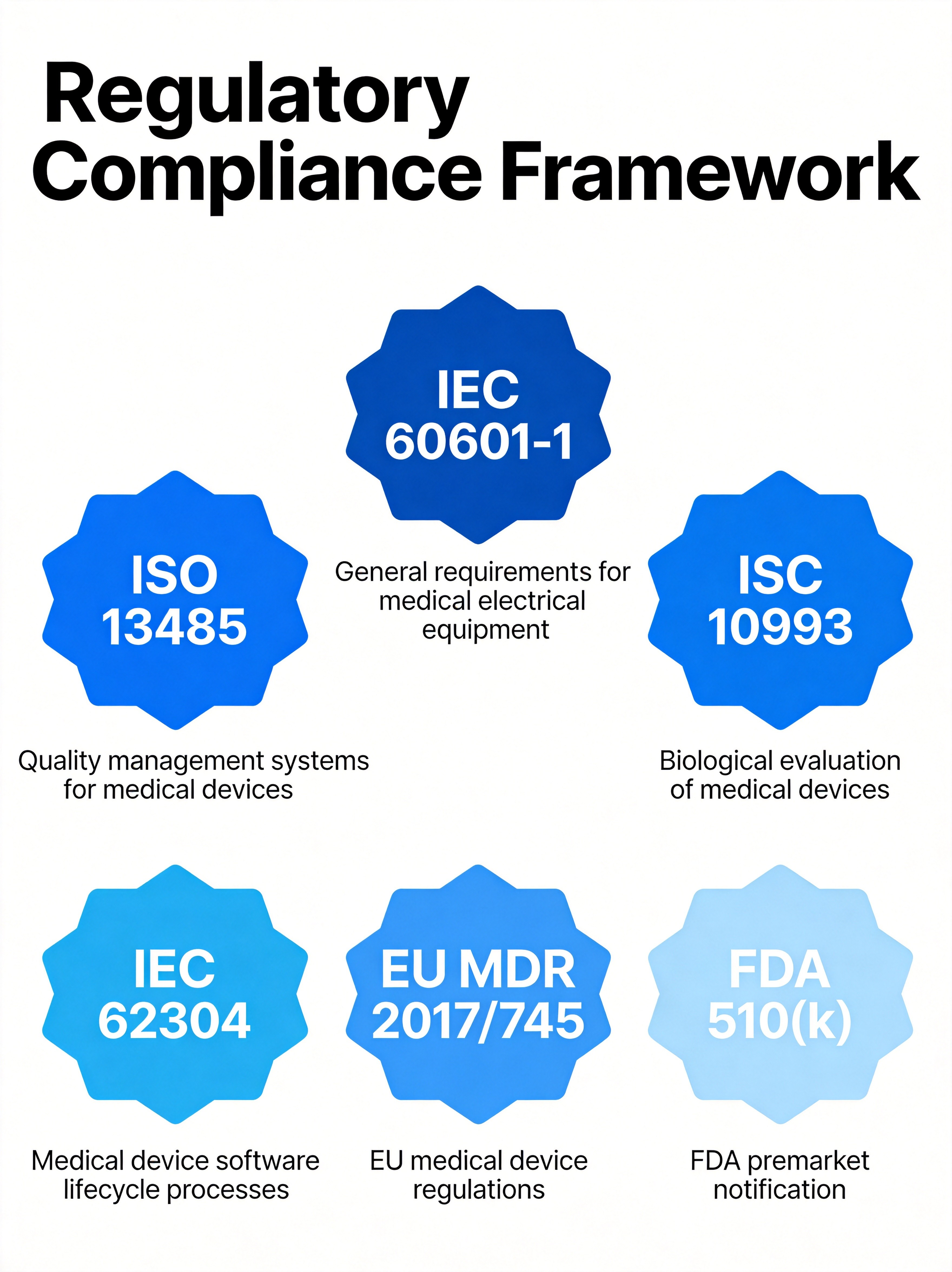
The regulatory environment for respiratory wearables continues to evolve. Buyers should understand the current framework and anticipate forthcoming changes that may affect product lifecycle management.
FDA Classification and Pathways
Under FDA regulations, most respiratory monitoring wearables are classified as Class II devices requiring 510(k) premarket notification. The specific product code and predicate device selection depend on the claimed indications:
- Pulse oximeters: Product code DQA, regulation 21 CFR 870.2700
- Respiratory monitors (general): Product code BZG or MNR
- Breathing frequency monitors: Product code BZQ
Software functions that analyze respiratory data to provide clinical decision support may trigger additional regulatory scrutiny under FDA’s Clinical Decision Support (CDS) guidance. OEM partners should be prepared to address software validation requirements per IEC 62304 and cybersecurity documentation per FDA’s latest premarket guidance.
EU MDR Compliance
The transition from the Medical Device Directive (MDD) to the Medical Device Regulation (MDR) 2017/745 has raised the compliance bar for respiratory wearables entering the European market. Key changes affecting this product category include:
- Enhanced clinical evidence requirements, including clinical investigations for higher-risk devices
- More stringent requirements for notified body oversight
- Expanded post-market surveillance and periodic safety update reporting
- Unique Device Identification (UDI) implementation
OEM partners with active MDR certifications and established relationships with EU notified bodies offer significant time-to-market advantages for buyers targeting European distribution.
Standards Compliance Matrix
The following standards are directly relevant to respiratory wearable device compliance. Buyers should confirm that prospective OEM partners can demonstrate conformity to applicable standards:
- IEC 60601-1: Medical electrical equipment — General requirements for basic safety
- IEC 60601-1-2: Electromagnetic compatibility requirements
- IEC 60601-1-11: Requirements for medical electrical equipment used in the home healthcare environment
- IEC 62304: Medical device software — Software life cycle processes
- IEC 62366: Application of usability engineering to medical devices
- ISO 10993-1: Biological evaluation of medical devices
- ISO 14971: Application of risk management to medical devices
- ISO 13485: Medical devices — Quality management systems
- ISO 80601-2-61: Particular requirements for pulse oximeter equipment
XDUN Medical: Your Strategic OEM Partner
XDUN Medical brings specialized expertise to the respiratory wearable device segment, combining precision manufacturing capabilities with deep regulatory knowledge across key global markets. Our approach is built on three pillars that directly address the priorities of B2B buyers in this sector.
Engineering Excellence
Our engineering teams specialize in the integration of biosensor arrays, flexible circuit design, and low-power wireless communication modules — the core technologies that define competitive respiratory wearables. We support the full product development lifecycle, from industrial design and rapid prototyping through design for manufacturability (DFM) optimization and pilot production scale-up. Our ISO 13485-certified quality management system ensures that every device meets the traceability, consistency, and documentation standards required for regulatory submissions in target markets.
Customization Without Compromise
As an OEM partner, we recognize that brand differentiation is critical to our clients’ commercial success. Our manufacturing workflows support customization across multiple dimensions: sensor configuration, enclosure design, user interface, packaging, and firmware feature sets. We collaborate with clients to align product specifications with their target market requirements — whether that means optimizing for cost-sensitive emerging markets or building premium devices for regulated clinical environments.
Competitive Pricing, Predictable Delivery
We maintain competitive pricing structures that enable our partners to achieve healthy margins while delivering value to end users. Our supply chain management practices — including multi-source qualification for critical components, strategic inventory management, and production scheduling transparency — provide predictable delivery timelines that support our clients’ go-to-market planning.
Moving Forward: Initiating an OEM Partnership
The respiratory wearable device market is projected to sustain double-digit growth through 2035. Organizations that establish OEM partnerships now position themselves to capture market share as reimbursement frameworks expand, clinical evidence accumulates, and patient expectations shift toward connected, continuous care models.
XDUN Medical invites qualified distributors, healthcare brands, and institutional buyers to explore partnership opportunities. Our team provides technical consultation, regulatory pathway analysis, and product specification guidance as part of the engagement process — at no cost and with no obligation.
Contact XDUN Medical Today
Email: jine@xdunmedical.com
Phone: +86-13544254314
Website: https://xdunmedical.com
Let us help you bring clinically meaningful respiratory monitoring technology to the patients and providers who need it most.