Diabetes Management Wearable Technology: The Complete B2B Procurement and OEM Guide
Here’s the blunt truth: the International Diabetes Federation’s 2025 Diabetes Atlas puts the number at 589 million adults living with diabetes globally. WHO says closer to 830 million when you count undiagnosed cases. Either way, roughly 1 in 10 adults on the planet has it. Nearly half don’t know.
The money side is equally staggering. The digital diabetes management market hit $14.75 billion in 2025 and is projected to reach $31.64 billion by 2034 — an 8.85% CAGR, according to Fortune Business Insights. Wearable devices alone account for 60% of that market.
For healthcare distributors, hospital procurement teams, and OEM buyers, the signal is clear: diabetes-focused wearables aren’t a niche. They’re the next big procurement category.
How Wearables Are Actually Changing Diabetes Care
Let’s skip the marketing fluff. Here’s what matters clinically and commercially.
CGMs: The Workhorse
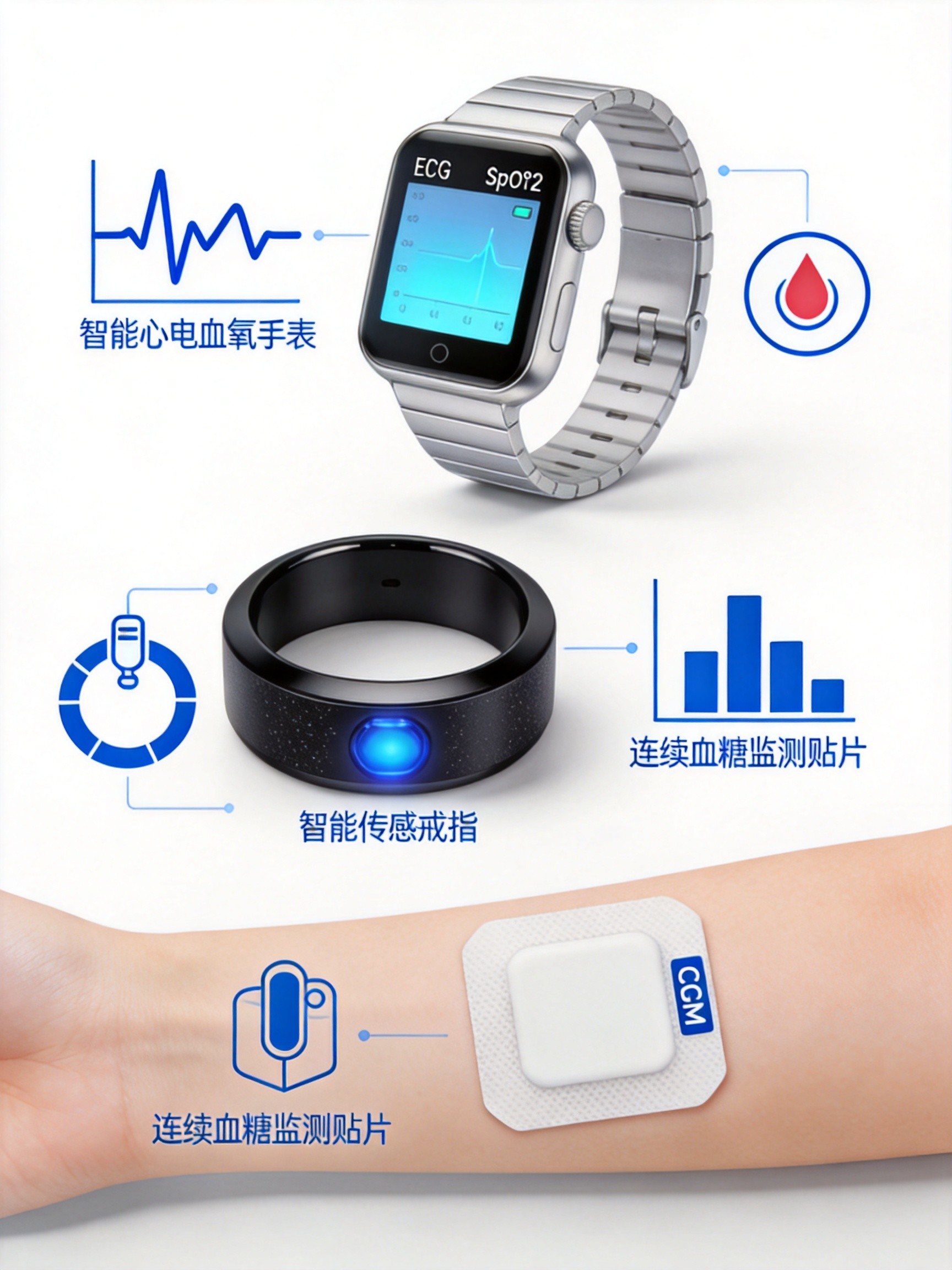
Continuous Glucose Monitors remain the gold standard. Devices like Abbott’s FreeStyle Libre 3 and Dexcom G7 measure glucose from interstitial fluid every 1-5 minutes. No finger pricks. Data streams to a smartphone. The CDC recommends CGMs for anyone with Type 1 diabetes and Type 2 patients on insulin.
The numbers back it up. Studies show CGM users cut severe hypoglycemia events by 88%. Hospitalizations drop. A University of Michigan RPM program documented a 59% reduction in hospital admissions among monitored patients — with a $12 million ROI.
But here’s what matters for B2B buyers: the CGM market is projected to exceed $18.89 billion by 2032. Demand is growing faster than supply. Healthcare providers are scrambling for reliable hardware partners.

Smartwatches: The Volume Play
Smartwatches can’t replace CGMs for glucose measurement — not yet. Non-invasive glucose monitoring remains experimental. In 2026, no fully non-invasive, FDA-cleared optical glucose sensor exists on the consumer market. Anyone claiming otherwise is selling hype.
What smartwatches can do is track everything that surrounds diabetes: heart rate variability, SpO₂, sleep quality, activity levels, blood pressure trends. These are the metrics that determine whether a patient’s glucose stays stable or spikes.
Xdun’s blood pressure smartwatch line, for example, uses hospital-grade air pump and airbag technology for BP measurement, plus medical-grade ECG and 4PD dynamic SpO₂ monitoring. As covered in our guide on blood pressure monitoring wearables from PPG estimation to air pump measurement, understanding the clinical trade-offs between these technologies is critical for healthcare procurement. To support continuous remote patient monitoring without relying on a paired smartphone, the standalone 4G LTE health watch enables direct cellular transmission of these vital metrics to clinical dashboards. A single device that captures BP, ECG, SpO₂, and activity data is a serious tool for diabetes comorbidity management — heart disease is what kills most diabetic patients. Naturally, powering continuous 4G transmission alongside this multi-sensor monitoring requires robust energy solutions; for deeper analysis, see our medical wearable battery technology and power management procurement guide.
Smart Rings: The Compliance Hack
Here’s an underappreciated angle. CGM adoption rates hover around 30-40% globally. Smartwatch compliance for elderly patients isn’t much better — many find them bulky, hard to charge, or just forget to wear them.
Smart rings solve this. They’re lightweight, unobtrusive, and have 5-7 day battery life. Xdun’s TK20 Smart Health Ring, for instance, tracks heart rate, SpO₂, sleep, and activity in a 5ATM waterproof form factor. Patients wear it 24/7 without thinking about it. For RPM programs targeting elderly or low-tech-adherence populations, rings often outperform watches on compliance metrics.
The Business Case: RPM Economics for Healthcare Providers
Remote Patient Monitoring isn’t just clinically effective — it’s financially sustainable. Here’s the math:
A typical RPM program for diabetes management generates revenue through Medicare billing codes:
- CPT 99453 ($20): Initial setup and patient education
- CPT 99454 ($64.50/month): Data collection and transmission (minimum 16 days/month)
- CPT 99457 ($51.33/month): First 20 minutes of clinical review
- CPT 99458 ($41.14/month): Each additional 20 minutes
A practice with 500 monitored patients generates roughly $79,000 per month — nearly $954,000 annually — in RPM billing alone. After staffing costs, net margins typically run 40-55%.
The cost-savings side is even more compelling. Studies document $4,200 annual savings per patient from reduced emergency visits. Lifetime complication prevention saves an estimated $40,000 per patient.
For hospitals and distributors, the question isn’t “should we offer diabetes wearables?” It’s “who’s our hardware partner?”
Diabetes Monitoring Wearable Technologies Compared
| Technology | What It Measures | Accuracy | Patient Burden | Best For | B2B OEM Price Range |
|---|---|---|---|---|---|
| CGM (Continuous Glucose Monitor) | Interstitial glucose every 1-5 min | MARD ~9%, ISO 15197 | Sensor insertion every 7-14 days | Type 1, insulin-dependent T2 | $25-45/unit |
| Smartwatch (Health Monitoring) | HR, SpO₂, BP, ECG, sleep, activity | BP ±3mmHg, SpO₂ ±2% | Daily charging | Comorbidity tracking | $18-55/unit |
| Smart Ring | HR, SpO₂, sleep, activity, HRV | SpO₂ ±2%, HR ±3bpm | Weekly charging | Elderly, low-tech | $12-30/unit |
| Smart BP Monitor | BP, HR, arrhythmia detection | ±3mmHg (air pump) | As-needed use | Hypertension-diabetes | $15-40/unit |
| Smart Insulin Pen | Insulin dose tracking, timing | N/A (dose recording) | Per-injection use | Insulin-dependent | $8-20/unit |
What to Look for in a Diabetes Wearable OEM Partner
Not all manufacturers are created equal. When evaluating an OEM/ODM partner for diabetes-focused wearables, grill them on these five points:
- Sensor supply chain stability. PPG sensors, ECG electrodes, and SpO₂ modules are the building blocks. If your partner can’t guarantee consistent sensor sourcing, your product line stalls. Ask about their semiconductor relationships directly.
- Regulatory documentation support. You don’t need them to have FDA clearance (most OEMs don’t). You need them to provide the design history files, materials certifications, and testing data that you’ll use to get clearance. If they can’t produce a 510(k)-ready documentation package, walk away.
- App and cloud platform capability. A wearable without a companion app is a brick. Your OEM partner should either offer a white-label app platform or provide API/SDK access for third-party integration. Diabetes data without a dashboard is useless.
- Customization depth. Can they customize the PPG lens geometry? Tweak the BP algorithm? Adjust the SpO₂ calibration curve for darker skin tones? The answer reveals whether you’re dealing with a real manufacturer or a trading company.
- Minimum order flexibility. Full custom tooling runs $15,000-50,000 upfront. But many manufacturers offer “soft customization” — logo engraving, strap color, UI skinning — at MOQs of 500-1,000 units. Good for market testing before committing to hard tooling.
Xdun Medical Technology (Shenzhen) operates a 24,000 sqm facility with 300+ employees, producing up to 50,000 units daily. They ship to 30+ countries and offer the full spectrum from soft customization to deep ODM development. Their product line — smartwatches, fitness bands, smart rings — covers the diabetes monitoring ecosystem from wrist to finger.
FAQ
Can a smartwatch actually measure blood glucose?
No. As of mid-2026, no consumer smartwatch has FDA-cleared non-invasive glucose monitoring. Optical sensors can estimate trends for wellness purposes, but they cannot replace a CGM or finger-stick meter for clinical decisions. Be skeptical of any manufacturer claiming otherwise.
What’s the ROI timeline for a hospital RPM program using wearables?
Most programs break even within 6-9 months. The University of Michigan study showed a $12 million return over the program period. At 500 patients, monthly RPM billing alone covers hardware and staffing costs within the first quarter.
Do I need FDA clearance to sell diabetes monitoring wearables?
If you’re marketing the device for clinical glucose monitoring or making medical claims: yes. If you’re selling it as a “wellness and fitness tracker” that also measures heart rate and SpO₂: generally no, but regulations vary by country. Always consult regulatory counsel for your target market.
What sensors are non-negotiable for a diabetes-focused wearable?
Continuous heart rate monitoring (PPG), SpO₂, and sleep tracking are the baseline. ECG and blood pressure monitoring add serious clinical value for comorbidity management. If you’re building a device specifically for diabetes RPM, ensure it supports data export to major EHR platforms via FHIR or HL7.
How does the smart ring compare to the smartwatch for diabetes patients?
Rings win on compliance — patients wear them longer and more consistently. They’re better for sleep tracking and passive monitoring. Watches win on sensor density and screen-based interaction. For elderly Type 2 patients, rings often outperform watches. For active Type 1 patients who need frequent data checks, watches are more practical. Many RPM programs deploy both.
The Bottom Line
Diabetes isn’t going away. The IDF projects 643 million cases by 2030. Healthcare systems are drowning in chronic disease costs. Wearables — CGMs, smartwatches, rings, connected BP monitors — are the only scalable solution that doesn’t require building more hospital beds.
For B2B buyers, the window is open. The technology is mature. The reimbursement codes exist. The OEM infrastructure — particularly in Shenzhen’s manufacturing ecosystem — is ready to scale.
The question is whether your procurement timeline matches the market’s urgency.
Ready to discuss your diabetes wearable project? Contact Xdun Medical Technology for end-to-end OEM/ODM services — smartwatches, fitness bands, and smart rings with health monitoring capabilities. From sensor selection to white-label app deployment, we support your product from concept to container.