Chronic diseases are the single largest driver of healthcare expenditure worldwide. In the United States alone, 90% of the nation’s $4.5 trillion in annual healthcare spending goes toward treating chronic and mental health conditions, according to the U.S. Centers for Disease Control and Prevention (CDC). The World Health Organization (WHO) reports that noncommunicable diseases (NCDs) kill 43 million people annually, accounting for 75% of non-pandemic-related deaths globally. Cardiovascular diseases alone claim 19 million lives each year, while diabetes, cancer, and chronic respiratory diseases account for the remainder of the NCD burden.
Against this backdrop, Remote Patient Monitoring (RPM) has emerged as one of the most compelling economic interventions in modern healthcare delivery. By shifting care from episodic, facility-based encounters to continuous, data-driven surveillance in the home, RPM is redefining the cost structure of chronic disease management. This article examines the economics of RPM through the lens of cost-benefit analysis and return on investment (ROI), drawing on peer-reviewed research, government data, and real-world implementation evidence from health systems across the United States and internationally. For deeper analysis on payer-specific models and financial workflows, see our detailed breakdown of RPM reimbursement and provider economics.
The Chronic Disease Cost Crisis: Why RPM Economics Matter
The numbers are staggering and well-documented. The CDC estimates that heart disease and stroke cost the U.S. healthcare system $216 billion annually, with an additional $147 billion in lost workplace productivity. The American Diabetes Association reported that the total annual cost of diabetes reached $412.9 billion in 2022, encompassing direct medical costs, lost productivity, and premature mortality. Cancer care costs are projected to exceed $240 billion by 2030. Obesity alone costs the U.S. system nearly $173 billion per year. To help mitigate the financial burden of these chronic conditions, remote patient monitoring solutions like the 4G ECG monitoring watch utilize medical-grade sensors to assist with continuous cardiac tracking and early intervention.
What makes these figures particularly relevant to the RPM conversation is the structural inefficiency embedded in how chronic care has traditionally been delivered. Medicine has been organized around discrete episodes of care: a patient visits a clinic, vital signs are captured at a single point in time, a treatment plan is adjusted, and the patient returns weeks or months later. During the extended intervals between visits, risk accumulates invisibly—unmonitored, unmanaged, and frequently culminating in avoidable emergencies.
This is the gap that RPM fills. By deploying connected medical devices—blood pressure monitors, pulse oximeters, glucose meters, ECG wearables, and weight scales—into patients’ homes and streaming data to clinical teams in near real-time, RPM transforms chronic disease management from reactive to proactive. The economic implications are profound, and the evidence base is now mature enough to support rigorous ROI analysis.
RPM Cost Savings: The Evidence Base
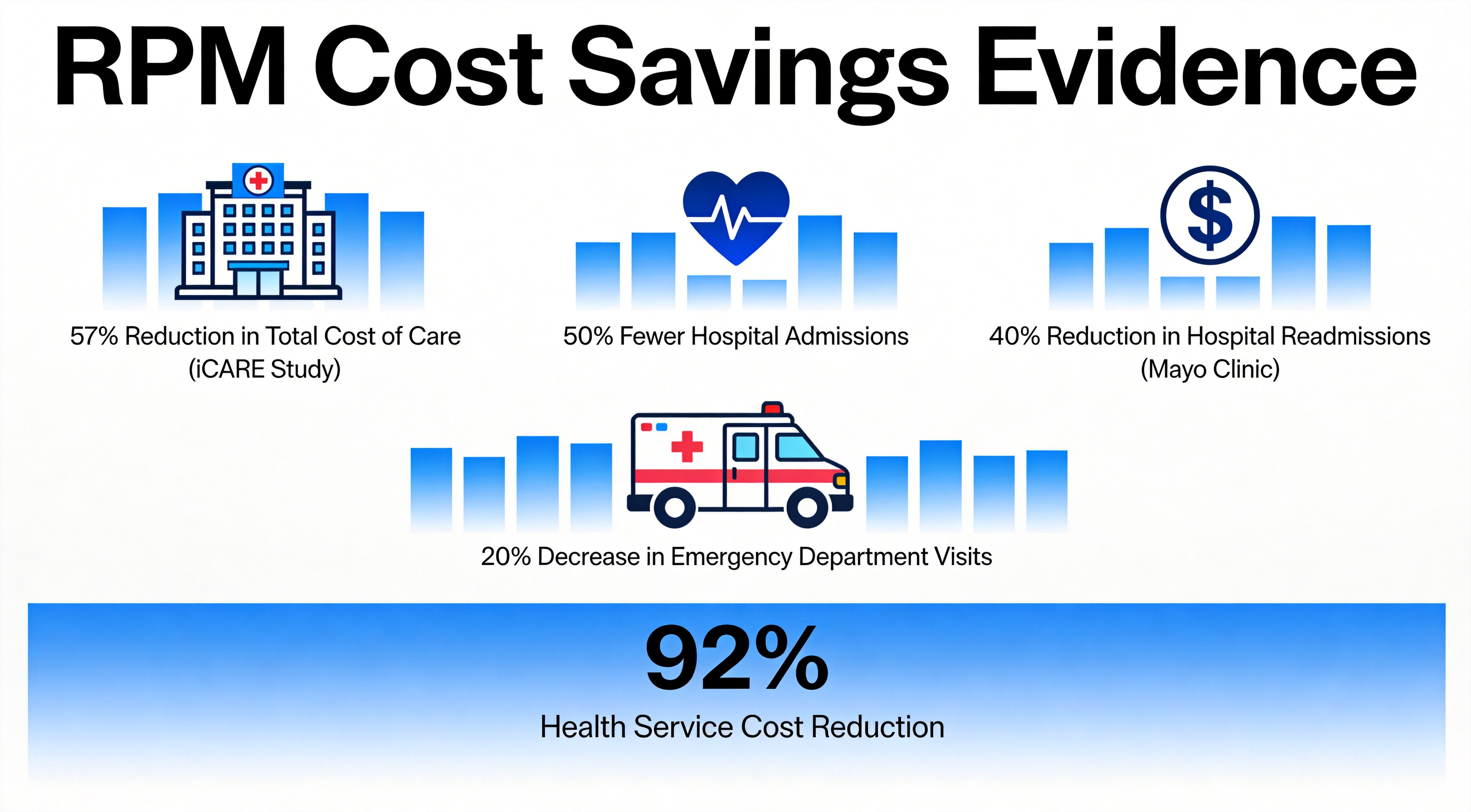
The clinical and economic evidence supporting RPM has accumulated rapidly over the past five years, moving from small pilot studies to large-scale, multi-site implementations. The results are remarkably consistent across disease states, geographies, and care settings.
The iCARE study (Intermountain COPD and Adult Asthma Remote Evaluation), presented at the American Thoracic Society 2026 International Conference, documented outcomes from 1,200 patients across five Intermountain Health hospitals in Utah. Over a two-year period, patients equipped with connected spirometers, pulse oximeters, and sensor-equipped inhalers generated more than 11.5 million data points, averaging approximately 24 signals per patient per day. The results: total cost of care fell 57% per patient per year (from $36,837 to $15,899 across all payers), hospital admissions were cut by 50.3%, emergency department visits declined by 20%, and observation stay costs decreased by 73%. Critically, the AI-driven platform enabled a single respiratory navigator to monitor nearly 220 patients—a sevenfold increase in clinical capacity.
This is not an isolated finding. A landmark study published in JAMA found that remote monitoring of heart failure patients reduced all-cause readmissions by 38%. Multiple heart failure programs have since reported readmission reductions in the 50% range. Research from the University of Manchester and Manchester University NHS Foundation Trust demonstrated that patientMpower’s RPM solution achieved a 92% reduction in health service costs and an 80% decrease in outpatient appointments for lung transplant patients, with earlier trials showing an 82% reduction in hospitalizations for COPD patients.
In oncology, the Canopy ePRO-based remote therapeutic monitoring platform demonstrated a 28% reduction in hospitalizations among patients with metastatic solid tumors, with projected annual savings of approximately $3.15 million per 1,000 patients. For immune checkpoint inhibitor recipients, the savings were even more dramatic: an estimated $12.6 million in annual acute care savings per 1,000 patients, driven by earlier detection of immune-related adverse events and increased outpatient management.
Hospital Readmission Reduction: The Strongest ROI Driver
Hospital readmissions represent the single largest source of avoidable healthcare expenditure targeted by RPM. In the United States, a typical 3-day hospital stay costs approximately $30,000. For heart failure patients—one of the highest-readmission populations—the cost per readmission routinely exceeds $15,000. CMS penalizes hospitals with excess readmission rates through the Hospital Readmissions Reduction Program (HRRP), adding a direct financial penalty layer on top of the clinical cost.
The Mayo Clinic’s AI-powered remote monitoring program achieved a 40% reduction in hospital readmissions, with a number needed to treat (NNT) of just 11 to prevent one readmission—a remarkably efficient clinical intervention by any standard. For a mid-sized hospital with 500 annual heart failure admissions and a 22% baseline 30-day readmission rate, a 40% reduction translates to 44 avoided readmissions annually. At an average cost of $15,000 per readmission, that represents $660,000 in direct cost savings per year—not including HRRP penalty avoidance, bed capacity gains, or improved quality metrics.
Johns Hopkins’ implementation of AI-driven RPM for chronic disease management demonstrated reductions in 30-day readmissions of up to 50%. Their machine learning model achieved a 0.855 ROC-AUC score in predicting heart failure hospitalizations, with risk scores rising detectably during the three weeks preceding admission—creating a critical window for preventive intervention. By reviewing only the highest-risk third of patients identified by the algorithm, clinicians could detect 95% of heart failure hospitalizations within the following seven days.
Emergency Department Visit Reduction
Emergency department (ED) overutilization is both a cost driver and a quality indicator. The average ED visit cost in the United States ranges from $1,200 to $2,500, with costs rising substantially for patients requiring advanced imaging, specialist consultation, or observation stays. For chronic disease patients, many ED visits represent preventable exacerbations that could have been intercepted earlier with continuous monitoring.
The iCARE study documented a 20% reduction in ED visits for COPD and asthma patients. A large retrospective cohort study of 6,595 patients on RPM for hypertension found that uncontrolled hypertension fell from 66.3% to 40.2% after 90 days of monitoring, with systolic blood pressure dropping an average of 7.3 mmHg—and 16.7 mmHg for stage 2 patients. These improvements directly correlate with reduced ED utilization for hypertensive crises, strokes, and cardiac events.
According to CDC data, approximately 12% of all ED visits in the United States have a diabetes diagnosis listed. With RPM-enabled continuous glucose monitoring and proactive care management, many of these visits—driven by hypoglycemic events, hyperglycemic crises, and diabetic complications—can be prevented. The economic impact scales rapidly: if RPM can reduce diabetes-related ED visits by even 20%, the savings for a health system serving 100,000 covered lives would reach into the millions of dollars annually.
Chronic Disease Management Economics: The Long-Term View
Beyond acute event reduction, RPM creates value through improved chronic disease control—the sustained, longitudinal management that prevents complications, slows disease progression, and reduces the total cost of care over years and decades.
Consider hypertension, which affects nearly half of all U.S. adults (approximately 120 million people) and is a primary driver of heart disease, stroke, kidney failure, and dementia. The CDC reports that only about 1 in 4 adults with hypertension has their blood pressure under control. The gap between diagnosis and control represents an enormous reservoir of preventable morbidity and cost. RPM-enabled blood pressure monitoring, combined with medication titration and lifestyle coaching, has been shown to double or triple control rates compared to usual care in multiple randomized trials.
For diabetes, the economics are equally compelling. The CDC’s National Diabetes Statistics Report indicates that more than 37 million Americans have diabetes and another 96 million have prediabetes. The annual per-capita medical expenditure for people with diagnosed diabetes is approximately 2.3 times higher than for those without diabetes. RPM programs that combine continuous glucose monitoring with care team intervention have demonstrated HbA1c reductions of 0.5–1.5 percentage points, with each percentage-point reduction associated with a 21% decrease in diabetes-related deaths, a 14% decrease in myocardial infarction, and a 37% decrease in microvascular complications (UKPDS).
ROI Across Three Stakeholder Perspectives
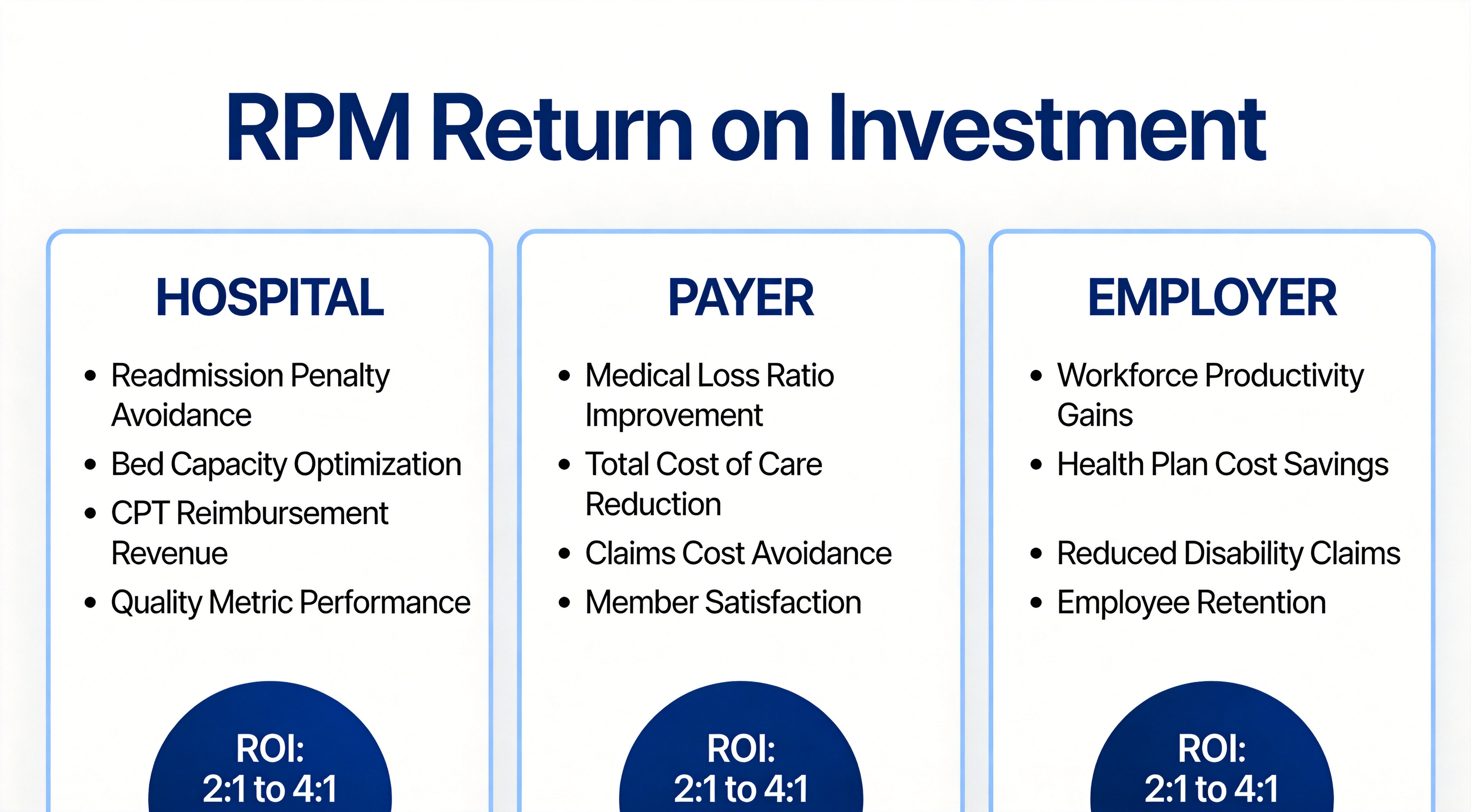
The economic case for RPM becomes most actionable when analyzed from the perspective of each stakeholder in the healthcare ecosystem. The incentives, cost structures, and value metrics differ substantially across hospitals, payers, and employers.
1. Hospital and Health System ROI
For hospitals and health systems, RPM ROI is driven by four primary mechanisms:
- Readmission penalty avoidance: CMS’s HRRP penalizes hospitals with excess readmissions by up to 3% of total Medicare reimbursement. For a hospital with $100 million in annual Medicare revenue, a 40% reduction in readmissions can translate to millions in penalty avoidance alone.
- Bed capacity optimization: Each avoided readmission frees a bed for higher-acuity, higher-reimbursement admissions. In capacity-constrained hospitals, this represents substantial opportunity cost recovery.
- CPT code reimbursement: Under CMS 2026 rules, hospitals and eligible providers can bill CPT 99453 (device setup), CPT 99454 (monthly device/data transmission), CPT 99457 (20+ minutes of clinical monitoring), and the new CPT 99445/99470 codes for shorter-duration monitoring. Combined, these codes generate approximately $120–$210 per patient per month in billable revenue.
- Value-based contract performance: RPM improves performance on quality metrics (HEDIS, MIPS, Star Ratings) that increasingly determine reimbursement in value-based arrangements.
A 2026 analysis published by Healee found that under the new CMS 2026 Physician Fee Schedule—which introduced CPT codes covering as few as 2 days of readings and 10 minutes of management time—a six-provider practice can generate meaningful net revenue from RPM even with partial patient adherence. The old 16-day threshold, which made incomplete months worth zero revenue, has been eliminated, dramatically improving the financial viability of RPM programs at every scale.
2. Payer ROI (Health Plans and Insurers)
For commercial and government payers, RPM ROI is measured through medical loss ratio improvement and total cost of care reduction. Payers benefit when enrolled members experience fewer hospitalizations, ED visits, and disease complications—all of which are direct claims costs.
The iCARE study’s finding of a 57% reduction in total cost of care per patient-year is the kind of result that reshapes payer actuarial models. When applied to a health plan with 10,000 members diagnosed with COPD or asthma, the implications are substantial: the U.S. spends nearly $50 billion annually managing COPD and asthma patients, much of it on preventable hospitalizations. A 57% cost reduction across even a fraction of that population would generate hundreds of millions in savings.
CMS data confirms that RPM is no longer a niche experiment from a payer perspective. Medicare RPM payments grew from $8.5 million in 2019 to over $255 million in 2023, a 30-fold increase in four years. The number of RPM service claims in physician offices rose from approximately 160,000 to over 5.5 million over the same period. With the 2026 introduction of lower-threshold billing codes, CMS has signaled that RPM is a permanent and expanding component of the Medicare reimbursement architecture.
3. Employer ROI
For self-insured employers and organizations offering health benefits, the RPM value proposition centers on workforce productivity, health plan cost containment, and employee retention.
The CDC estimates that chronic diseases cause $147 billion in lost workplace productivity annually from heart disease and stroke alone, with additional billions from diabetes, obesity, and other chronic conditions. When employees with uncontrolled chronic conditions experience acute events, employers absorb costs through medical claims, disability payments, and lost productive time. UnitedHealthcare’s Level2 diabetes management program, which combines continuous glucose monitoring with personalized coaching, demonstrated 20% lower inpatient admissions and significant reductions in insulin dependency among enrolled employees.
For a self-insured employer with 5,000 covered lives, implementing a comprehensive RPM program for employees with hypertension, diabetes, and heart disease can yield an estimated 2:1 to 4:1 ROI within 18–24 months, factoring in reduced claims, improved productivity, and lower disability incidence. Employers also benefit from the recruitment and retention advantages of offering sophisticated health management programs as part of their benefits package.
The Xdun Medical RPM Ecosystem: Devices + Platform, One Integrated Solution
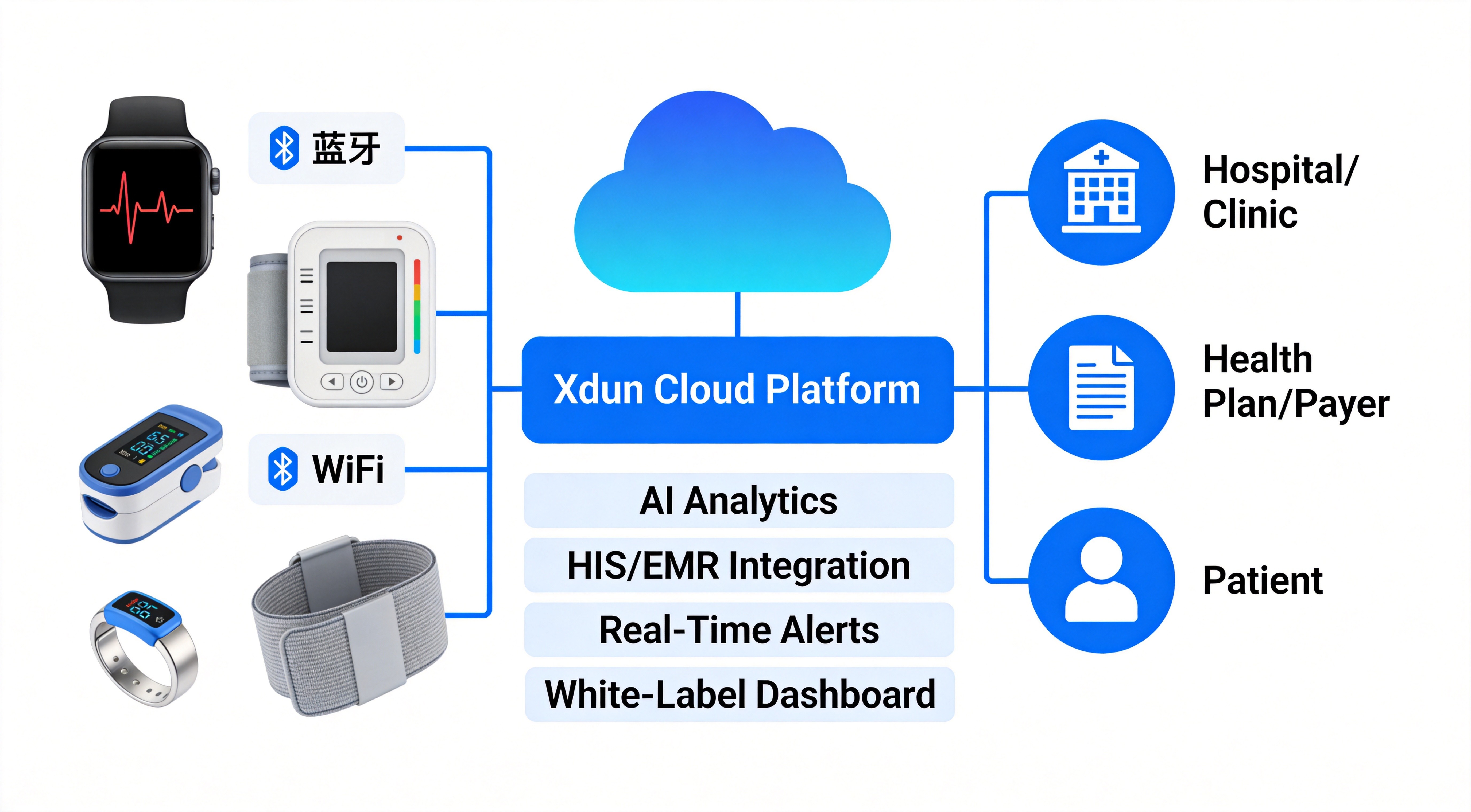 Realizing the economic benefits of RPM requires more than a collection of connected devices. It demands an integrated ecosystem—medical-grade hardware that captures reliable physiological data, coupled with a software platform that transforms raw readings into actionable clinical intelligence. This is the approach Xdun Medical has built over 15 years of medical wearable manufacturing, serving healthcare providers, hospitals, and brands across 30+ countries.
Medical-Grade RPM Devices
Xdun Medical’s RPM device portfolio spans the full range of chronic disease monitoring requirements:
- ECG Monitoring Watches and Bands: Medical-grade electrocardiogram capture with real-time arrhythmia detection, supporting cardiac rehabilitation and heart failure management programs. Devices support CE, FDA, and FCC certification pathways.
- Blood Pressure Monitoring Watches: Air-pump-based oscillometric blood pressure measurement integrated into wearable form factors, enabling continuous hypertension management without traditional cuff-based devices.
- Pulse Oximeters: Clinical-grade SpO2 monitoring for respiratory disease management, sleep apnea detection, and post-discharge surveillance of COPD and asthma patients.
- Smart Rings: Continuous HRV, sleep quality, and stress monitoring for holistic chronic disease management, with 24/7 wearability and extended battery life.
- Heart Rate Chest Straps and Arm Bands: Professional-grade heart rate monitoring with ANT+/Bluetooth connectivity for cardiac rehabilitation and exercise-based chronic disease interventions.
Xdun Cloud Platform: The Intelligence Layer
The Xdun Cloud Platform is the central nervous system of the RPM ecosystem—a HIPAA/GDPR-compliant, white-label-ready platform that aggregates data from all connected devices and transforms it into clinical workflows:
- AI Health Engine: Automated risk stratification, trend analysis, and early-warning alerts that prioritize patients for clinical intervention based on configurable thresholds.
- HIS/EMR Integration: Seamless data exchange with hospital information systems and electronic medical records via API, enabling bidirectional data flow and eliminating manual data entry.
- Real-Time Alerts & Reports: Customizable alerting logic that routes notifications to the appropriate care team member, with comprehensive reporting for quality metrics, reimbursement documentation, and population health analytics.
- White-Label Customization: Full branding flexibility for healthcare providers, hospital groups, and health technology companies seeking to deploy RPM under their own brand identity.
OEM/ODM Manufacturing: Scale Without Compromise
With a manufacturing capacity of 50,000+ units per day and 15+ years of experience serving global healthcare markets, Xdun Medical provides OEM and ODM partnerships that enable healthcare organizations to deploy RPM at population scale. The company’s certification support framework assists clients through CE, FDA, FCC, RoHS, and BIS certification processes—ensuring devices meet the regulatory requirements of target markets without the delays and complexity that often derail RPM program launches.
Implementation Economics: What Makes RPM Programs Financially Viable
The difference between an RPM pilot that succeeds and one that fails is rarely the technology. It is operations. The 2026 CMS rule changes designed around partial adherence acknowledge this reality: the old 16-day threshold was a cliff that made the economics of RPM unsustainable for programs with anything less than perfect patient engagement. The new 2-to-15-day codes (CPT 99445 and 99470) recognize that partial adherence is the normal case, and they ensure that clinical value—and revenue—is captured even when patients don’t achieve perfect compliance.
Key operational factors that determine RPM program ROI include:
- Device reliability and ease of use: Devices that require complex setup, frequent charging, or manual data transmission consistently produce low adherence rates. Xdun Medical’s wearables are designed for intuitive, low-burden daily use—critical for maintaining the data streams that drive both clinical value and billable services.
- Automated data pipelines: Manual data review is the enemy of RPM scalability. The Xdun Cloud Platform automates data ingestion, validation, and preliminary analysis, allowing clinical staff to focus on high-risk patients rather than routine data processing.
- Billing engine integration: Programs that track patient monitoring days, clinical staff time, and interaction documentation in a billing-ready format capture significantly more revenue than those relying on manual reconciliation. The platform’s built-in tracking ensures eligible services are consistently identified and documented.
- Patient selection and stratification: The highest ROI is achieved by targeting patients with the greatest comorbidity burden and highest predicted utilization. Research consistently shows that RPM benefits are concentrated in high-risk populations, with NNT values as low as 11 in the most medically complex patients.
The Global RPM Market: Growth Trajectory
The economic momentum behind RPM is reflected in market projections. Industry analysts estimate the global RPM market at approximately $22 billion in 2024, with projections reaching $110.7 billion by 2033—a compound annual growth rate (CAGR) of approximately 19.8%. The U.S. market alone was estimated at $14.3 billion in 2024 and is expected to exceed $18 billion by 2026. Approximately 71 million Americans are projected to use some form of RPM service by 2025, and roughly 46% of U.S. hospitals already offer some form of remote monitoring.
This growth is being fueled by converging forces: an aging population with increasing chronic disease prevalence, expanding reimbursement coverage from CMS and commercial payers, proven clinical and economic outcomes, and the extension of the Acute Hospital Care at Home waiver through September 2030—which provides a five-year regulatory runway for hospital-at-home programs that depend on continuous remote monitoring infrastructure.
Conclusion: The RPM ROI Imperative
The economic case for Remote Patient Monitoring has moved from speculative to settled. Across disease states, care settings, and stakeholder perspectives, the evidence consistently demonstrates that RPM reduces total cost of care, prevents avoidable utilization, and generates measurable ROI. The iCARE study’s 57% total cost reduction. The Mayo Clinic’s 40% readmission decline. The 92% cost savings demonstrated by patientMpower in the UK. The $3.15 million per-1,000-patient annual savings from oncology RPM. These are not marginal improvements—they are structural transformations in the economics of chronic disease management.
For healthcare organizations evaluating RPM investment, the question is no longer whether the economics work. The question is whether their device and platform infrastructure is robust enough to deliver the outcomes that the evidence promises. This is where Xdun Medical’s integrated approach—medical-grade devices, an intelligent cloud platform, and global-scale manufacturing—provides a differentiated foundation for RPM programs that are clinically effective, operationally scalable, and financially sustainable.
Take the Next Step
Whether you are a hospital system building an enterprise RPM program, a health plan seeking to improve member outcomes and reduce medical costs, or a healthcare brand developing your own remote monitoring solution, Xdun Medical provides the device and platform infrastructure to make your RPM economics work—at scale.
Contact our RPM solutions team to discuss your program requirements:
📧 Email: jine@xdunmedical.com
📱 Phone / WhatsApp: +86-13544254314
🌐 Website: xdunmedical.com
References: CDC Health and Economic Costs of Chronic Diseases; WHO Noncommunicable Diseases Fact Sheet (2025); American Diabetes Association Economic Costs of Diabetes Report (2023); Intermountain Health / CareCentra iCARE Study (ATS 2026); JAMA Network Open; patientMpower / University of Manchester Research; Canopy / ASCO 2026 Oral Abstract; Mayo Clinic AI Remote Monitoring Program; CMS Physician Fee Schedule 2026; li.solutions RPM 2026 Analysis; Grand View Research RPM Market Report; PMC Peer-Reviewed RPM Utilization Analysis.