Remote Patient Monitoring Implementation Guide: From Pilot Program to Enterprise-Wide Deployment
Implementing a remote patient monitoring (RPM) program is one of the most consequential decisions a healthcare organization can make. Done right, it reduces readmissions, improves chronic disease outcomes, and generates sustainable revenue. Done poorly, it drains clinical resources, frustrates patients, and leaves expensive devices collecting dust in a supply closet. For healthcare systems developing custom hardware, see our comprehensive guide on RPM wearable OEM market analysis and supplier selection.
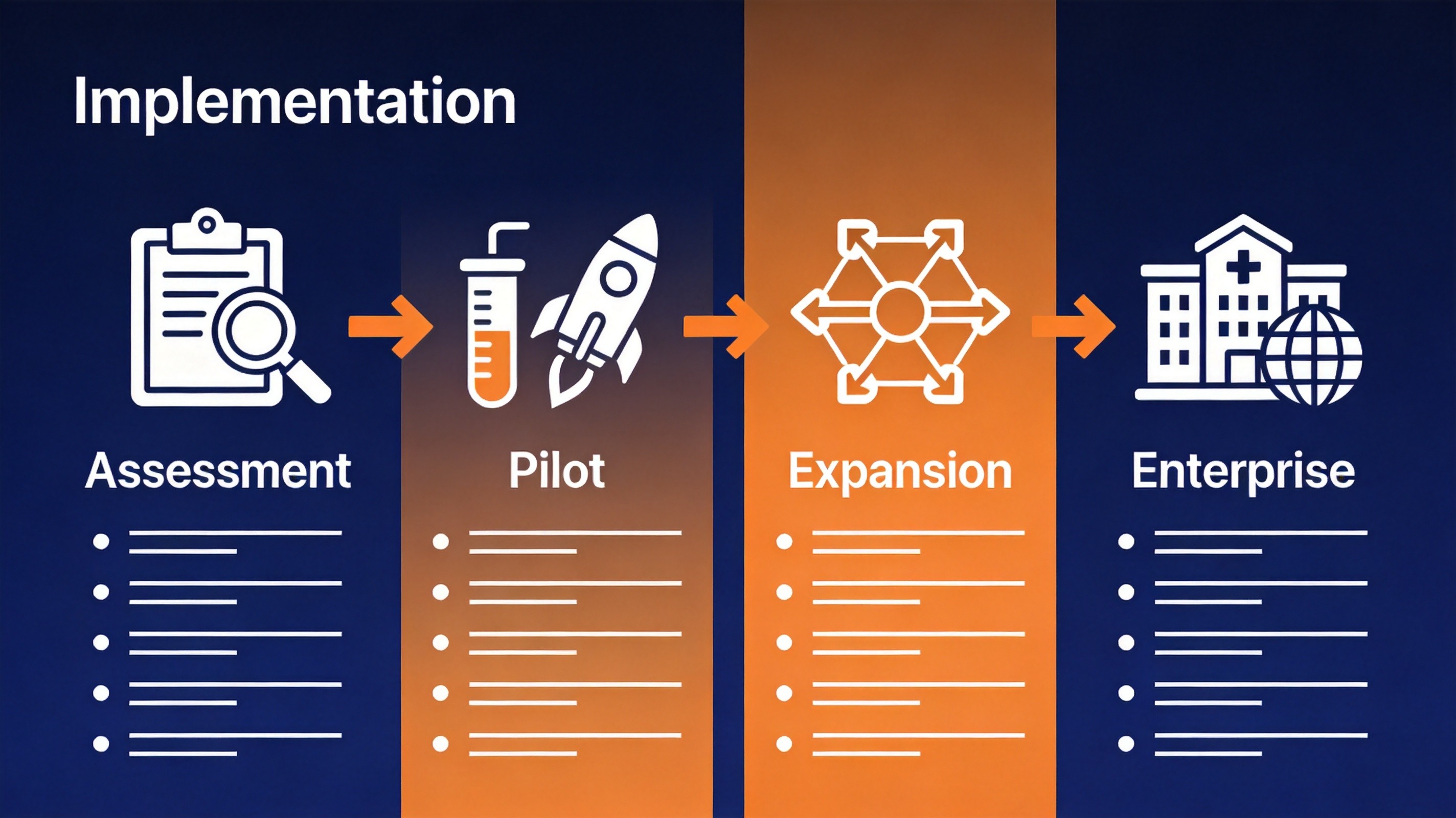
The difference between those two outcomes almost always comes down to implementation methodology. This guide walks through a structured four-phase roadmap—Assessment, Pilot, Expansion, and Enterprise Deployment—that hospital operations directors, RPM program managers, and health IT teams can adapt to their own organizations. Along the way, we address the practical realities of device logistics, patient onboarding, EHR integration, and the change management that determines whether your clinical staff embraces or abandons the program. For deeper analysis of the financial planning required to sustain this roadmap, see our guide on building a 3/5/7-year TCO model for hospital and RPM programs.
Phase 1: Assessment — Building the Foundation Before You Buy a Single Device
The most expensive mistake in RPM is purchasing hardware before defining the clinical and operational requirements. Assessment is not a one-week checkbox exercise. It is a rigorous evaluation that determines whether your RPM investment will generate measurable clinical and financial returns.
Define Your Target Patient Population
Start with the question: Which patient cohort, if monitored more closely, would produce the greatest reduction in avoidable utilization? For most organizations, the answer falls into one of four categories:
- Heart failure patients — daily weight, blood pressure, and SpO₂ monitoring can detect fluid retention 5–7 days before a decompensation event
- Post-surgical discharges — vital sign tracking during the first 30 days after orthopedic, cardiac, or bariatric procedures
- Hypertension management — regular BP readings enable medication titration without repeated office visits
- Diabetes with comorbidities — continuous glucose data combined with activity tracking provides a fuller picture than HbA1c alone
Be specific. “Chronic disease patients” is not a cohort. “Medicare Advantage heart failure patients with at least one hospitalization in the past 12 months” is a cohort you can build a business case around.
Map Your Current-State Workflow
Document exactly how your clinical team currently manages the target population. Who reviews vital signs? How often? What triggers an escalation? Where does the data live? This current-state map becomes the baseline against which you measure RPM’s impact—and it often reveals gaps that RPM alone cannot fix.
Stakeholder Alignment
RPM touches IT, nursing, physician leadership, revenue cycle, supply chain, and patient experience. Assemble a steering committee with decision-making authority from each function. The single most reliable predictor of RPM success is whether the Chief Nursing Officer and the CMIO are jointly accountable for the program.
Phase 2: Pilot — Prove Value with a Controlled Cohort
The pilot phase is where theory meets reality. Its purpose is not to demonstrate perfection—it is to surface every operational friction point while the blast radius is small.
Pilot Design Principles
- Limit to one clinical unit or one physician group — 30 to 50 patients is usually the sweet spot. Enough to generate statistically meaningful data, small enough to manage intensively.
- Run for a minimum of 90 days — the first 30 days are onboarding chaos. The second 30 days reveal workflow patterns. The third 30 days show whether the program is sustainable.
- Designate a pilot champion — a nurse or PA who owns the daily monitoring dashboard, triages alerts, and serves as the single point of contact for patients and vendors.
Device Selection and Logistics Management
Device selection during the pilot should answer three questions: Does the device collect clinically actionable data? Will patients actually use it? Can our IT team support it at scale?
For most RPM programs, the ideal device portfolio includes cellular-connected blood pressure monitors, pulse oximeters, weight scales, and wearable continuous monitors—ideally from a single vendor to simplify procurement, training, and support. Devices that require patients to pair with a smartphone app introduce a significant adherence barrier. Cellular-enabled devices that transmit data automatically eliminate that friction.
Logistics deserve as much attention as clinical protocols. Establish a clear process for device kitting, shipping, tracking, retrieval, and sanitation. One hospital system we worked with discovered that 22% of their pilot devices were never returned after patient discharge—a logistics failure, not a clinical one. Xdun Medical addresses this challenge through its integrated RPM solution, which combines medical-grade wearable devices with a cloud platform that tracks device status, battery levels, and connectivity in real time—reducing the operational burden on clinical teams.
Patient Enrollment and Training Strategy
Patient enrollment is the moment of truth for RPM adherence. The most effective approach is a structured bedside or discharge-day enrollment session that takes no more than 15 minutes:
- Show, don’t tell — hand the patient the device and have them take a reading during the session
- Explain the “why” — patients who understand that their data is being reviewed by a real clinician are 3× more likely to transmit readings daily
- Provide a single-page visual guide — not a 40-page manual. One laminated card with device photos and 3-step instructions
- Schedule the first follow-up call within 48 hours — this call resolves early technical issues and establishes the monitoring habit
Phase 3: Expansion — Scale What Works, Fix What Doesn’t
Expansion is not about doing the pilot bigger. It is about industrializing the processes that worked in a controlled environment so they function reliably across multiple units, multiple physician groups, and potentially multiple facilities.
Data Integration and Clinical Workflow
During the pilot, it is acceptable for a nurse to log into a separate vendor dashboard to review patient data. During expansion, that workflow becomes unsustainable. The RPM data stream must integrate into the EHR—ideally as discrete data points that flow into the patient’s vitals flowsheet, not as a PDF attachment buried in the media tab.
Key integration requirements at this stage:
- HL7 FHIR or direct EHR API integration for automated data ingestion
- Alert routing rules that distinguish between “review within 24 hours” and “call the patient now”
- Bidirectional data flow — the RPM platform should pull the patient’s problem list and medications from the EHR to contextualize readings
- Automated billing code capture for CPT 99454, 99457, and 99458 to ensure services are reimbursed
Xdun Medical’s cloud platform is designed with this integration layer in mind. It supports FHIR-based data exchange and provides white-label dashboards that clinical teams can configure to match their existing triage workflows, rather than forcing adoption of an unfamiliar interface.
Clinical Team Change Management
If there is one factor that kills RPM programs at the expansion stage, it is clinical staff resistance. Nurses and physicians did not enter medicine to manage dashboards. They will embrace RPM only when it demonstrably makes their work easier, not harder.
Effective change management tactics include:
- Protect dedicated RPM time — block 2–4 hours per day on RPM nurses’ schedules. Do not expect them to monitor 200 patients between bedside rounds.
- Share early wins publicly — the first time an RPM alert catches a heart failure decompensation 5 days before the patient would have called 911, tell that story at every staff meeting.
- Involve physicians in alert threshold design — when doctors help define what triggers an alert, they trust the system. When thresholds are imposed by IT, they ignore them.
- Track and publish clinician satisfaction metrics alongside patient outcomes. A program that burns out nurses is not sustainable.
Phase 4: Enterprise-Wide Deployment — RPM as Standard of Care
Enterprise deployment means RPM is no longer a “program”—it is a standard care pathway offered to every eligible patient, supported by standardized protocols, dedicated staffing, and executive-level accountability.
Centralized Monitoring Operations
At enterprise scale, most organizations move to a centralized monitoring model: a dedicated RPM command center staffed by nurses and medical assistants who triage alerts across the entire system. This model achieves economies of scale, standardizes escalation protocols, and frees unit-based nurses to focus on in-person care.
Sustainable Vendor Partnerships
Enterprise RPM demands a vendor relationship that goes beyond transactional device purchasing. You need a partner that provides ongoing firmware updates, device fleet management, clinical training refreshers, and responsive technical support. Organizations that treat their RPM vendor as a strategic partner—rather than a box-shipper—consistently outperform those that don’t.
For healthcare organizations looking for a turnkey RPM solution, Xdun Medical offers a comprehensive approach: medical-grade wearable devices (ECG watches, blood pressure monitors, pulse oximeters, smart rings), a HIPAA-compliant cloud platform with real-time dashboards, and implementation training that covers device deployment, patient onboarding, and clinical workflow integration. As a prime example of this hardware, the 4G ECG monitoring watch utilizes medical-grade sensors to deliver continuous cardiac data directly to the cloud platform. With 15+ years of OEM/ODM experience serving hospitals and healthcare providers across 30+ countries, Xdun Medical supports the full RPM lifecycle—from device selection to enterprise-scale monitoring.
Measuring Success: The Metrics That Matter
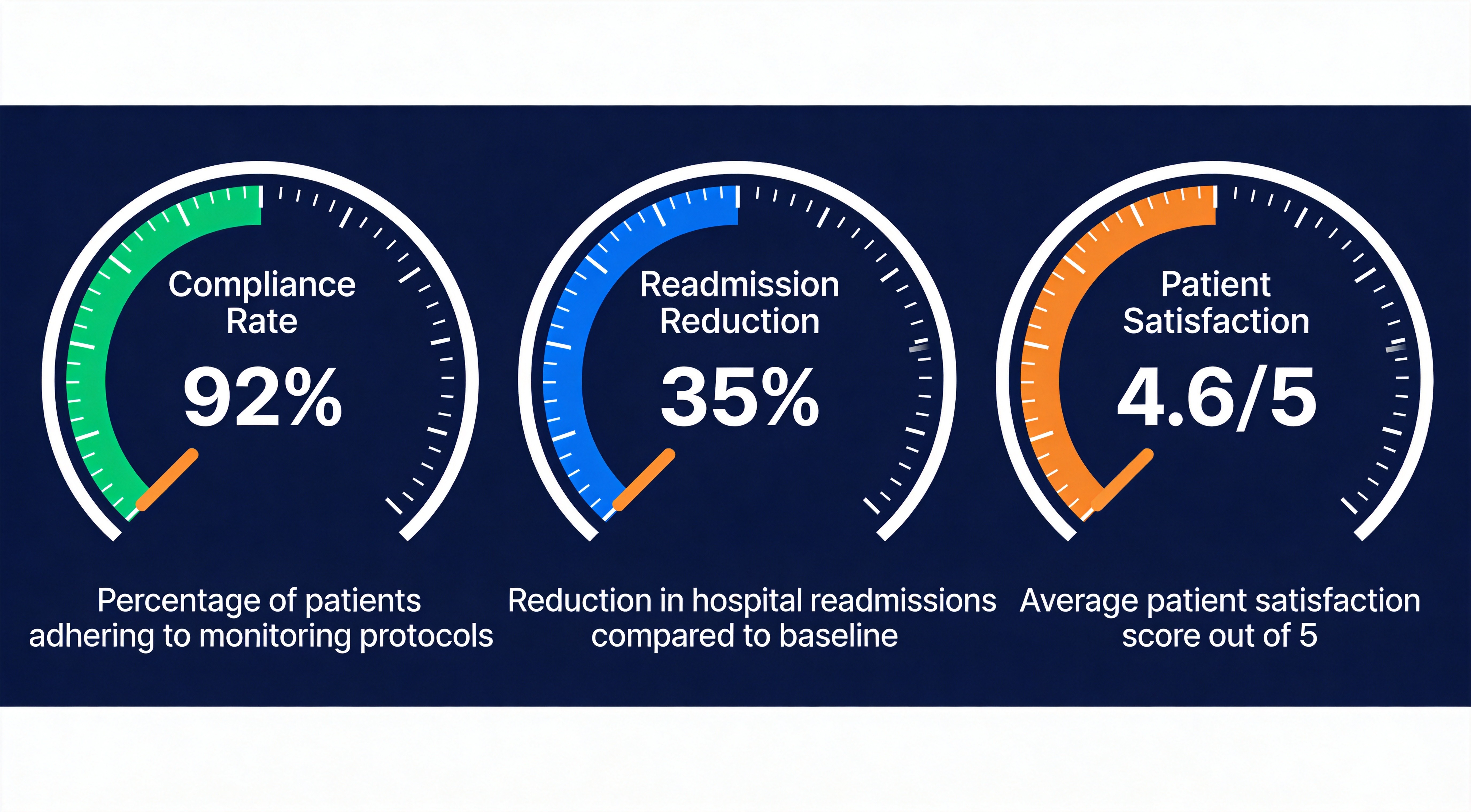
If you cannot measure it, you cannot improve it—and you certainly cannot justify the next budget cycle. RPM programs should track three categories of metrics from day one:
Clinical Outcomes
- 30-day all-cause readmission rate — the gold standard metric. Target: ≥20% reduction vs. baseline for the enrolled population
- Emergency department visit rate — particularly for ambulatory-care-sensitive conditions
- Time to clinical intervention — how many hours elapse between an abnormal reading and a clinician response
Operational Metrics
- Patient adherence rate — defined as the percentage of enrolled patients transmitting data on ≥80% of eligible days. Below 60%, the program is not generating reliable clinical data
- Device utilization rate — how many devices in inventory are actively assigned to patients vs. sitting on a shelf
- Alert-to-action ratio — what percentage of generated alerts result in a clinical action. If it is below 30%, your alert thresholds need recalibration
Experience Metrics
- Patient satisfaction (Net Promoter Score) — target: NPS ≥ 50 among RPM-enrolled patients
- Clinician satisfaction — measured quarterly. If clinicians rate the program below 7/10, investigate workflow burden before expanding further
- Patient net retention — what percentage of patients remain actively enrolled at 90 days and 180 days
Common Pitfalls and How to Avoid Them
After working with dozens of RPM implementations across health systems of varying sizes, several patterns emerge among programs that stall or fail:
- Buying devices before defining the workflow — the device is the easiest part. The workflow is the hard part. Start with the workflow.
- Underinvesting in patient onboarding — a rushed 5-minute discharge-day explanation guarantees a 40%+ dropout rate in the first two weeks. Patient education is a clinical intervention, not an administrative task.
- Treating RPM as a technology project — RPM is a clinical care delivery model enabled by technology, not a technology project with clinical implications. The program owner should be clinical operations, not IT.
- Ignoring the data-to-decision pipeline — collecting data that nobody reviews is worse than collecting nothing. It creates liability without creating value.
- Failing to plan for device lifecycle management — batteries degrade, firmware needs updating, and devices get lost. Build a 15% annual device replacement budget into your RPM financial model.
Getting Started: Your First 30 Days
If you are at the beginning of your RPM journey, here is a concrete 30-day action plan:
- Week 1: Identify your target patient cohort and calculate the baseline readmission rate for that population over the past 12 months
- Week 2: Assemble your steering committee and map the current-state clinical workflow
- Week 3: Evaluate RPM technology vendors. Prioritize those offering integrated device + platform + training solutions over point-solution hardware vendors
- Week 4: Define your pilot scope (one unit, 30–50 patients, 90-day duration) and designate your pilot champion
The RPM market is maturing rapidly. Organizations that build implementation competency now—developing the operational muscle to deploy, manage, and scale remote monitoring—will be positioned to deliver better outcomes at lower cost as value-based care models continue to expand. The window for building that competency is open. The question is whether your organization walks through it with a structured plan or stumbles through it with a box of devices and a hope.
Partner with Xdun Medical for Your RPM Implementation
Xdun Medical provides a complete RPM solution for hospitals, clinics, and healthcare organizations: medical-grade wearable devices (ECG smart watches, blood pressure monitors, pulse oximeters, smart rings, and health bands), a HIPAA-compliant cloud platform with real-time clinical dashboards, and comprehensive implementation training to support your team at every stage—from pilot design to enterprise-scale deployment.
With 15+ years of OEM/ODM expertise, 50,000+ units monthly production capacity, and partnerships with healthcare providers across 30+ countries, Xdun Medical delivers the hardware, software, and support infrastructure that makes RPM programs clinically effective and operationally sustainable.
Contact our RPM solutions team:
📧 Email: jine@xdunmedical.com
📞 Phone/WhatsApp: +86-13544254314
Let’s discuss how Xdun Medical can support your RPM program—from device selection to enterprise deployment.