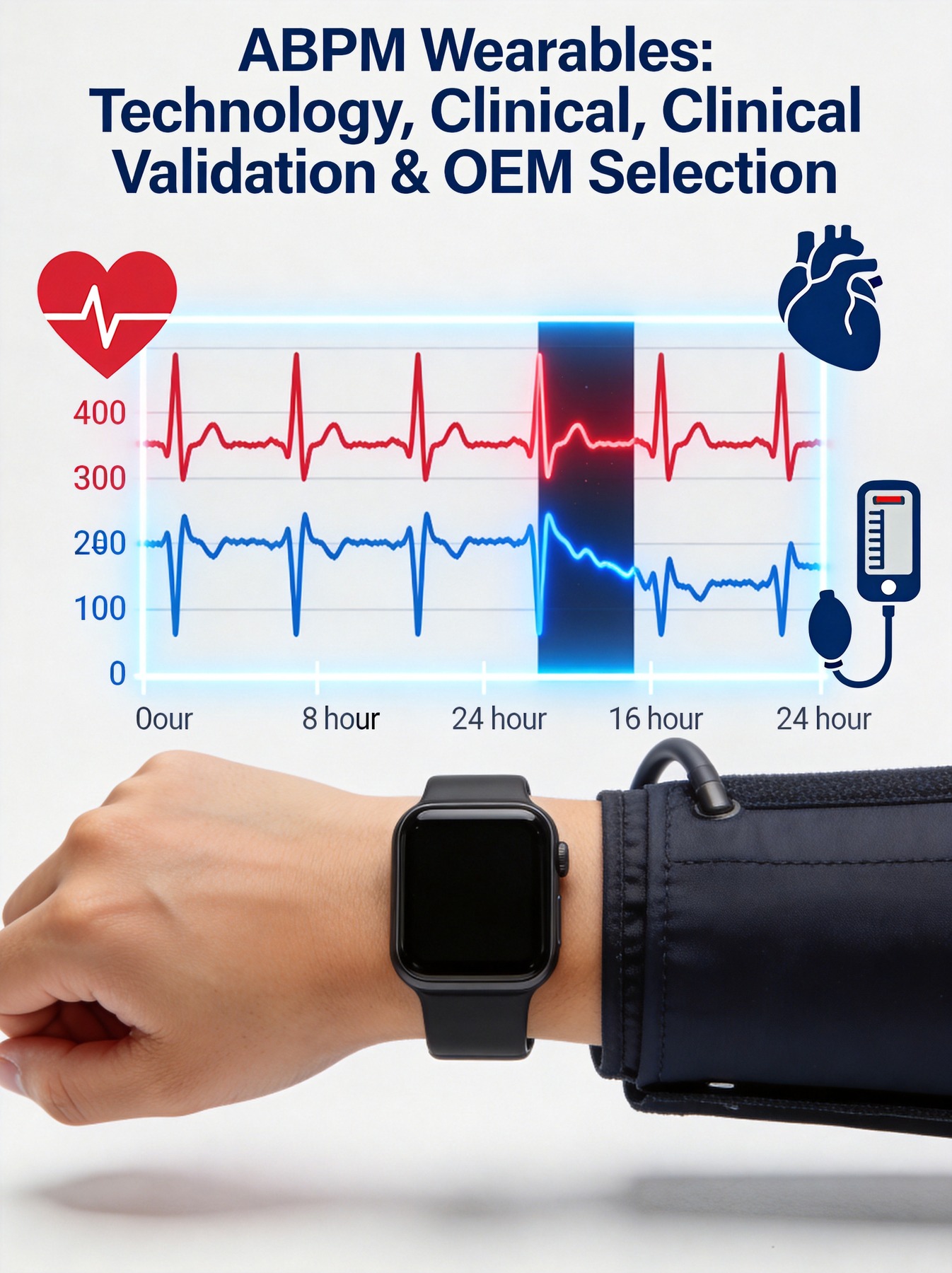
Ambulatory Blood Pressure Monitoring Wearables: Technology, Clinical Validation, and OEM Selection
The Global Hypertension Burden: Why ABPM Matters Now
Hypertension remains the single largest modifiable risk factor for cardiovascular disease worldwide. According to the World Health Organization, an estimated 1.28 billion adults aged 30–79 live with hypertension—roughly one in every three adults on the planet. More troubling still: nearly 46% of those affected are unaware of their condition, and among those receiving treatment, only 21% achieve adequate blood pressure control. The disease contributes to approximately 10 million deaths annually, accounting for nearly one-fifth of all global mortality.
These numbers are not static. The global hypertension management market surpassed $42 billion in 2025, driven by aging populations, sedentary lifestyles, and the accelerating penetration of remote monitoring technologies. Within this landscape, blood pressure monitoring devices—projected to grow from $2.63 billion in 2025 to $9.84 billion by 2035 at a 14.1% CAGR—represent one of the fastest-expanding segments in medical technology. Wearable ambulatory blood pressure monitors, in particular, saw a 23% year-over-year increase in global shipments, signaling a structural shift in how hypertension is diagnosed, managed, and reimbursed.
For B2B buyers—hypertension management platforms, cardiology clinics, RPM (Remote Patient Monitoring) service providers, and medical device distributors—the question is no longer whether to integrate ABPM wearables into their product portfolio. The question is: which technology, validated to which standard, and sourced from which OEM partner?
Three Blood Pressure Measurement Modalities: A Clinical Comparison
To understand where ABPM wearables fit, it is essential to distinguish the three primary blood pressure measurement modalities used in clinical practice.
Office Blood Pressure Measurement (OBPM)
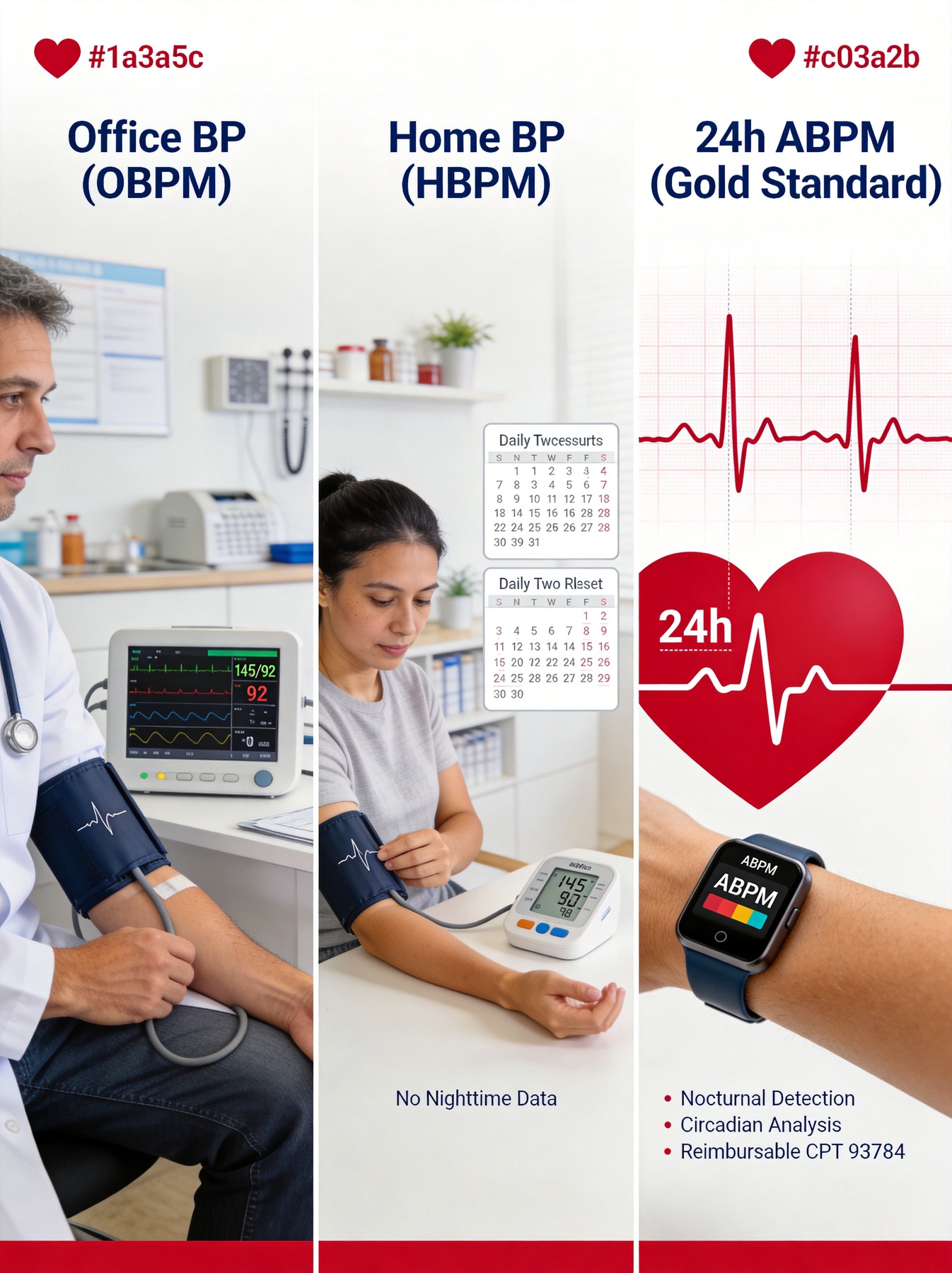
OBPM, performed with a manual sphygmomanometer or automated oscillometric device in a clinical setting, has been the cornerstone of hypertension diagnosis for over a century. It provides a single snapshot of blood pressure at a specific moment. Its limitations, however, are well documented: white-coat hypertension affects 15–30% of patients whose readings spike in clinical environments, while masked hypertension—where office readings appear normal despite elevated ambulatory pressures—goes undetected in an estimated 10–17% of the population. Neither condition can be reliably diagnosed without out-of-office monitoring. To address this critical need for continuous out-of-office tracking, OEMs can integrate advanced solutions such as the 4G air pump blood pressure smart watch, which utilizes medical-grade sensors and oscillometric measurement to support accurate ambulatory data collection.
Home Blood Pressure Monitoring (HBPM)
HBPM addresses some of OBPM’s shortcomings by enabling patients to take readings in their own environment, typically with an upper-arm oscillometric device. The 2024 ESC/ESH Guidelines for the management of arterial hypertension recommend HBPM as a valuable complement to office readings, particularly for long-term treatment monitoring. However, HBPM cannot capture nocturnal blood pressure patterns, early-morning surges, or the full circadian variability that carries independent prognostic value. It also depends heavily on patient adherence and correct technique—variables that introduce inconsistency in real-world deployments.
24-Hour Ambulatory Blood Pressure Monitoring (ABPM)
ABPM is the gold standard for out-of-office blood pressure assessment. A wearable device automatically inflates a cuff at programmed intervals—typically every 15–30 minutes during daytime and every 30–60 minutes during sleep—over a full 24-hour cycle. The resulting dataset reveals not just average pressures but the entire circadian architecture of a patient’s blood pressure, including:
- 24-hour mean BP (diagnostic threshold: ≥130/80 mmHg)
- Daytime mean BP (threshold: ≥135/85 mmHg)
- Nighttime mean BP (threshold: ≥120/70 mmHg)
- Nocturnal dipping status (normal: 10–20% decline; non-dipper: 0–10%; reverse dipper: nighttime > daytime)
- Morning surge amplitude (a recognized trigger for stroke and myocardial infarction)
- Blood pressure variability and load (percentage of readings exceeding threshold)
The American Heart Association and American College of Cardiology (AHA/ACC), in their 2025 updated guidelines, continue to emphasize ABPM as the preferred diagnostic modality for confirming hypertension, ruling out white-coat effect, and assessing treatment efficacy—particularly in patients with resistant hypertension, suspected nocturnal hypertension, or discordant office and home readings. The ESC/ESH similarly recommends ABPM as a Class I indication for hypertension diagnosis.
Oscillometric vs. PPG: The Technology Battle Shaping ABPM Wearables
Two fundamentally different sensing technologies compete for dominance in the wearable ABPM market. For OEM buyers, understanding their trade-offs is not academic—it is a procurement decision with direct clinical and commercial consequences.
Oscillometric Cuff-Based Technology
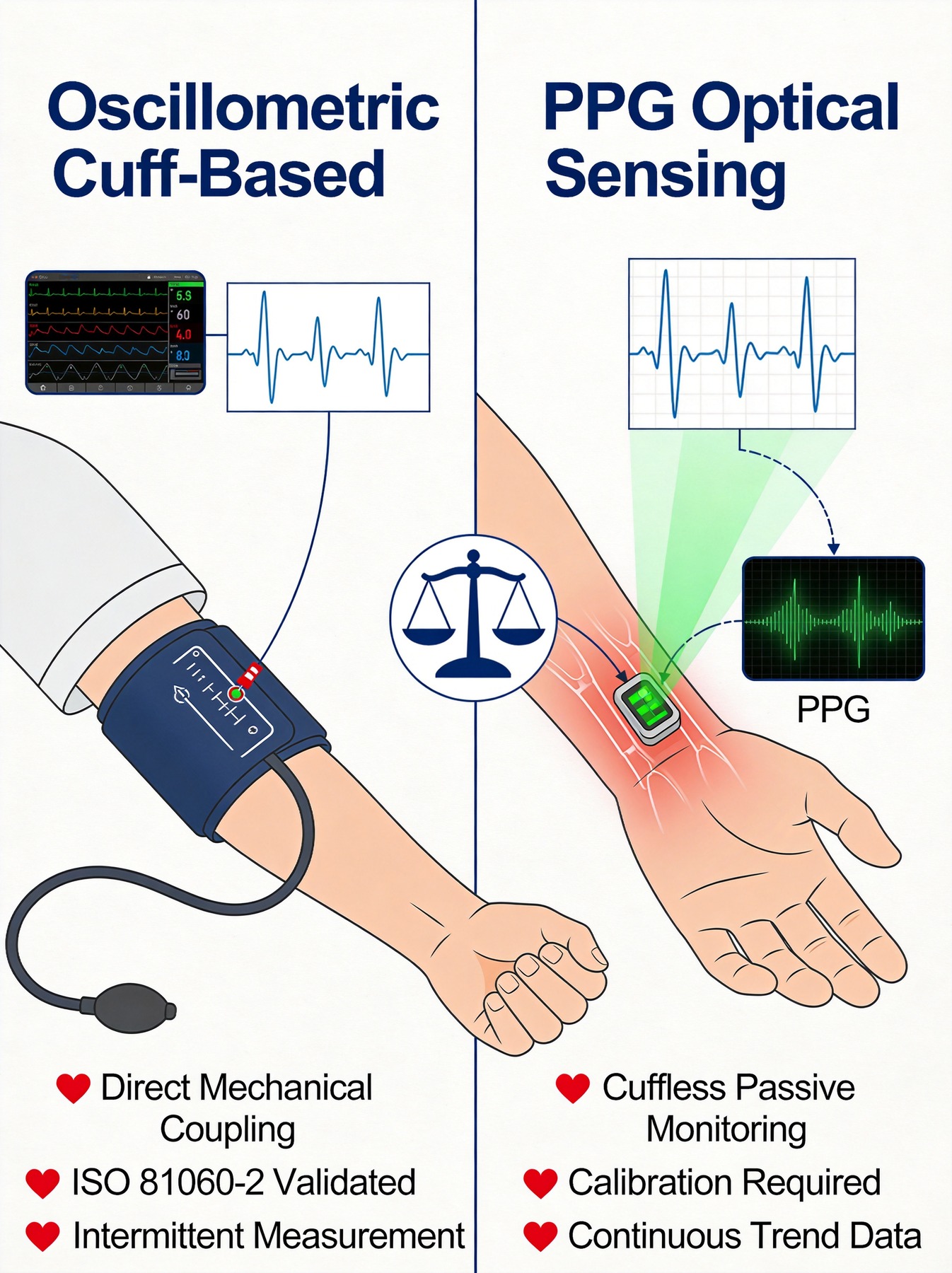
Oscillometry is the established workhorse of automated blood pressure measurement. The principle is elegant: an inflatable cuff compresses the brachial artery, and a pressure sensor detects the minute oscillations transmitted from the arterial wall to the cuff as blood pulses through the partially occluded vessel. The oscillation amplitude forms a characteristic envelope; the point of maximum oscillation corresponds to mean arterial pressure (MAP), from which systolic and diastolic pressures are algorithmically derived.
Strengths:
- Clinically validated against auscultatory reference across decades of research
- Direct mechanical coupling to arterial wall; relatively insensitive to skin tone, ambient light, and motion artifacts compared to optical methods
- Compatible with ISO 81060-2 validation protocols; widely accepted by regulatory bodies including FDA and CE-notified bodies
- Established reimbursement codes in the US (CPT 93784, 93786, 93788 for ABPM) and multiple EU markets
Limitations:
- Intermittent measurement only; no beat-to-beat continuous data
- Cuff inflation can disrupt sleep, though studies show the effect on overall sleep quality is modest
- Patient compliance can be affected by discomfort during repeated inflations
- Traditional ABPM form factors remain bulky; miniaturization into a wrist-worn device requires engineering innovation
The Xdun Medical Air-Pump Blood Pressure Smartwatch represents a notable advancement in miniaturized oscillometric technology. By integrating a micro air pump and inflatable wrist cuff directly into a smartwatch form factor, the device delivers clinical-grade oscillometric measurements without the traditional ABPM recorder and shoulder harness. This form factor dramatically improves patient compliance for 24-hour monitoring while maintaining the measurement principle that clinicians and regulators trust. For deeper analysis, see our technology guide comparing PPG estimation to air pump measurement for healthcare procurement. For product teams evaluating alternative form factors, see our detailed resource on smart ring blood pressure trend monitoring via PPG-based cuffless estimation and its clinical validation pathways.
PPG (Photoplethysmography) Optical Technology
PPG-based blood pressure estimation is a fundamentally different approach. An optical sensor—typically a green or infrared LED paired with a photodetector—illuminates the skin and measures the volumetric changes in the microvascular bed with each cardiac cycle. Blood pressure is not directly measured; rather, it is estimated from features extracted from the PPG waveform, often in combination with pulse transit time (PTT) derived from the time delay between the ECG R-wave and the PPG pulse arrival at a peripheral site.
Strengths:
- Fully cuffless, enabling continuous, passive monitoring without user intervention
- Excellent for trending and screening applications; unobtrusive enough for 24/7 wear
- Integrates naturally into consumer and clinical wearable form factors
- Rich waveform data supports additional analytics: heart rate variability, arterial stiffness indices, and sleep-stage correlation
Limitations:
- Blood pressure values are estimated, not measured—every PPG-based BP algorithm requires periodic calibration against a reference device
- Accuracy degrades significantly with motion artifact, poor perfusion, dark skin pigmentation, and ambient light interference
- A 2025 systematic review and meta-analysis published in *Anaesthesia* found that while PPG-based continuous non-invasive BP technologies met AAMI bias criteria for MAP, SBP, and DBP, standard deviations remained wide, and limits of agreement were concerning for clinical interchangeability
- Regulatory pathway is less established; most PPG-based BP claims are positioned as “screening” or “wellness” rather than diagnostic
- No current ISO standard specifically addresses cuffless BP devices (though ISO 81060-3 is under development)
Xdun Medical’s PPG Blood Pressure Solution addresses several of these limitations through multi-wavelength sensor architecture, accelerometer-based motion artifact compensation, and proprietary machine-learning calibration models. The solution is designed for integration into RPM platforms that require continuous trend data to complement intermittent cuff-based reference measurements—a hybrid approach increasingly favored by clinical informatics teams.
The Pragmatic B2B View: Hybrid Architectures Win
The future of clinical ABPM wearables is not oscillometric versus PPG. It is oscillometric and PPG, deployed in a tiered architecture:
- Diagnostic tier: Oscillometric cuff-based measurements at programmed intervals, providing the regulatory-grade data points required for clinical decision-making and reimbursement
- Monitoring tier: Continuous PPG between cuff cycles, capturing trend data, detecting acute deviations, and correlating blood pressure with activity, sleep, and medication timing
For OEM buyers, this means evaluating potential manufacturing partners on their ability to deliver both technologies—not just one. A supplier that can provide an integrated air-pump oscillometric module alongside a validated PPG sensor pipeline offers a materially shorter time-to-market than assembling components from separate vendors.
Clinical Validation: ISO 81060-2 and the Regulatory Landscape
For any blood pressure monitoring device intended for clinical use, ISO 81060-2 is the non-negotiable benchmark. This international standard, developed jointly by ISO and IEC in collaboration with AAMI, specifies the requirements for clinical investigation of automated non-invasive sphygmomanometers.
The standard mandates a clinical validation study comparing the device under test against a reference standard (auscultatory measurement by two trained observers using a calibrated mercury or aneroid sphygmomanometer). Key requirements include:
- Subject population: Minimum 85 subjects with specified distributions across blood pressure ranges (systolic: at least 10% ≤100 mmHg, 10% ≥160 mmHg; diastolic: at least 10% ≤60 mmHg, 10% ≥100 mmHg) and arm circumference categories
- Accuracy criteria: Mean difference (bias) ≤5.0 mmHg with standard deviation ≤8.0 mmHg for both systolic and diastolic pressures—matching the AAMI/ESH/ISO Universal Standard
- Data integrity: A minimum of 255 valid paired readings across the subject pool
For B2B buyers, the key distinction is between devices that have completed ISO 81060-2 clinical validation versus those that merely claim “clinical accuracy” based on internal bench testing. The difference carries regulatory weight: ISO 81060-2 compliance is explicitly referenced in FDA 510(k) clearance pathways, EU Medical Device Regulation (MDR) technical documentation requirements, and China NMPA registration submissions.
Equally important is CE marking under MDR 2017/745, which replaced the Medical Device Directive (MDD) with substantially more rigorous clinical evidence requirements. For RPM platforms deploying ABPM wearables across European markets, MDR-compliant devices are not optional—they are a prerequisite for reimbursement under national health systems.
When evaluating OEM partners, buyers should request documentation of:
- The ISO 81060-2 clinical investigation report, including the name of the independent investigator and institution
- The notified body’s certification scope for the relevant device classification
- Post-market clinical follow-up (PMCF) plans, as required under MDR
Xdun Medical supports its OEM partners through the full validation lifecycle, providing technical documentation packages, design history files, and engineering support aligned with ISO 81060-2, MDR, and FDA 510(k) requirements.
Nocturnal Hypertension: The Silent Risk That ABPM Uniquely Detects
One of the most compelling clinical arguments for ABPM—and the feature that neither OBPM nor HBPM can replicate—is the detection of nocturnal hypertension and abnormal circadian blood pressure patterns.
In a healthy individual, blood pressure follows a predictable diurnal rhythm: it rises sharply upon waking (the morning surge), remains elevated during daytime activity, and declines by 10–20% during sleep. This normal pattern is termed “dipping.” When nocturnal blood pressure fails to decline by at least 10%, the patient is classified as a non-dipper—a phenotype associated with a significantly elevated risk of target organ damage, including left ventricular hypertrophy, microalbuminuria, and silent cerebral infarction.
The clinical implications are stark. Multiple large-scale cohort studies have demonstrated that nocturnal blood pressure is a stronger predictor of cardiovascular mortality than daytime or office blood pressure. In the Dublin Outcome Study, each 10 mmHg increase in nighttime systolic pressure was associated with a 21% increase in cardiovascular mortality, independent of daytime pressures. The PAMELA study similarly found that nighttime blood pressure carried greater prognostic weight than either office or home readings.
The 2024 Chinese Hypertension Prevention and Treatment Guidelines explicitly list ABPM as the preferred diagnostic method for hypertension, specifically citing its unique ability to capture nocturnal patterns, white-coat hypertension, and masked hypertension. The guidelines recommend ABPM as a mandatory assessment for patients with resistant hypertension, suspected nocturnal hypertension, episodic symptoms, and special populations including pregnant women and elderly patients with suspected postural or postprandial hypotension.
For B2B buyers building hypertension management platforms, the message is clear: any solution that claims to provide comprehensive blood pressure management but lacks ABPM capability is leaving the most clinically valuable data—nighttime pressures—on the table.
OEM Selection: What to Look for in an ABPM Wearable Manufacturing Partner
Selecting the right OEM partner for ABPM wearables is a decision that shapes not just unit economics but clinical credibility, regulatory pathway, and time-to-market. Based on the technical and regulatory landscape outlined above, here are the evaluation criteria that matter most:
1. Dual-Technology Capability
Does the manufacturer offer both oscillometric (air-pump cuff) and PPG-based solutions? A supplier that can provide both technologies—ideally in an integrated module—reduces integration complexity and accelerates development timelines.
2. Validation-Ready Engineering
Beyond the sensor itself, does the OEM provide the documentation infrastructure required for regulatory submission? This includes design history files, risk management files per ISO 14971, software life cycle documentation per IEC 62304, and clinical investigation protocols aligned with ISO 81060-2. A manufacturer that treats validation as an afterthought will cost you months of regulatory delay.
3. Form Factor and Patient Compliance
ABPM clinical utility depends on patient compliance. A device that patients refuse to wear for 24 hours generates no data. Evaluate the wearable’s weight, cuff design, battery life, and user interface from the patient’s perspective—not just the engineer’s. Wrist-worn form factors with integrated air pumps represent a significant compliance advantage over traditional upper-arm ABPM recorders.
4. Data Infrastructure
The device is only half the product. The other half is the data pipeline: raw signal access, API availability, cloud integration options, and HL7/FHIR compatibility for EHR integration. RPM platforms, in particular, should evaluate whether the OEM’s data architecture supports the throughput and interoperability their clinical workflows demand.
5. Manufacturing Scale and Quality Systems
ISO 13485 certification is table stakes. Beyond that, evaluate the manufacturer’s production capacity, supply chain redundancy, component traceability, and quality control processes. A beautiful prototype that cannot be manufactured at scale with consistent quality is a liability, not an asset.
6. Customization Depth
Can the OEM customize the industrial design, firmware behavior, measurement algorithms, and packaging to align with your brand and clinical protocols? Off-the-shelf ODM products may be faster to market, but they limit differentiation. A partner that offers deep customization enables you to build a product—not just resell one.
Strategic Implications for B2B Buyers
The ABPM wearable market is at an inflection point. Three converging trends make this a uniquely opportune moment for platform builders and distributors:
Regulatory tailwinds: The US Centers for Medicare & Medicaid Services (CMS) expanded remote patient monitoring reimbursement in late 2025, covering additional blood pressure management digital therapeutic use cases. Similar expansions are underway in Germany (DiGA), France (PECAN), and Japan.
Technology maturity: Miniaturized air-pump modules, multi-wavelength PPG sensors, and on-device AI algorithms have reached a level of reliability that makes clinical-grade wearable ABPM commercially viable—not just a research curiosity.
Clinical consensus: The world’s major hypertension societies—AHA/ACC, ESC/ESH, and the Chinese Hypertension League—have converged on ABPM as the preferred diagnostic modality. This consensus translates directly into clinical guideline recommendations, which in turn drive procurement decisions at hospitals, clinics, and health systems.
For hypertension management platforms, the strategic imperative is to own the diagnostic data layer. ABPM is the highest-resolution blood pressure dataset available, and it is the foundation upon which medication titration algorithms, risk stratification models, and outcome-based reimbursement contracts are built.
For cardiology clinics and RPM providers, the imperative is differentiation. The difference between a generic RPM program and a clinically credible one increasingly comes down to the quality of the blood pressure data. ABPM-grade measurements—with nocturnal coverage, circadian analysis, and ISO 81060-2 validation—provide the clinical depth that justifies premium reimbursement rates and specialist referral relationships.
Conclusion
Ambulatory blood pressure monitoring is not a niche clinical tool. It is the emerging standard of care for hypertension diagnosis and management, supported by the world’s leading cardiovascular societies, enabled by advances in wearable sensor technology, and increasingly reimbursed by public and private payers. For B2B buyers in the hypertension management ecosystem, ABPM wearable capability is rapidly transitioning from a competitive differentiator to a baseline requirement.
The technology choices—oscillometric versus PPG, cuff-based versus cuffless, diagnostic versus screening—are not binary decisions. They are architectural choices that should reflect the clinical use case, regulatory strategy, and reimbursement model of the platform being built. The most defensible position combines both technologies in a tiered architecture that delivers diagnostic-grade intermittent measurements alongside continuous trend data.
Selecting the right OEM partner is the critical step that turns these architectural decisions into a shippable product. The partner should bring not just sensor hardware but validation-ready documentation, regulatory expertise, data infrastructure, and the manufacturing scale to support commercial deployment.
Xdun Medical specializes in the R&D and OEM manufacturing of clinical-grade wearable blood pressure monitoring devices, including air-pump oscillometric smartwatch modules and multi-wavelength PPG sensor solutions. Our engineering teams support partners through the full product lifecycle—from industrial design and firmware customization to ISO 81060-2 clinical investigation protocol design and regulatory documentation preparation.
Contact our OEM team:
- Email: jine@xdunmedical.com
- Phone: +86-13544254314