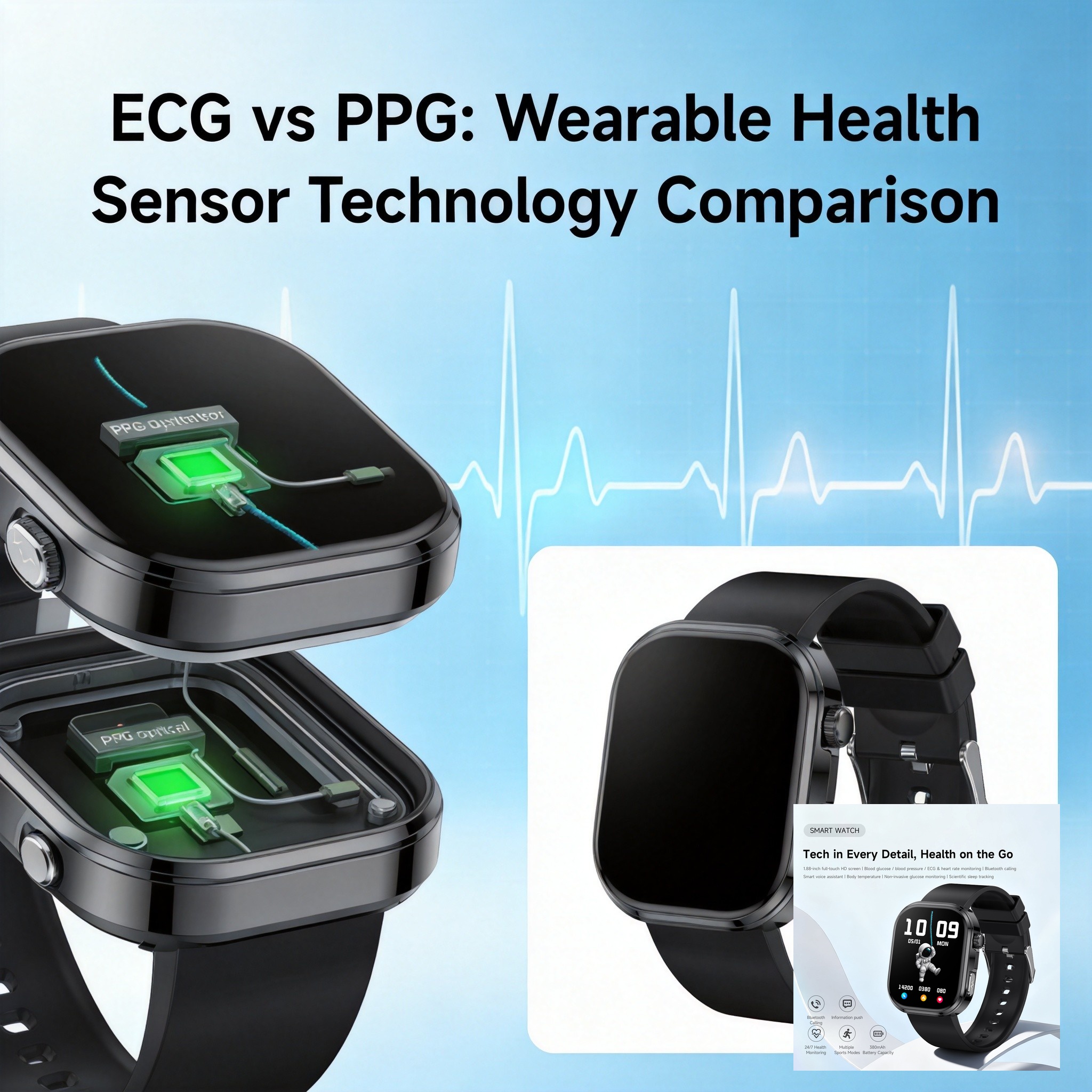
ECG Watch vs. PPG Watch for Medical Monitoring: Which Technology Is Right for Your Application?
By
/ 2026 年 6 月 21 日
ECG Watch vs. PPG Watch for Medical Monitoring: Which Technology Is Right for Your Application?
When evaluating wearable health monitoring devices for clinical, corporate wellness, or telehealth applications, one of the most critical technical decisions is choosing between ECG (electrocardiogram) and PPG (photoplethysmography) sensor technology. Both have legitimate use cases, but their accuracy, cost, and regulatory pathways differ significantly.
Understanding the Core Technologies
What Is PPG (Photoplethysmography)?
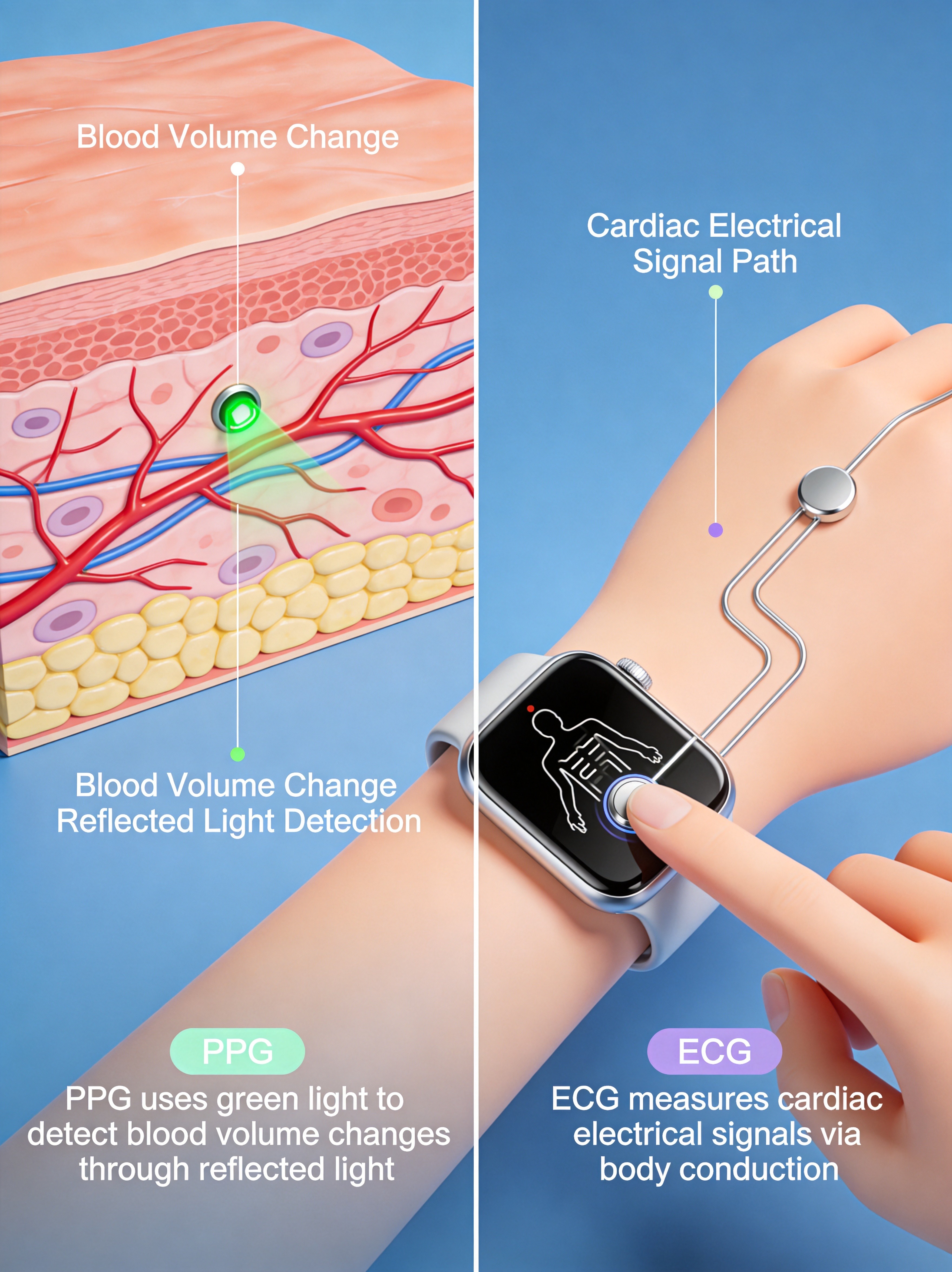
PPG uses optical sensors — typically green and infrared LEDs — to measure blood volume changes in the microvascular bed of tissue. When light hits the skin, the amount of light absorbed or reflected changes with each heartbeat as blood pulses through the vessels.
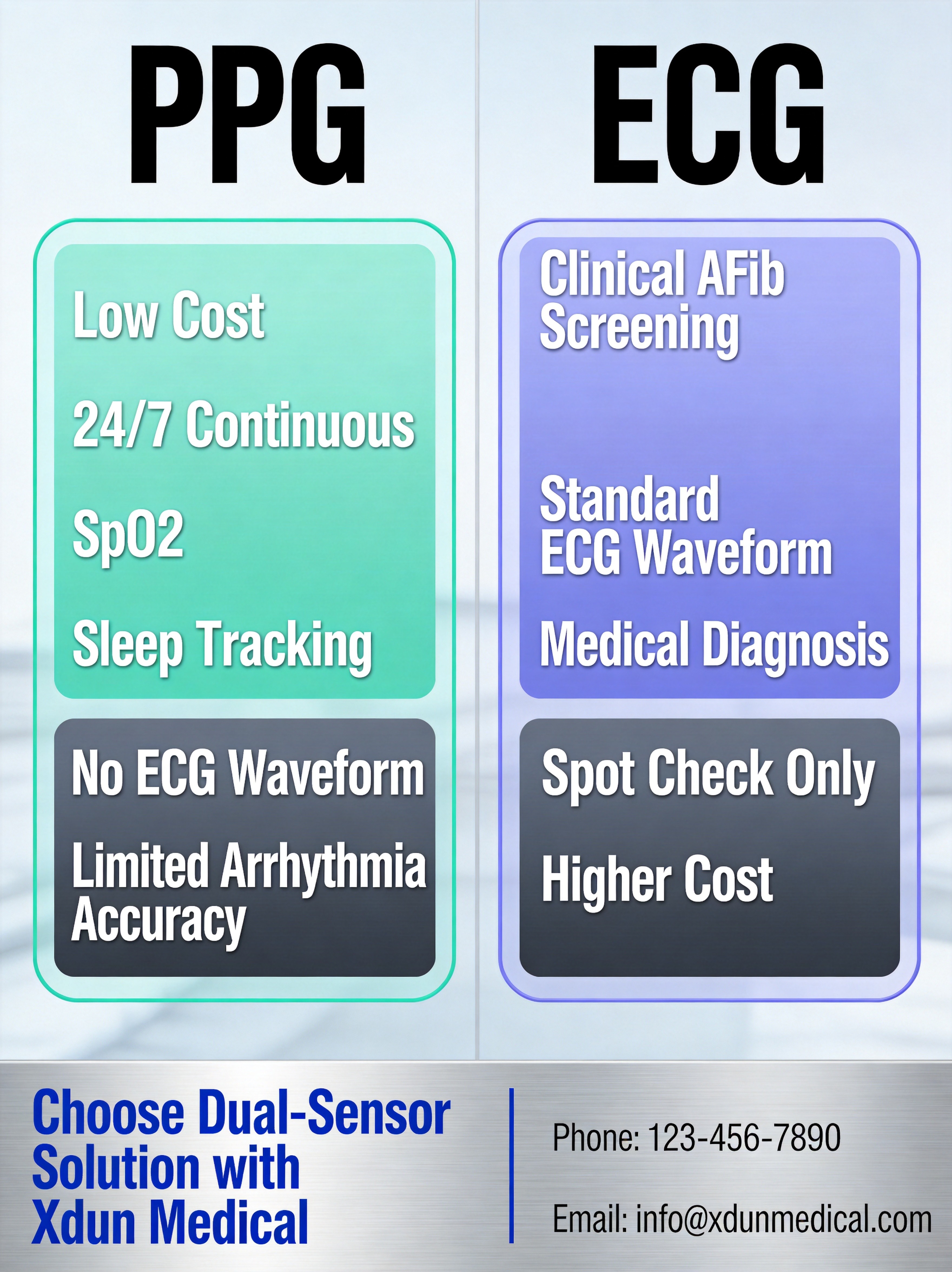
PPG measures: Heart rate (continuous, 24/7), Heart rate variability (HRV), Blood oxygen saturation (SpO2), Basic sleep staging.
PPG limitations: Cannot generate ECG waveforms, susceptible to motion artifacts, less accurate for arrhythmia detection, cannot measure electrical heart activity.
What Is ECG (Electrocardiogram)?
ECG measures the electrical activity of the heart directly using electrodes. In wearable devices, this is typically single-lead ECG: the user touches an electrode on the watch case with their finger, while a second electrode on the back of the device contacts the wrist.
ECG measures: Heart rate (during active measurement), Atrial fibrillation (AFib) detection, Heart rhythm patterns, ECG waveform generation (clinical-grade PDF reports), PVC (premature ventricular contraction) detection.
ECG limitations: Requires active measurement (not continuous), user must hold still for 30 seconds, single-lead only (vs. 12-lead in clinical ECG), higher component cost.
Accuracy Comparison
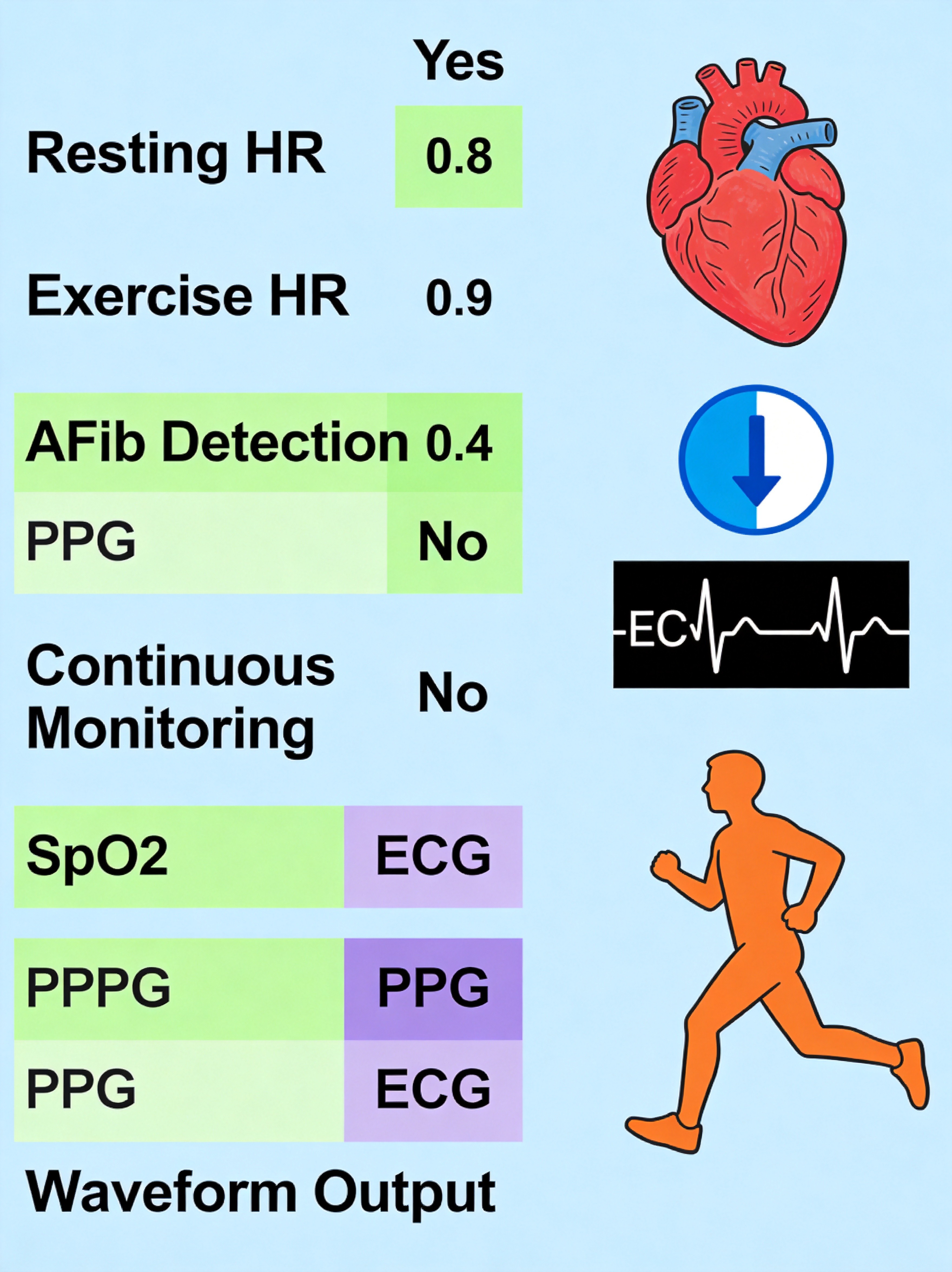
Metric
PPG
ECG
Heart rate (resting)
±2-5 BPM
±1 BPM
Heart rate (during exercise)
±5-10 BPM
N/A (spot check)
AFib detection
Limited
Clinical-grade
Arrhythmia screening
Not recommended
FDA-cleared
Continuous monitoring
Yes (24/7)
No (spot check only)
SpO2 measurement
Yes
No
Waveform output
No
Yes (PDF report)
Use Case Recommendations
Choose PPG When:
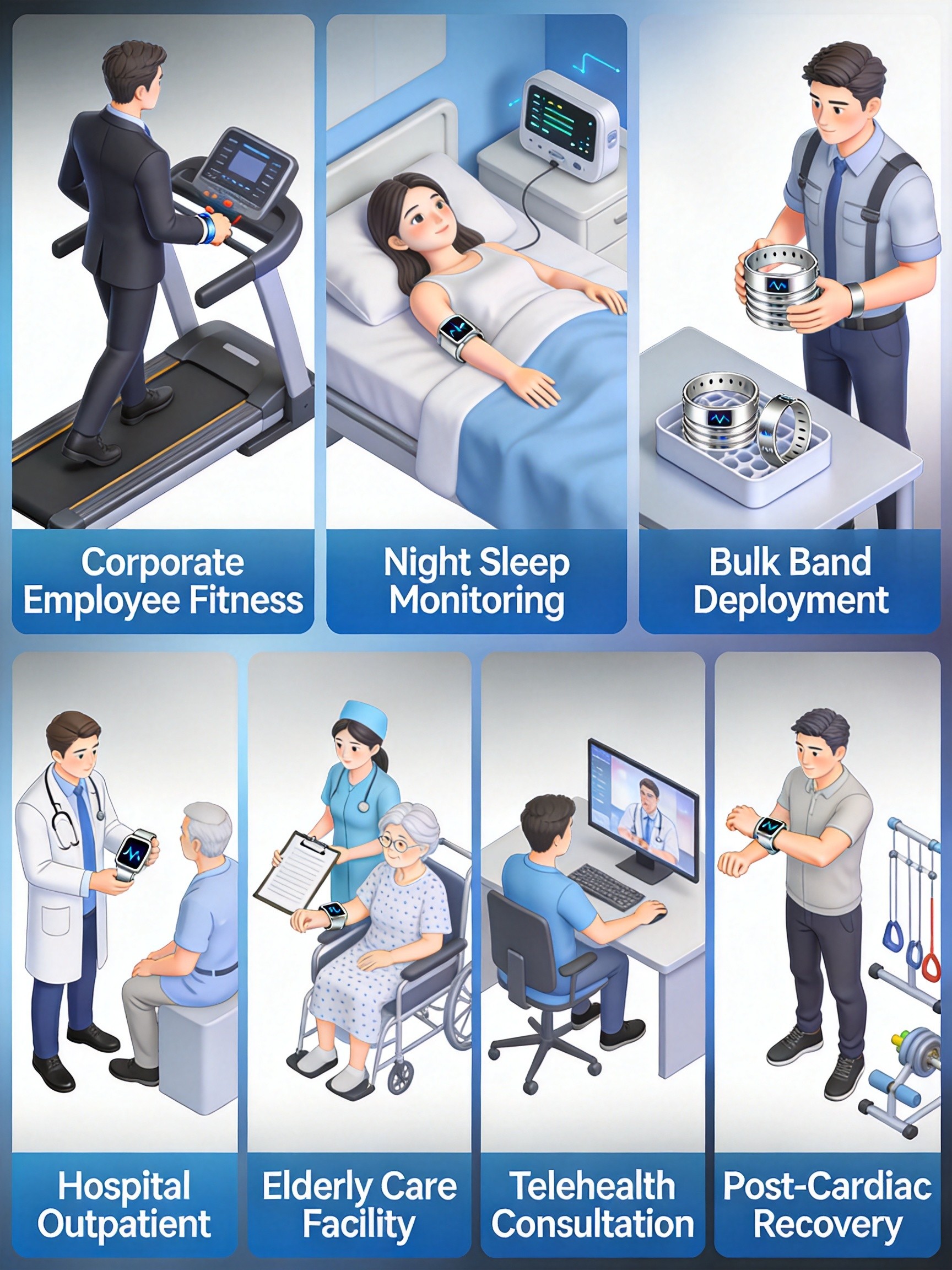
Corporate wellness programs: Continuous activity and heart rate tracking is more valuable than clinical-grade spot checks
Consumer fitness: Cost-sensitive applications where arrhythmia detection is not required
Sleep monitoring: PPG excels at overnight heart rate and SpO2 trends
Large-scale deployment: Lower per-unit cost enables wider population coverage
Choose ECG When:
Hospital outpatient monitoring: Clinical-grade cardiac screening is essential
Elderly care facilities: AFib prevalence in seniors makes arrhythmia detection critical
Telehealth and RPM programs: Reimbursable remote patient monitoring often requires ECG capability
Post-cardiac event follow-up: Patients recovering from cardiac events need rhythm monitoring
Clinical trials: Regulatory submissions typically require ECG data, not PPG estimates
Regulatory Considerations
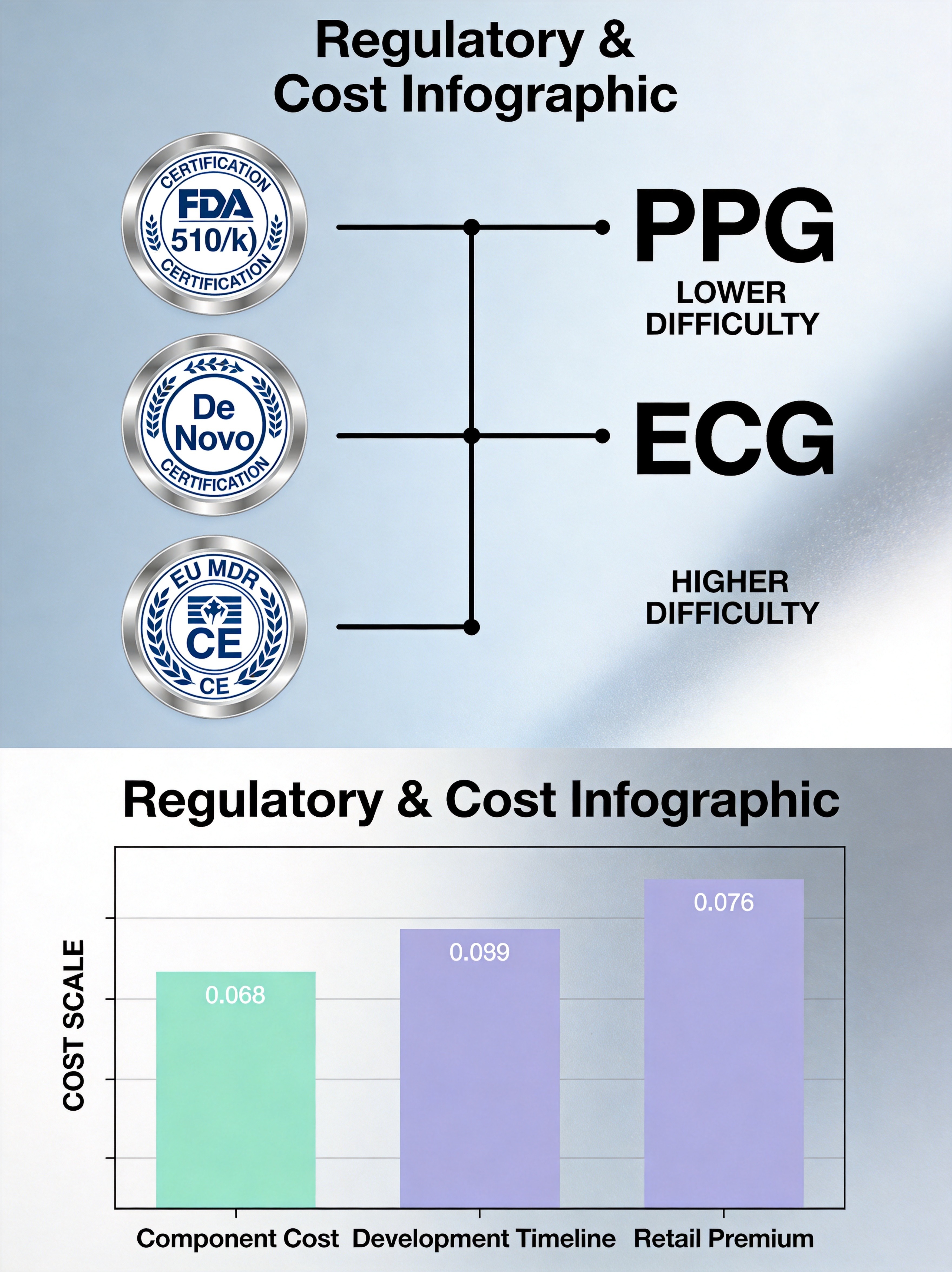
PPG-based devices are generally classified as Class I or Class II medical devices, depending on claims. SpO2 monitoring via PPG requires FDA 510(k) clearance if medical-grade accuracy is claimed. ECG-based devices with AFib detection are typically FDA De Novo or 510(k) cleared. CE certification under MDR (Medical Device Regulation) is required for European markets.
Cost Comparison
Factor
PPG Solution
ECG Solution
Component cost (per unit)
$2-5
$8-15
Certification cost
Lower
Higher (clinical validation required)
Development timeline
3-4 months
6-8 months
Retail price premium
Baseline
+30-50%
The Hybrid Approach
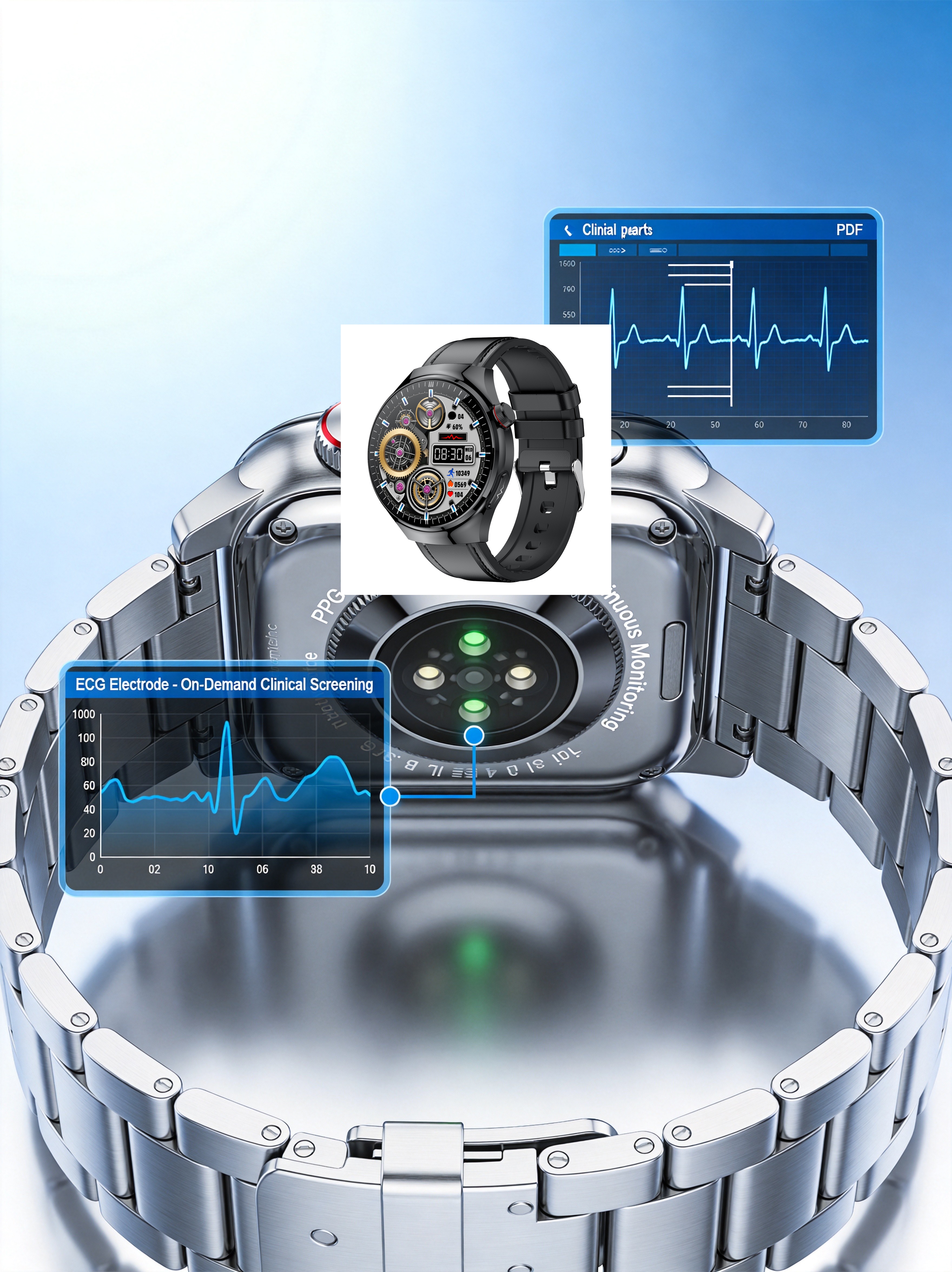
Many modern medical wearables — including Xdun Medical ECG smart watch line — combine both technologies: PPG for continuous 24/7 heart rate, SpO2, and sleep monitoring; ECG for on-demand clinical-grade cardiac screening. This dual-sensor approach provides the best of both worlds: continuous background monitoring plus clinical-grade spot checks when needed.
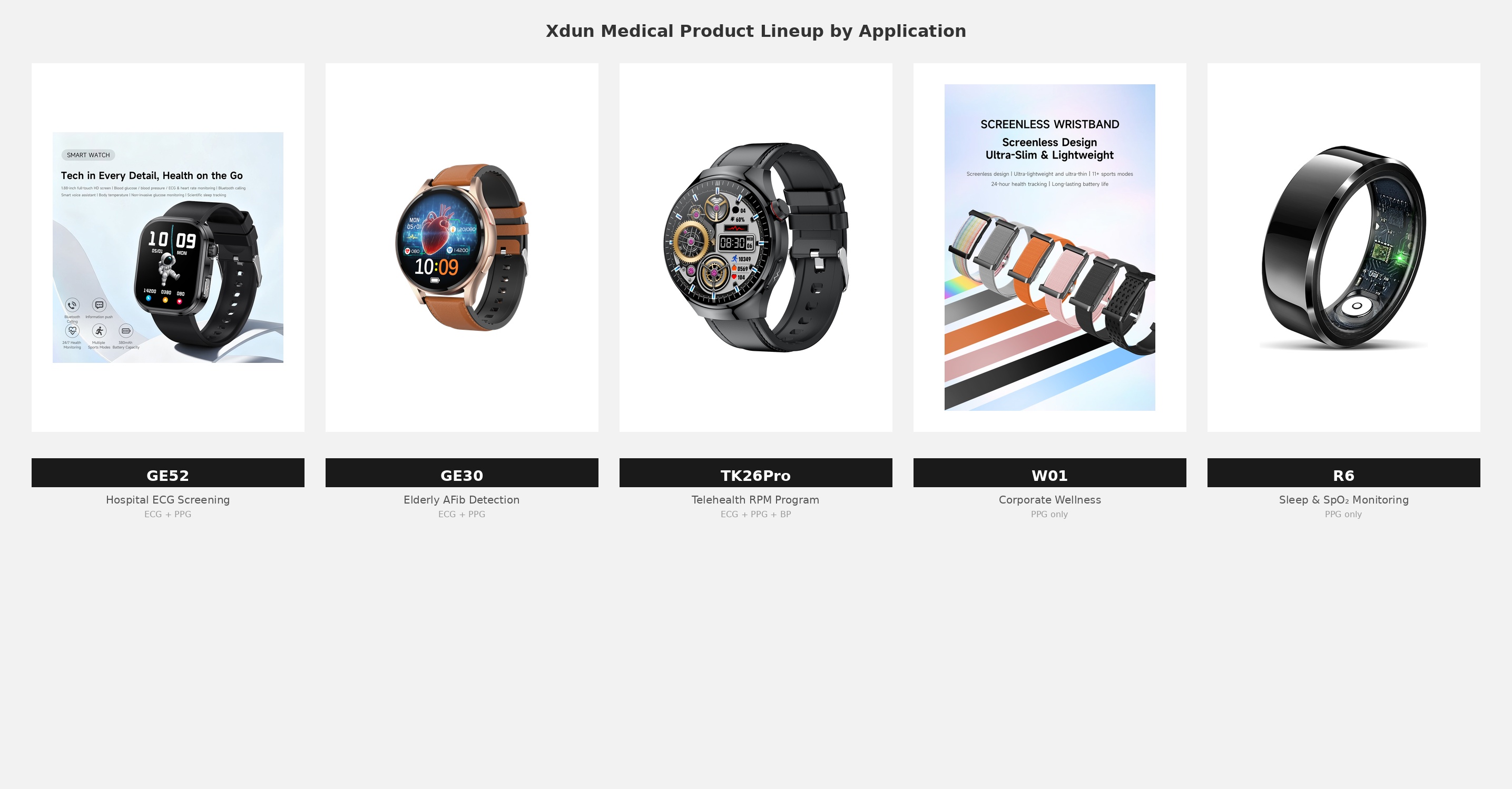
Recommended Xdun Medical Products by Use Case
Application
Recommended Model
Sensor
Hospital outpatient ECG screening
GE52 ECG Smart Watch
ECG + PPG
Elderly care AFib detection
GE30 ECG Smart Watch
ECG + PPG
Corporate wellness (cost-sensitive)
W01 Smart Band
PPG only
Telehealth RPM program
TK26Pro ECG Smart Watch
ECG + PPG + BP
Sleep and SpO2 monitoring
Smart Ring R6
PPG only
Conclusion
There is no universal “better” technology — the right choice depends on your clinical requirements, target population, budget, and regulatory pathway. For applications where cardiac arrhythmia screening matters, ECG is non-negotiable. For general wellness and activity tracking, PPG delivers excellent value at lower cost.
Frequently Asked Questions
Can a single device include both ECG and PPG?
Yes. Most advanced medical wearables — including Xdun Medical GE52, GE30, and TK26Pro — combine both sensors. PPG handles continuous monitoring while ECG provides on-demand clinical-grade readings.
Is PPG accurate enough for medical diagnosis?
PPG is suitable for wellness tracking and trend monitoring but is not sufficient for cardiac diagnosis. Clinical arrhythmia detection and diagnosis require ECG waveform data.
Does ECG monitoring require FDA clearance?
Yes. ECG-based devices with AFib detection claims require FDA 510(k) or De Novo clearance in the US market. Xdun Medical supports partners through the certification process.
What is the cost difference between PPG and ECG wearables?
ECG solutions typically cost 30-50% more at retail due to higher component costs ($8-15 vs $2-5 per unit) and additional clinical validation requirements.
Which technology is better for elderly care?
ECG is strongly recommended for elderly care due to the high prevalence of atrial fibrillation in seniors. Continuous PPG monitoring can supplement ECG with 24/7 heart rate and SpO2 tracking.
Can PPG detect sleep apnea?
PPG can detect SpO2 drops and heart rate variability patterns associated with sleep apnea, making it useful for screening. However, clinical sleep apnea diagnosis requires polysomnography (PSG).
Need help selecting the right sensor technology for your project? Contact Xdun Medical at jine@xdunmedical.com or +86-13544254314 for a consultation with our engineering team.
📋 Editorial Note This content was produced with AI assistance and reviewed by human editors for factual accuracy. All medical and health claims are verified against authoritative sources (WHO, CDC, FDA, peer-reviewed journals). Learn more about our content standards →