The remote patient monitoring (RPM) industry is at a crossroads. For years, healthcare organizations have deployed single-sensor wearables—devices that track heart rate, or blood pressure, or oxygen saturation in isolation. These tools served a purpose when the market was young and the technology limited. But as healthcare systems scale their virtual care operations and clinical teams demand richer, more actionable data, the single-sensor paradigm is showing its age.
Consider a patient discharged after cardiac surgery. A heart-rate-only monitor tells you the pulse is 92 bpm. Is that a normal recovery pattern, an early sign of decompensation, or simply the result of walking to the kitchen? Without concurrent blood pressure, SpO₂, temperature, and activity context, the number is a data point—not a clinical insight.
This is the fundamental limitation of single-sensor architecture: it produces isolated metrics in a world where physiology is inherently interconnected. Multi-parameter health monitoring platforms are not merely an upgrade; they represent a structural shift in how RPM data is collected, interpreted, and acted upon.
The Clinical Blind Spot of Single-Sensor Monitoring
Single-sensor devices suffer from what clinical engineers call contextual deprivation. A heart rate monitor cannot distinguish between sinus tachycardia caused by exercise, anxiety, fever, or early sepsis. A pulse oximeter cannot tell whether a SpO₂ decline reflects genuine respiratory deterioration or a loose wristband. These ambiguities generate two costly outcomes: false alarms that erode clinician trust, and missed deteriorations that lead to preventable admissions.
The evidence is accumulating. Research published in JAMA Network Open (June 2026) examining remote monitoring programs across 19 hospitals found that patients enrolled in RPM programs with limited parameter tracking showed paradoxically higher readmission rates for sepsis, influenza, and COVID-19. The study highlights a critical insight: monitoring that is too narrow in scope can create a false sense of security while missing the multi-system signals that precede clinical deterioration.
In hospital settings, clinicians never rely on a single vital sign in isolation. They use Early Warning Scores—MEWS (Modified Early Warning Score) and NEWS2 (National Early Warning Score 2)—which aggregate respiratory rate, SpO₂, temperature, systolic blood pressure, heart rate, and level of consciousness into a composite risk score. These scores have been validated across hundreds of thousands of patient encounters. Yet the RPM industry has largely failed to translate this multi-parameter approach into wearable form factors suitable for home and ambulatory use.
The Seven Parameters That Matter
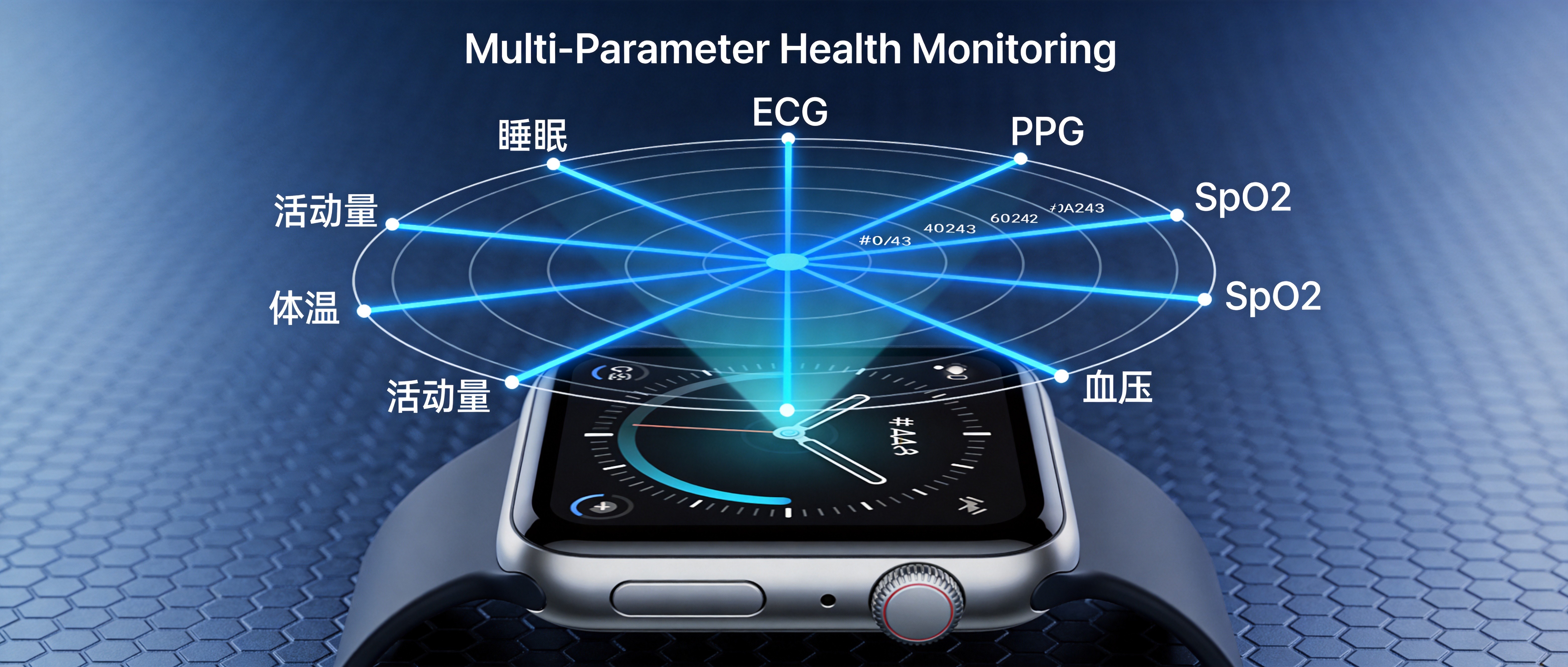
A clinically meaningful multi-parameter monitoring platform must capture the vital signs that drive actionable clinical decisions. At Xdun Medical, we have identified seven core parameters that, when monitored simultaneously, provide the depth of physiological insight that hospital-grade early warning systems require:
1. Electrocardiogram (ECG)
Single-lead ECG provides rhythm analysis for atrial fibrillation detection, QT interval monitoring, and arrhythmia screening. Unlike PPG-only devices that estimate pulse rate, ECG captures the electrical signature of cardiac activity—the gold standard for rhythm assessment. For patients on QT-prolonging medications or those with known arrhythmia risk, ECG capability is not optional. To support this critical need for continuous cardiac monitoring, the 4G ECG smart health watch integrates medical-grade sensors to reliably capture and transmit single-lead data.
2. Photoplethysmography (PPG)
Optical PPG sensing delivers continuous heart rate tracking, pulse rate variability, and perfusion index. When combined with ECG, the PPG signal enables pulse arrival time (PAT) measurement—a key input for cuffless blood pressure estimation algorithms. PPG alone is a consumer feature; PPG fused with ECG becomes a clinical tool.
3. Blood Oxygen Saturation (SpO₂)
Continuous SpO₂ monitoring is essential for patients with COPD, sleep apnea, post-surgical recovery, and respiratory infection monitoring. The clinical value multiplies when SpO₂ trends are analyzed alongside respiratory rate, heart rate, and temperature—enabling the detection of patterns that any single parameter would miss.
4. Blood Pressure (BP)
Whether captured through cuff-based oscillometry or cuffless PPG+PAT estimation, blood pressure is the most requested RPM parameter by cardiologists and primary care physicians. Hypertension management requires trend data across days and weeks, not the snapshot obtained during quarterly clinic visits. Multi-parameter integration allows BP readings to be contextualized against activity state, sleep quality, and stress markers.
5. Body Temperature
Continuous skin temperature monitoring provides early warning of infection, inflammatory response, and circadian rhythm disruption. When combined with heart rate and SpO₂ trends, temperature data contributes to systemic inflammatory response syndrome (SIRS) criteria and NEWS2 scoring—directly relevant for post-operative monitoring and immunocompromised patient management.
6. Physical Activity
Activity tracking is often dismissed as a consumer wellness feature, but in a clinical RPM context, it serves a critical function: providing the activity baseline against which all other parameters must be interpreted. An elevated heart rate during exercise is normal; the same elevation at rest is a red flag. Activity data transforms raw vitals into contextualized clinical signals.
7. Sleep Architecture
Sleep quality—including total sleep duration, sleep stage distribution, and overnight SpO₂ patterns—is increasingly recognized as a vital sign in its own right. Poor sleep correlates with cardiovascular risk, cognitive decline, and metabolic dysfunction. For RPM platforms managing chronic disease populations, sleep data provides a longitudinal wellness indicator that complements acute vital sign monitoring.
Sensor Fusion: The Algorithm That Changes Everything
Collecting seven parameters is necessary but not sufficient. The real clinical value emerges from sensor fusion—the algorithmic layer that cross-references signals from multiple sensors to filter noise, validate readings, and generate composite insights. For a deeper analysis of these integration requirements, see our comprehensive guide on strategic sourcing of multi-modal sensor fusion and RPM wearables for OEMs. Furthermore, for OEMs developing compact form factors, our technical breakdown of smart ring multi-sensor fusion algorithms and data integration details how to achieve clinical-grade accuracy in space-constrained devices.
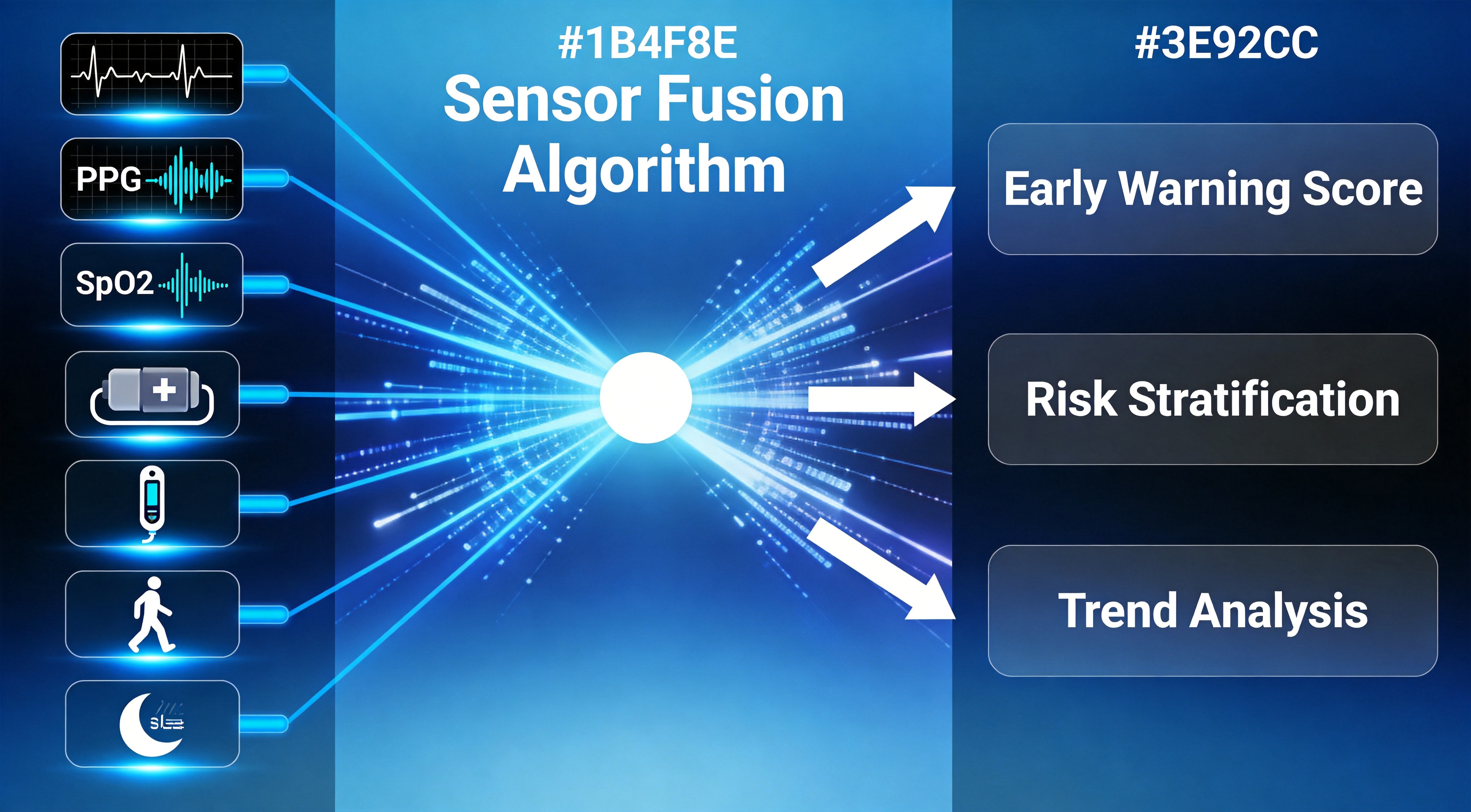
Sensor fusion works on a simple principle: each sensor has inherent weaknesses, but those weaknesses are uncorrelated across different sensing modalities.
PPG is susceptible to motion artifact; accelerometer data can identify when motion is occurring and adjust the PPG confidence level accordingly. ECG electrode contact may degrade during sleep; the PPG signal can provide continuity during those gaps. Blood pressure estimation via PAT requires simultaneous ECG and PPG inputs; neither sensor alone can produce the measurement.
The fusion algorithm operates in three stages:
Stage 1: Signal Quality Assessment. Each raw signal is evaluated for noise, artifact, and contact quality. Signals with low confidence scores are down-weighted or temporarily excluded from downstream calculations.
Stage 2: Cross-Validation. Where multiple sensors can infer the same physiological state, their outputs are compared. If ECG-derived heart rate and PPG-derived pulse rate diverge significantly, the system flags the discrepancy for algorithmic resolution rather than silently averaging the two.
Stage 3: Composite Insight Generation. Validated signals are combined into clinically meaningful outputs—early warning scores, trend analyses, and risk stratification. The system doesn’t just report “heart rate is 95”; it reports “heart rate is elevated relative to this patient’s resting baseline, concurrent with rising temperature and declining SpO₂, suggesting possible infection.”
This third stage is where multi-parameter platforms fundamentally separate themselves from single-sensor devices. A single sensor can report a number. Only a sensor fusion architecture can deliver a clinical assessment.
From Data Points to Early Warning Scores
The bridge between raw sensor data and clinical action is the early warning score. Both MEWS and NEWS2 are well-established in hospital settings. They assign weighted scores to vital sign deviations and produce an aggregate number that triggers escalating clinical responses.
| Parameter | NEWS2 Score 0 | NEWS2 Score 3 |
|---|---|---|
| ———– | ————– | ————– |
| Respiratory Rate | 12–20 bpm | ≤8 or ≥25 bpm |
| SpO₂ | ≥96% | ≤91% |
| Temperature | 36.1–38.0°C | ≤35.0 or ≥39.1°C |
| Systolic BP | 111–219 mmHg | ≤90 or ≥220 mmHg |
| Heart Rate | 51–90 bpm | ≤40 or ≥131 bpm |
| Consciousness | Alert | Unresponsive |
In a hospital, these scores are calculated manually by nursing staff every 4–12 hours. In an RPM setting, a multi-parameter wearable platform can compute them continuously, generating alerts when a patient crosses from a low-risk to a medium-risk or high-risk threshold. This continuous surveillance capability is particularly valuable for post-discharge patients, where the first 72 hours carry the highest readmission risk.
The practical impact is significant. A hospital system deploying multi-parameter wearables with automated NEWS2 calculation can detect deterioration hours before a patient or caregiver would notice symptoms and seek help. Those hours translate directly into earlier intervention, reduced emergency department utilization, and lower readmission rates.
The Unified Cloud Dashboard: Where Clinical Value Materializes
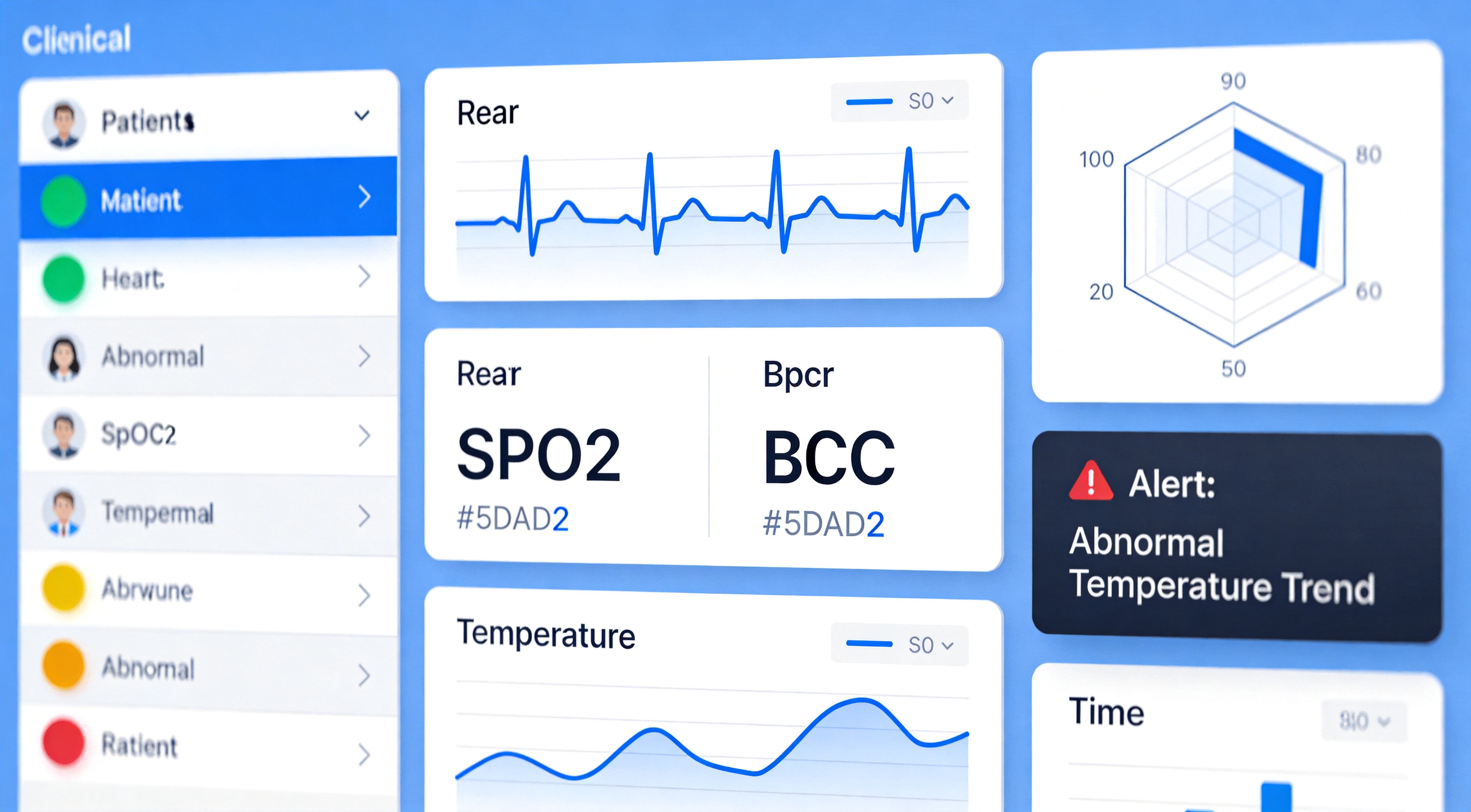
Even the most sophisticated multi-parameter wearable is only as valuable as the platform that receives, stores, and displays its data.
RPM program directors and hospital IT teams consistently report that data fragmentation is their number one operational challenge—too many device portals, too many logins, too many incompatible data formats.
A unified cloud dashboard solves this by serving as a single pane of glass for all monitored patients. The Xdun Medical unified management platform aggregates data from deployed multi-parameter fusion watches across an entire patient population, presenting clinicians with:
– Population-level dashboards showing real-time risk stratification across all monitored patients, enabling triage nurses to prioritize outreach based on clinical urgency rather than chronological order.
– Patient-level trend views displaying longitudinal data for all seven parameters with configurable time ranges, allowing clinicians to visualize the trajectory of recovery or deterioration.
– Automated alerting driven by configurable thresholds and composite early warning scores, with escalation rules that can be customized by care protocol.
– Data export and EHR integration capabilities that support HL7 FHIR standards, ensuring that RPM data flows into the electronic health record rather than existing in a parallel silo.
The dashboard is not an afterthought—it is where clinical value materializes. A wearable without a coherent data platform is a gadget. A wearable integrated into a unified dashboard with clinical decision support is a medical tool.
Xdun Medical: Multi-Parameter Fusion for the B2B RPM Market
Xdun Medical has developed a multi-parameter health monitoring platform purpose-built for the B2B RPM market. Our fusion watch integrates ECG, PPG, SpO₂, blood pressure, temperature, activity, and sleep monitoring into a single wrist-worn device, backed by a sensor fusion algorithm that cross-validates signals and generates composite clinical insights.
The platform is designed for the decision-makers who evaluate RPM technology: hospital procurement teams assessing clinical value, RPM platform operators seeking hardware partners, and health-tech CTOs integrating wearable data into existing care management workflows. The hardware is engineered for extended wear and continuous data collection; the cloud platform is built for scale, supporting population-level monitoring with role-based access control and configurable alerting rules.
We support the regulatory pathways our partners require—including frameworks aligned with FDA, CE MDR, and NMPA requirements—and we work collaboratively with RPM platform providers to ensure seamless data integration through standard APIs.
The Economics of Multi-Parameter Monitoring
The shift from single-sensor to multi-parameter monitoring is not solely a clinical decision; it carries compelling economic logic. When a single device replaces multiple single-purpose monitors, three cost vectors are improved:
Hardware Consolidation. Instead of deploying a pulse oximeter, a blood pressure cuff, a thermometer, and an ECG patch—each with its own procurement, provisioning, and maintenance burden—one device covers all parameters. For RPM programs managing thousands of patients, this consolidation reduces device management complexity.
Data Integration Cost. Each additional device portal adds IT overhead: API integration, user training, credential management, and data normalization. A single unified platform eliminates these redundant costs while providing richer, cross-referenced data.
Clinical Efficiency. When clinicians must check multiple dashboards to assemble a patient picture, each minute of portal-switching is a minute not spent on patient care. A unified multi-parameter view reduces cognitive load and accelerates clinical decision-making.
Looking Ahead
The RPM industry is maturing rapidly. The global remote patient monitoring market is projected to grow at a CAGR exceeding 15% through 2032, driven by aging populations, chronic disease prevalence, and reimbursement policy expansion. As the market matures, procurement criteria will inevitably shift from “does it monitor anything?” to “does it monitor everything that matters, and does it present the data in a clinically actionable format?”
Single-sensor devices will retain a role in narrow, well-defined use cases. But for the core RPM workflows—post-discharge monitoring, chronic disease management, and high-risk population surveillance—multi-parameter platforms with sensor fusion and unified cloud dashboards are becoming the new standard.
The question for RPM decision-makers is no longer whether to adopt multi-parameter monitoring, but which platform architecture delivers the clinical depth, integration flexibility, and operational scalability their programs require.
Interested in learning how Xdun Medical’s multi-parameter fusion platform can support your RPM program? Contact our B2B solutions team:
📧 jine@xdunmedical.com 📞 +86-13544254314
www.xdunmedical.com
© 2025 Xdun Medical. All rights reserved.