Corporate Wellness Wearables: Measuring ROI and Building Effective Employee Health Programs
The corporate wellness landscape has undergone a fundamental shift. What was once a peripheral employee perk—annual health fairs, discounted gym memberships, biometric screenings—has evolved into a data-driven strategic function that directly impacts the bottom line. At the center of this transformation sits a deceptively simple tool: the health wearable device.
For HR directors, benefits managers, and corporate health platform providers, the question is no longer whether to incorporate wearables into employee wellness programs. The question is how to deploy them effectively, measure their impact, and build programs that deliver verifiable returns while respecting the boundaries of employee privacy and regulatory compliance.
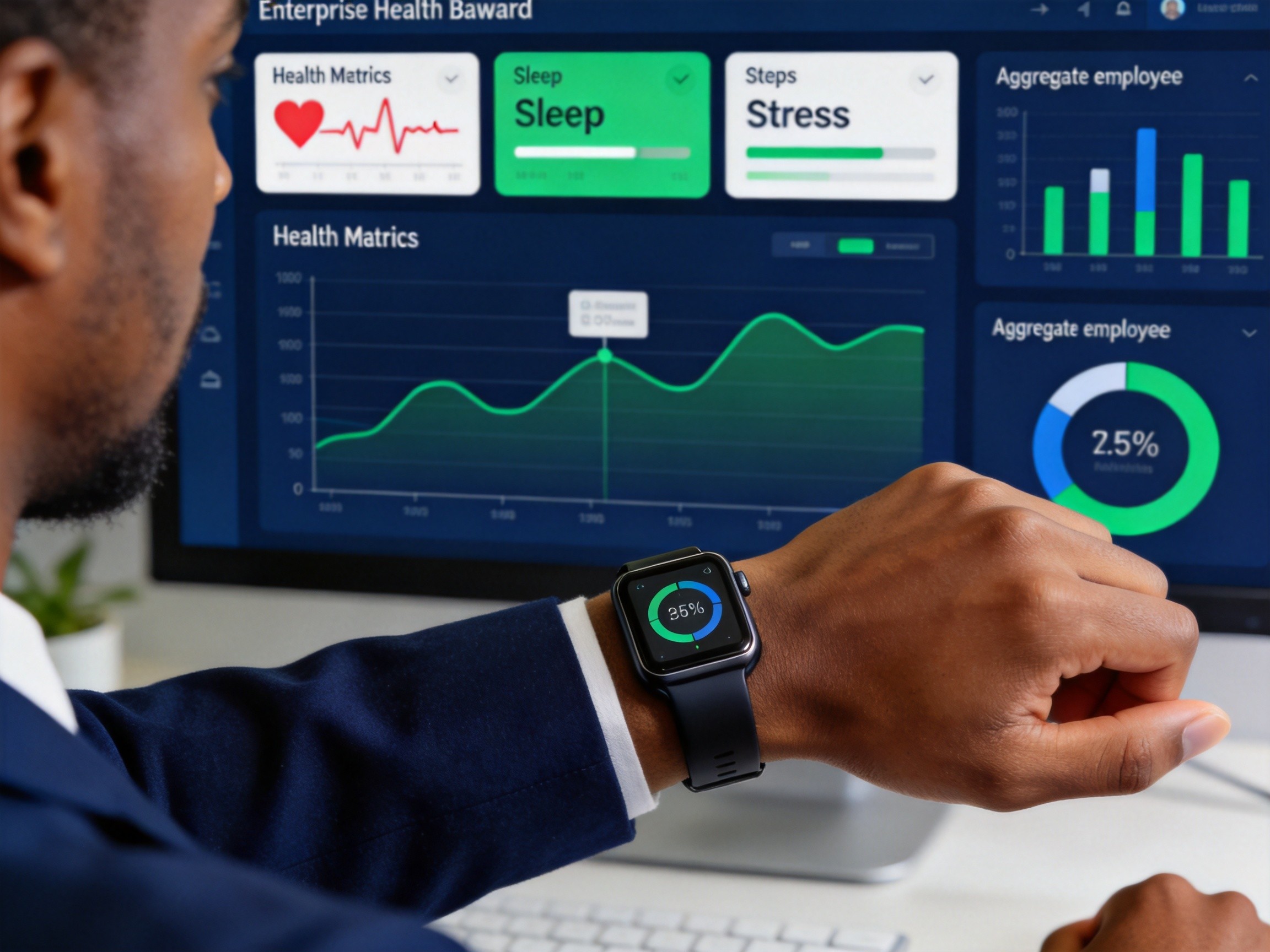 Enterprise health wearables combined with real-time wellness dashboards give HR teams population-level health insights.
The Business Case: Why Wellness Wearables Merit a Line Item
Let’s start with the numbers that matter to the C-suite. Workplace wellness programs have consistently demonstrated a compelling return profile. Landmark research from the Harvard Business Review and the American Journal of Health Promotion has documented that comprehensive, well-structured corporate wellness initiatives generate between $3 and $6 in healthcare cost savings for every dollar invested. This range narrows toward the upper end when programs incorporate continuous health monitoring through wearables, which enable early intervention and sustained behavior change rather than point-in-time assessments. For deeper analysis, see our B2B guide on chronic disease management wearables.
The cost drivers these programs address are substantial. According to the Centers for Disease Control and Prevention (CDC), productivity losses linked to absenteeism cost U.S. employers approximately $1,685 per employee annually. When factoring in presenteeism—employees working while unwell, operating at diminished capacity—the economic burden multiplies. A study published in the Journal of Occupational and Environmental Medicine found that presenteeism accounts for 18% to 60% of total health-related productivity costs, depending on the condition and industry.
Wearables change the equation by shifting health monitoring from reactive to proactive. A continuous heart rate, sleep, and activity data stream enables organizations to identify risk patterns—chronic sleep deprivation across a department, rising stress markers during a product launch, declining physical activity post-relocation—before they translate into claims, leaves, or turnover events.
Selecting the Right Wearables: A Framework for Corporate Buyers
Not all wearables are created equal for enterprise deployment. The consumer smartwatch that excels at counting weekend steps may fall short when asked to serve as a reliable node in a corporate health data ecosystem. Procurement teams should evaluate devices across four core health dimensions and several operational considerations.
Heart Rate and Cardiovascular Monitoring
Continuous optical heart rate monitoring serves as the foundation of any corporate wearable program. Beyond resting heart rate trends, look for devices that capture heart rate variability (HRV), a key indicator of stress load and recovery capacity. In high-pressure environments—trading floors, emergency response teams, executive leadership—HRV trend data can flag burnout risk weeks before performance visibly declines.
Devices that offer on-demand ECG or irregular rhythm notifications add a layer of cardiovascular risk screening. While not diagnostic instruments, these features can prompt employees to seek early medical evaluation, potentially preventing costly cardiac events.
Sleep Quality and Recovery Tracking
Sleep is the most underappreciated productivity lever in the modern workplace. Research from RAND Europe estimates that insufficient sleep costs the U.S. economy up to $411 billion annually in lost productivity. Corporate wearable programs that track sleep duration, sleep stages, and sleep consistency provide a window into workforce recovery patterns.
For organizations with shift workers, global teams spanning time zones, or roles requiring sustained attention, sleep data aggregated at the department level can inform scheduling decisions and fatigue risk management protocols.
Stress and Mental Well-being Indicators
The World Health Organization estimates that depression and anxiety disorders cost the global economy $1 trillion per year in lost productivity. Wearables that combine HRV, skin temperature, and activity data can generate stress scores that help employees understand their physiological stress responses—and help employers understand where organizational stressors are concentrated.
Some platforms now integrate wearable stress data with digital mental health resources, creating a seamless pathway from awareness to action. An employee whose device detects persistently elevated stress can receive a nudge toward mindfulness content, counseling resources, or workload management tools.
Physical Activity and Sedentary Behavior
The most established wearable metric remains one of the most actionable. Sedentary behavior is an independent risk factor for cardiovascular disease, type 2 diabetes, and musculoskeletal disorders. Corporate programs that use activity tracking to power team-based challenges, walking meetings, and movement breaks have demonstrated measurable improvements in employee energy levels and collaboration.
When evaluating devices, consider battery life, water resistance, and form factor. A device that requires daily charging or feels uncomfortable during sleep will quickly find its way into a desk drawer, undermining participation rates.
Driving Employee Participation: Strategies That Actually Work
The most sophisticated wearable program is worthless if employees don’t engage. Industry data consistently shows that voluntary corporate wellness programs achieve 20% to 40% participation in their first year, with well-designed programs reaching 60% to 70% over time. Here’s what separates high-participation programs from the rest.
Opt-Out vs. Opt-In Design
Behavioral economics provides a clear direction: opt-out designs consistently outperform opt-in. When employees are automatically enrolled with a simple, transparent opt-out mechanism, participation rates can reach 80% or higher. The key is ensuring the opt-out process is genuinely frictionless and that employees understand exactly what data is and isn’t being collected.
Incentive Architecture That Aligns
Financial incentives work, but they work best when structured as ongoing rewards for sustained engagement rather than one-time enrollment bonuses. Programs that offer health insurance premium reductions, HSA/HRA contributions, or gift card rewards tied to consistent device wear and goal achievement see higher long-term adherence than those relying on a single enrollment incentive.
Some organizations have pioneered “team-based” incentive models where departments collectively earn rewards based on aggregate participation rather than individual health outcomes. This approach addresses the equity concern that employees with chronic conditions face inherent disadvantages in health-outcome-based incentive structures.
Communication That Respects Intelligence
The most common reason employees disengage from wellness programs? They perceive them as paternalistic or surveillance-oriented. Communication strategies that emphasize personal benefit, voluntary participation, and transparent data handling consistently outperform those that frame the program as a corporate mandate.
Successful programs also invest in onboarding. A 15-minute orientation session—whether in-person, virtual, or asynchronous—that walks employees through device setup, data privacy settings, and the personal health dashboard dramatically improves first-week activation rates.
The Privacy Tightrope: GDPR, Trust, and Data Governance
This is the conversation that keeps corporate counsel awake at night. Health data collected through wearables—heart rate, sleep patterns, stress indicators—falls under stringent regulatory frameworks in most jurisdictions. In the European Union, GDPR classifies health data as “special category” data requiring explicit consent and heightened protections. In the United States, while HIPAA may not directly apply to employer-sponsored wellness programs (unless the employer is a covered entity), state-level privacy laws and FTC guidelines impose meaningful obligations.
The principles that protect both the organization and its employees are straightforward:
Aggregation by default. Individual health data should never be visible to managers, supervisors, or HR personnel in personally identifiable form. Dashboards should display department-level trends, population health insights, and program participation metrics—not individual Jane’s sleep score or John’s resting heart rate.
Explicit consent architecture. Consent should be granular, informed, and revocable. Employees should understand exactly what data points are collected, how they are processed, who has access to them, and what happens to their data if they leave the organization.
Data minimization. Collect only the health metrics necessary to deliver program value. If a program’s core purpose is activity encouragement, there’s no defensible reason to collect raw ECG data.
Third-party governance. If the wearable manufacturer or platform vendor processes employee health data, the contract must specify data processing terms, breach notification obligations, and data deletion timelines. Standard vendor terms of service written for consumer users are generally insufficient for enterprise deployments.
Organizations that handle these questions well do more than comply with regulations—they earn the trust that drives sustained participation. A 2024 survey by a leading employee benefits consultancy found that 68% of employees cited “concerns about who sees my data” as their primary hesitation about workplace wellness wearables. Addressing that concern head-on, with clear policies and visible practices, removes the single largest barrier to adoption.
The Insurance Connection: Wearables as a Premium Lever
The intersection of corporate wellness wearables and insurance represents one of the most tangible ROI pathways for employers. Major global insurers—including Aetna, Cigna, and Bupa—have introduced programs that link wearable-based wellness engagement to premium adjustments, deductible reductions, or enhanced benefits.
The mechanics vary by carrier and jurisdiction, but the underlying logic is consistent: insurers recognize that engaged, physically active employee populations generate lower claims. By sharing a portion of those savings with employers through premium adjustments, insurers create alignment between their financial interests and employer wellness investments.
In practice, these programs typically involve:
- Data-sharing agreements where the insurer receives aggregated wellness program participation metrics, not individual health data
- Premium credit tiers that reward employers based on the percentage of employees actively participating in wearable-based wellness activities
- Integrated platform partnerships where the insurer’s member portal connects directly with the corporate wellness platform, streamlining the employee experience
For self-insured employers, the linkage is even more direct. Every avoided claim drops straight to the bottom line. Organizations with self-insured health plans should consider wearable wellness programs as a core component of their population health management strategy, alongside traditional levers like disease management, pharmacy benefit optimization, and network design.
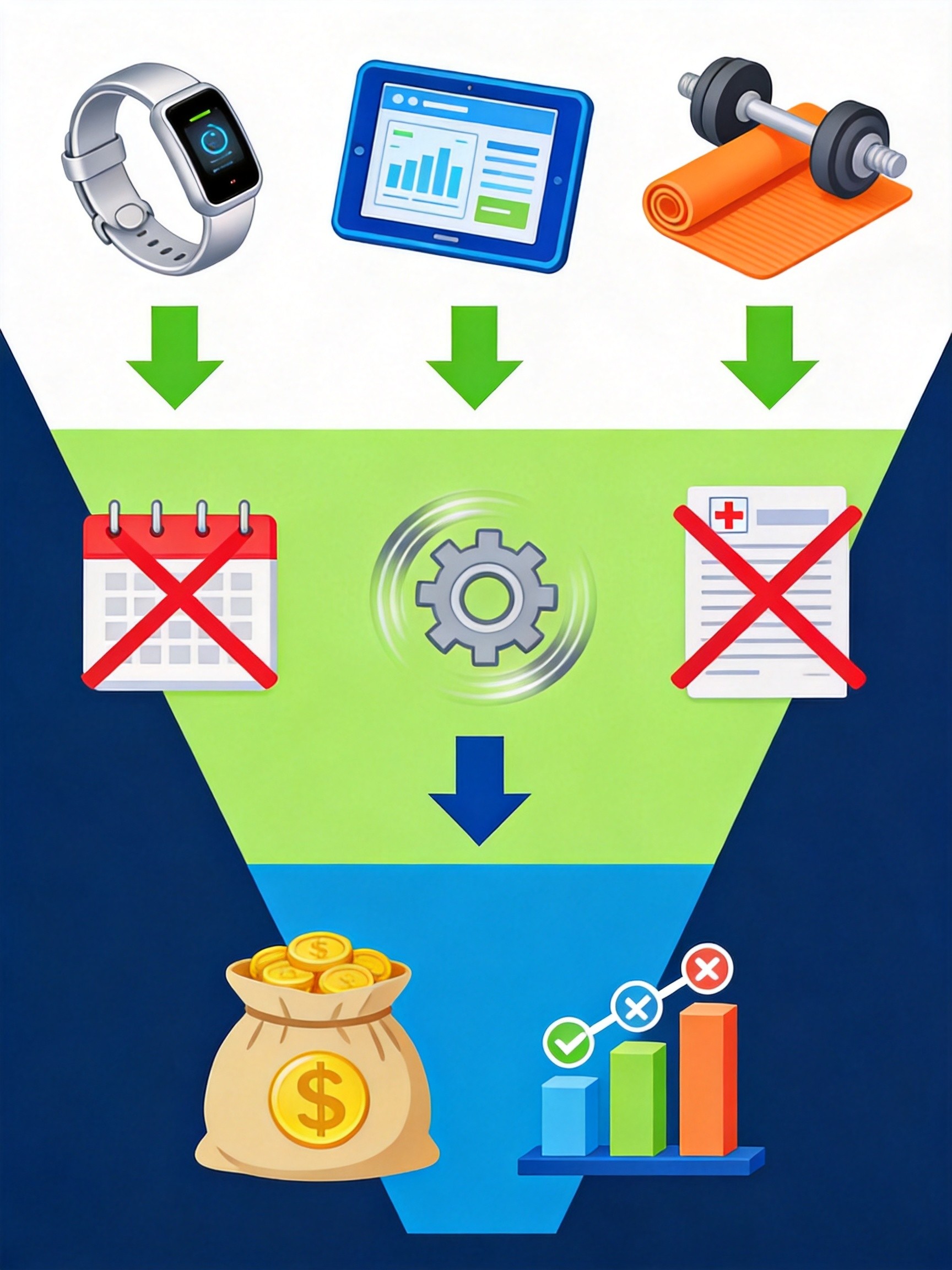
Building the Business Case: A Measurement Framework
Boards and CFOs require more than health outcome data—they require financial impact projections. Here’s a framework for building a wearable wellness program business case that speaks the language of the C-suite.
Cost Inputs
| Component | Typical Range (Per Employee/Year) |
|---|---|
| Wearable device hardware | One-time procurement, amortized over 2-3 years |
| Platform licensing and data integration | SaaS subscription model |
| Program administration and communications | Internal HR time + external support |
| Incentive budget | Variable, based on program design |
Projected Savings
| Category | Basis for Projection |
|---|---|
| Medical claims reduction | 3-6% reduction in claims cost for engaged participants |
| Absenteeism reduction | 1.5-2.5 fewer sick days per engaged participant annually |
| Presenteeism improvement | 2-4% productivity gain per engaged participant |
| Turnover reduction | 1-2 point reduction in voluntary turnover for program participants |
| Insurance premium adjustment | Carrier-specific, typically 2-5% on renewal |
A mid-size organization with 1,000 employees and $10 million in annual health spend can reasonably project a net ROI of 2:1 to 3:1 within 24 months of program launch, with the ratio improving over time as participation deepens and health behavior changes compound.

From Pilot to Enterprise: The Xdun Medical Deployment Model
For organizations ready to move beyond concept and into execution, the path from pilot to scaled deployment requires careful planning around device logistics, data architecture, and employee support infrastructure. This is where specialized enterprise deployment partners create disproportionate value.
Xdun Medical’s enterprise batch deployment solution addresses the operational challenges that often derail corporate wearable programs. Rather than requiring HR teams to manage individual device procurement, inventory, configuration, and distribution, the batch deployment model delivers pre-configured devices organized by department, location, or cohort—ready for immediate distribution to employees. For deeper analysis, see our guide on building a 3/5/7-year TCO model for medical wearable deployment.
The approach supports multiple deployment scenarios: traditional office-based teams, distributed remote workforces, and industrial or manufacturing environments where device durability and shift-work compatibility are essential considerations. Each deployment scenario carries distinct requirements around device selection, data connectivity, and program communication, and the batch deployment framework is designed to accommodate these variations without requiring the employer to develop in-house wearable logistics expertise. For remote and industrial deployments requiring independent data transmission, the 4G LTE standalone health watch offers built-in cellular connectivity to support continuous wellness tracking without relying on a paired smartphone.
For organizations evaluating wearable wellness programs, the recommendation is to start with a defined pilot cohort of 100-300 employees, run for a minimum of 90 days, and measure against pre-defined engagement and health outcome metrics before scaling. This approach limits risk, generates internal proof points, and surfaces the operational refinements that make enterprise-wide deployment successful.
Key Takeaways for Corporate Health Leaders
- The ROI is real and measurable. The $3-to-$6 return per dollar invested has been validated across multiple studies and industry contexts. Wearables amplify this return by enabling continuous, objective health monitoring rather than episodic self-reporting.
- Device selection is a strategic decision. Evaluate wearables across heart rate, sleep, stress, and activity monitoring capabilities—and consider the operational requirements of your specific workforce deployment scenarios.
- Privacy isn’t a barrier—it’s the foundation. Organizations that design transparent, consent-based data governance frameworks see higher participation rates and fewer compliance headaches.
- The insurance linkage is underutilized. Most carriers now offer wellness-related premium adjustments. Employers not leveraging this pathway are leaving money on the table.
- Start with a pilot, scale with evidence. A 90-day, 100-300 employee pilot provides the data needed to build a compelling enterprise-wide business case.
Ready to Explore Corporate Wellness Wearables?
If your organization is evaluating enterprise wearable deployment for employee health programs, the Xdun Medical team can help you assess requirements, scope a pilot program, and design a deployment strategy that fits your workforce profile.
Contact us to start the conversation:
- Email: jine@xdunmedical.com
- Phone / WhatsApp: +86-13544254314
Our team supports corporate wellness program managers, insurance platform partners, and HR technology integrators with enterprise-grade wearable hardware and batch deployment services.