Chronic diseases are the leading cause of death and disability worldwide. For healthcare providers, aged care facilities, and corporate wellness programs, managing these conditions effectively — while keeping costs under control — is one of the greatest challenges of our time.
Smart wearables are changing the equation. By enabling continuous, real-time monitoring outside clinical settings, these devices bridge the gap between doctor visits and daily life. But not all wearables are created equal. For B2B buyers sourcing devices for chronic disease management programs, understanding the technology, clinical validation, and data infrastructure is critical. For deeper analysis, see our guide on smart wearables for chronic disease management. As covered in our B2B OEM guide on medical wearables for rare disease management and patient monitoring, these technologies are equally vital for orphan drug development and specialized clinical trials.
This guide covers everything you need to know: which conditions wearables can help manage, what clinical standards matter, how to evaluate OEM partners, and what returns you can realistically expect.
The Chronic Disease Burden: By the Numbers
The scale of the problem is staggering. Data from the World Health Organization (WHO) and leading research firms paints a clear picture:
- 74% of all deaths globally are caused by non-communicable diseases (NCDs), primarily cardiovascular diseases, cancers, chronic respiratory diseases, and diabetes
- 1.4 billion adults aged 30-79 live with hypertension — and only 320 million have it under control
- 537 million people worldwide have diabetes, projected to rise to 783 million by 2045
- Cardiovascular diseases cause 17.9 million deaths annually, more than any other cause
- 60% of healthcare spending goes toward managing chronic conditions
The problem isn’t lack of treatment. It’s lack of continuous monitoring between clinic visits. Most chronic disease management relies on episodic measurements — a blood pressure reading at the doctor’s office every few months, a quarterly blood test for diabetes. These snapshots miss the daily fluctuations that matter most.
This is where wearables create real value.
How Wearables Transform Chronic Disease Management
Wearable health devices address three fundamental gaps in traditional chronic care:
1. Continuous Data, Not Snapshots
A patient with hypertension might see their doctor four times a year. That’s four data points annually. A wearable blood pressure monitor takes one reading per hour — that’s 8,760 data points per year. This volume of data reveals patterns — morning hypertension spikes, post-meal surges, nocturnal blood pressure dips — that simply can’t be detected in a clinic. To capture these critical trends, advanced solutions like the 4G air pump blood pressure smart watch utilize oscillometric measurement to support continuous, clinic-level monitoring in everyday settings.
For clinicians, this means more informed treatment decisions. For payers and employers, it means fewer costly emergency room visits and hospital readmissions.
2. Early Intervention & Prevention
Wearables can detect abnormalities before symptoms appear. A smartwatch detecting atrial fibrillation (AFib) might prompt a patient to see a cardiologist before a stroke occurs. Continuous glucose monitoring (CGM) devices can alert patients to impending hypoglycemia or hyperglycemia episodes.
The economic argument is straightforward: prevention costs less than treatment. A 2025 study in the Journal of Medical Economics found that remote patient monitoring programs reduced hospital readmission rates by 19-29% for patients with chronic conditions.
3. Patient Engagement & Behavior Change
Let’s be honest. Most patients don’t adhere to their medication regimens or lifestyle recommendations as consistently as they should. Wearables create accountability and feedback loops that drive behavior change.
When a patient can see exactly how a 30-minute walk affects their blood glucose levels, or how sleep quality impacts their blood pressure the next day, they’re more likely to sustain healthy habits.
Key Conditions Wearables Help Manage
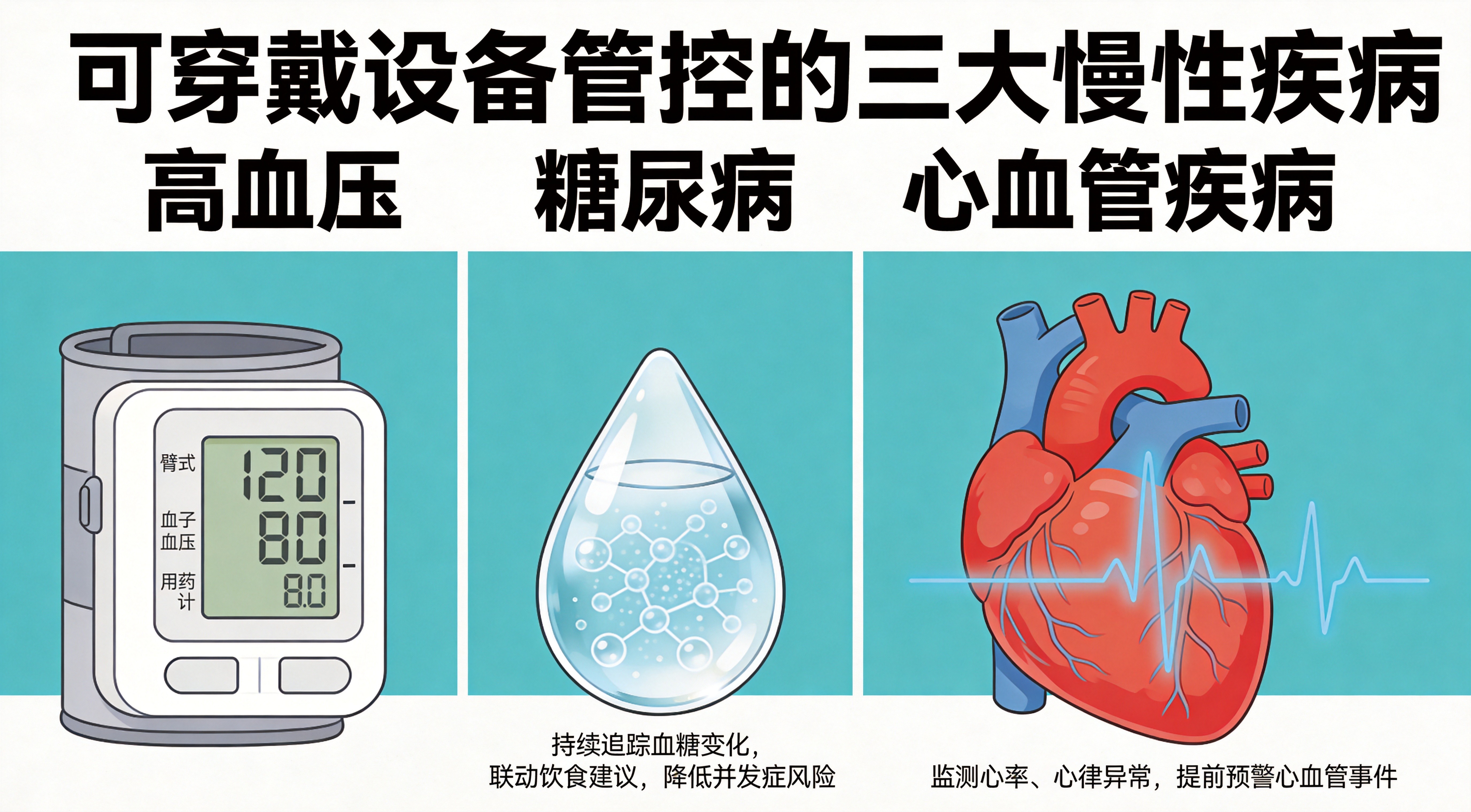
Hypertension (High Blood Pressure)
Hypertension is the most common chronic condition and the one where wearables have made the biggest clinical impact.
What wearables monitor:
- Systolic and diastolic blood pressure (via oscillometric cuff or PPG estimation)
- Heart rate and heart rate variability
- Activity levels and sleep patterns
Clinical evidence:
- The Huawei Watch D series achieved ISO 81060-2:2018 validation with ±3 mmHg accuracy
- A 2024 trial with 2,000+ hypertensive patients found that wearable monitoring plus medication adherence apps reduced average systolic BP by 8.2 mmHg over 6 months — comparable to adding a second medication
- The global blood pressure monitoring devices market reached $4.19 billion in 2025 and is projected to grow at 9.34% CAGR through 2033 (Grand View Research)
Xdun solution: Our BP100 and BP200 series wrist blood pressure monitors use clinical-grade oscillometric technology with full validation documentation available for regulatory submissions.
Diabetes Management
Diabetes is the fastest-growing chronic condition globally. Wearables are transforming how patients and clinicians manage blood glucose levels.
What wearables monitor:
- Continuous glucose levels (via CGM patches)
- Physical activity and calorie expenditure
- Heart rate variability as an insulin sensitivity indicator
- Sleep patterns that affect glucose regulation
Market data:
- The global CGM market is projected to exceed $17 billion by 2028, growing at 10.4% CAGR
- Smart watch integration with CGM data has been shown to improve time-in-range (TIR) by 12-18% in Type 2 diabetes patients
Important note: Most general-purpose smartwatches don’t directly measure glucose. Instead, they integrate with dedicated CGM devices and provide trend analysis, alerts, and lifestyle correlation data.
Cardiovascular Disease & Heart Health
From arrhythmia detection to post-heart-attack rehabilitation, wearables play multiple roles in cardiovascular care.
What wearables monitor:
- ECG/EKG for rhythm analysis
- Heart rate variability (HRV)
- Atrial fibrillation (AFib) detection
- Physical activity and cardiac rehabilitation adherence
Clinical evidence:
- The Apple Watch’s irregular rhythm notification feature demonstrated 92% specificity for AFib detection in the Apple Heart Study
- A 2025 study in Circulation found that ECG-enabled wearables detected 3x more undiagnosed AFib cases compared to standard care in a population of 500,000 adults
- Post-MI patients using wearables for cardiac rehab had 22% lower readmission rates at 6 months
Respiratory Conditions (Asthma, COPD)
While less established than cardiovascular monitoring, wearable technology for respiratory conditions is advancing rapidly.
What wearables monitor:
- Respiratory rate and breathing patterns
- Blood oxygen saturation (SpO2)
- Activity triggers for asthma exacerbations
- Sleep apnea screening
Market data:
- The global remote respiratory monitoring market is expected to reach $3.2 billion by 2028
- SpO2 monitoring wearables have become standard in post-COVID care programs
Clinical Validation: Separating Medical Devices from Wellness Toys
Here’s the hard truth about the wearable market: most devices are wellness products, not medical devices. For chronic disease management programs, this distinction is critical.
The Validation Hierarchy
| Level | Standard | What It Means | Use Case |
|---|---|---|---|
| Level 1 | General wellness | No clinical validation, “for informational purposes only” | Consumer wellness, fitness tracking |
| Level 2 | FDA 510(k) cleared / CE-MDR Class IIa | Substantially equivalent to a legally marketed predicate device | Screening, health monitoring, some clinical use |
| Level 3 | Full clinical trial (IDE/PMA) | Prospective trials proving safety and efficacy | Diagnostic use, prescription devices |
| Level 4 | Hospital-grade / FDA Class III | Highest level of clinical evidence | Critical care, surgical use |
For chronic disease management programs, you need at minimum Level 2 devices — those with regulatory clearance from bodies like the FDA, CE, or NMPA.
Why Validation Matters for B2B Buyers
- Liability protection: If a patient suffers harm because of inaccurate device readings, your organization could be exposed. Using validated devices demonstrates due diligence.
- Clinical credibility: Physicians won’t trust or act on data from unvalidated devices.
- Reimbursement eligibility: Many insurance programs and health systems will only reimburse for validated medical devices.
- Program effectiveness: If your device is inaccurate by ±15 mmHg, your hypertension management program won’t produce meaningful outcomes.
Real-World Applications for B2B
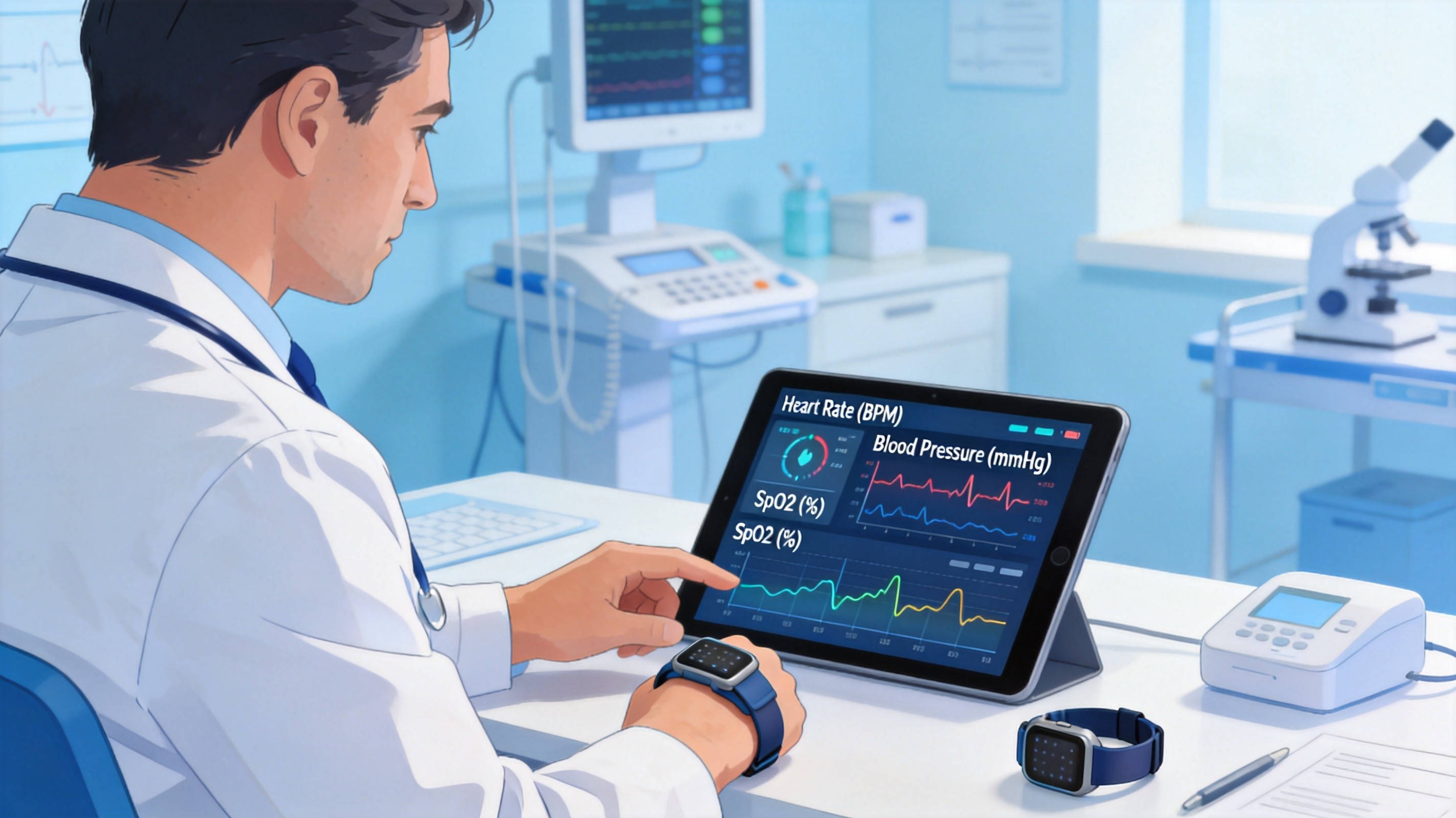
Hospitals & Healthcare Systems
Hospitals deploy wearables for:
- Remote patient monitoring (RPM): Post-discharge monitoring to reduce readmissions
- Chronic care management (CCM): Ongoing monitoring for patients with multiple conditions
- Clinical trials: Wearable data collection reduces site visit burden and improves data quality
- Pre-operative assessment: Remote baseline data collection before surgery
ROI driver: The U.S. Centers for Medicare & Medicaid Services (CMS) reimburses approximately $60-$150 per patient per month for remote patient monitoring services, depending on the condition and monitoring frequency.
Aged Care & Senior Living Facilities
Senior living communities use wearables for:
- Vital signs monitoring: Daily checks without staff intervention
- Fall detection: Accelerometer-based fall detection with emergency alerts
- Medication adherence: Reminders and tracking
- Resident safety: Wandering detection for dementia patients
ROI driver: Facilities using wearables report 20-40% fewer falls and 15-30% lower staff overtime costs from reduced manual check-ins.
Corporate Wellness & Employee Health Programs
Forward-thinking companies deploy wearables for:
- Hypertension and diabetes prevention programs
- Stress and mental health monitoring (via HRV)
- Fitness and activity challenges
- Health risk assessments
ROI driver: Companies with comprehensive wellness programs see $3-$6 in healthcare savings for every $1 spent, plus reduced absenteeism and improved productivity.
The Xdun Medical Advantage for Chronic Disease Programs
Xdun Medical specializes in medical-grade wearables designed explicitly for B2B health programs. Here’s what sets us apart:
1. Clinical-Grade Accuracy Across Product Lines
Our devices meet international standards for medical measurement:
- Blood pressure monitors: Oscillometric technology validated per ISO 81060-2:2018
- ECG smartwatches: Medical-grade ECG with AFib detection algorithms
- Pulse oximetry: SpO2 monitoring validated per ISO 80601-2-61
2. Comprehensive OEM/ODM Capabilities
We don’t just sell off-the-shelf products. We build custom solutions:
- White-label branding: Your brand, your packaging, your app ecosystem
- Custom firmware: Tailored features for your specific use case — whether that’s specialized alerting logic, custom vitals dashboards, or integration with your existing systems
- Regulatory support: We help navigate FDA, CE, NMPA, and other regional certification pathways
3. Enterprise-Grade Data Platform
Our cloud platform is built for healthcare:
- HIPAA and GDPR compliant: End-to-end encryption and data protection
- API integration: Connect to your EHR system, care management platform, or analytics tools
- Multi-level access controls: Administrator, clinician, and patient-level permissions
- Population health analytics: Aggregate data across your patient population to identify trends and measure program effectiveness
4. Scalable Manufacturing
With over a decade of medical device manufacturing experience and ISO 13485 certified facilities, we can scale from pilot programs to hundreds of thousands of units without compromising quality.
How to Select a Wearable Partner for Chronic Disease Management
Not all OEMs are equipped to deliver medical-grade wearables. Here’s what to evaluate:
1. Clinical Validation & Regulatory Track Record
Ask to see:
- Full clinical validation reports, not just marketing claims
- FDA/CE/NMPA certification documents for the specific model you’re sourcing
- References from other healthcare clients
- Whether they have in-house regulatory affairs teams or outsource this function
2. Data Infrastructure & Security
Chronic disease data is sensitive health information. Verify:
- HIPAA compliance (for US markets) or GDPR compliance (for EU)
- End-to-end encryption for data in transit and at rest
- SOC 2 Type II certification for data centers
- Business Associate Agreement (BAA) availability
- Data ownership terms (you should own your patients’ data)
3. Integration Capabilities
Your wearables need to work with your existing systems. Ask about:
- EHR/EMR integration experience (Epic, Cerner, etc.)
- API availability and documentation
- HL7/FHIR standard support
- Care management platform integrations
4. Total Cost of Ownership
The unit price is just the beginning. Consider:
- Device cost: Per-unit pricing at your volume
- Platform fees: Monthly or per-patient software costs
- Setup and integration: One-time implementation costs
- Support and maintenance: Ongoing firmware updates, customer service
- Replacement rate: Expected device lifespan and warranty terms
5. Scalability & Reliability
Your program might start small, but you need a partner who can grow with you:
- What’s their maximum monthly production capacity?
- Do they have dual-sourcing strategies for critical components?
- What’s their quality defect rate?
- How do they handle supply chain disruptions?
FAQ: Chronic Disease Management Wearables
Q1: Can consumer smartwatches be used for clinical chronic disease management?
Generally, no. Consumer smartwatches from Apple, Samsung, and others are classified as wellness or general health devices, not medical devices (with a few exceptions like Apple Watch’s ECG and irregular rhythm notification, which have limited FDA clearance). For formal chronic disease management programs, you need devices with specific clinical validation for the condition you’re managing. The accuracy bar for managing a patient’s hypertension is much higher than for general fitness tracking.
Q2: What’s the typical ROI timeline for a wearable chronic disease program?
Most programs see measurable ROI within 12-24 months. The exact timeline depends on your use case:
- Hospital RPM programs: 6-12 months (driven by readmission reduction and reimbursement)
- Aged care facilities: 18-24 months (driven by staff efficiency and reduced falls)
- Corporate wellness: 24-36 months (driven by reduced healthcare costs and productivity gains)
Q3: How do you address patient privacy concerns with wearable monitoring?
Transparency is key. Patients must understand exactly what data is being collected, how it’s being used, and who has access to it. Best practices include:
- Clear, plain-language privacy policies
- Opt-in consent for data collection and sharing
- Granular privacy controls (patients can choose which data to share)
- Compliance with all applicable regulations (HIPAA, GDPR, etc.)
- Regular security audits
Q4: What conditions show the best results with wearable monitoring?
Hypertension and cardiovascular conditions show the strongest evidence base and fastest ROI, because:
- Blood pressure and ECG can be accurately measured from the wrist
- Small improvements in metrics (e.g., 5 mmHg systolic reduction) have significant clinical impact
- Medication adjustments are straightforward based on monitoring data
- Healthcare systems already have established workflows for these conditions
Diabetes management with CGM integration also shows strong results, though the technology is more complex.
Q5: How do you ensure patient engagement and sustained usage?
This is the biggest challenge in wearable programs. The average consumer stops using their fitness tracker within 6 months. For clinical programs, you need:
- Clinician integration: When doctors review wearable data during appointments, patients use the devices more consistently
- Actionable insights: Not just data — but clear, personalized recommendations
- Social elements: Peer support, challenges, and community features
- Simplified UX: Elderly and less tech-savvy users need intuitive interfaces
- Regular check-ins: Proactive outreach when patients disengage
The Future Is Already Here
Wearable technology for chronic disease management isn’t some far-off sci-fi concept. It’s being used right now by leading health systems, senior care facilities, and Fortune 500 companies to improve patient outcomes and reduce costs.
The technology will only get better. AI-powered diagnostics, non-invasive glucose monitoring, multi-sensor fusion algorithms, and deeper integration with electronic health records will make wearables increasingly indispensable for chronic care.
For B2B buyers, the question isn’t whether to adopt wearable technology for chronic disease management — it’s how to do it strategically, with the right partner and the right devices.
Ready to explore wearable solutions for your chronic disease management program? Contact Xdun Medical to discuss custom OEM/ODM options tailored to your clinical requirements and target markets.
Sources: World Health Organization (WHO), International Diabetes Federation (IDF), Grand View Research, Journal of Medical Economics, Circulation, CMS.gov