The global market for continuous temperature monitoring wearables is expanding at a rate that demands attention from every medical device distributor and procurement decision-maker. With the wearable medical device ecosystem projected to surpass $233 billion by 2035 (MarketGenics, 2025), temperature-sensing wearables represent one of the fastest-growing segments within digital health. This guide provides procurement professionals, hospital buyers, and private-label distributors with a data-driven overview of the market, technology, regulatory landscape, and OEM partnership selection criteria for continuous temperature monitoring devices. While this resource focuses on the OEM and distribution side of the supply chain, for deeper analysis of the clinical deployment perspective, see our B2B procurement guide for hospitals and healthcare providers.
 1. Market Dynamics: Why Continuous Temperature Monitoring Is a Strategic Priority
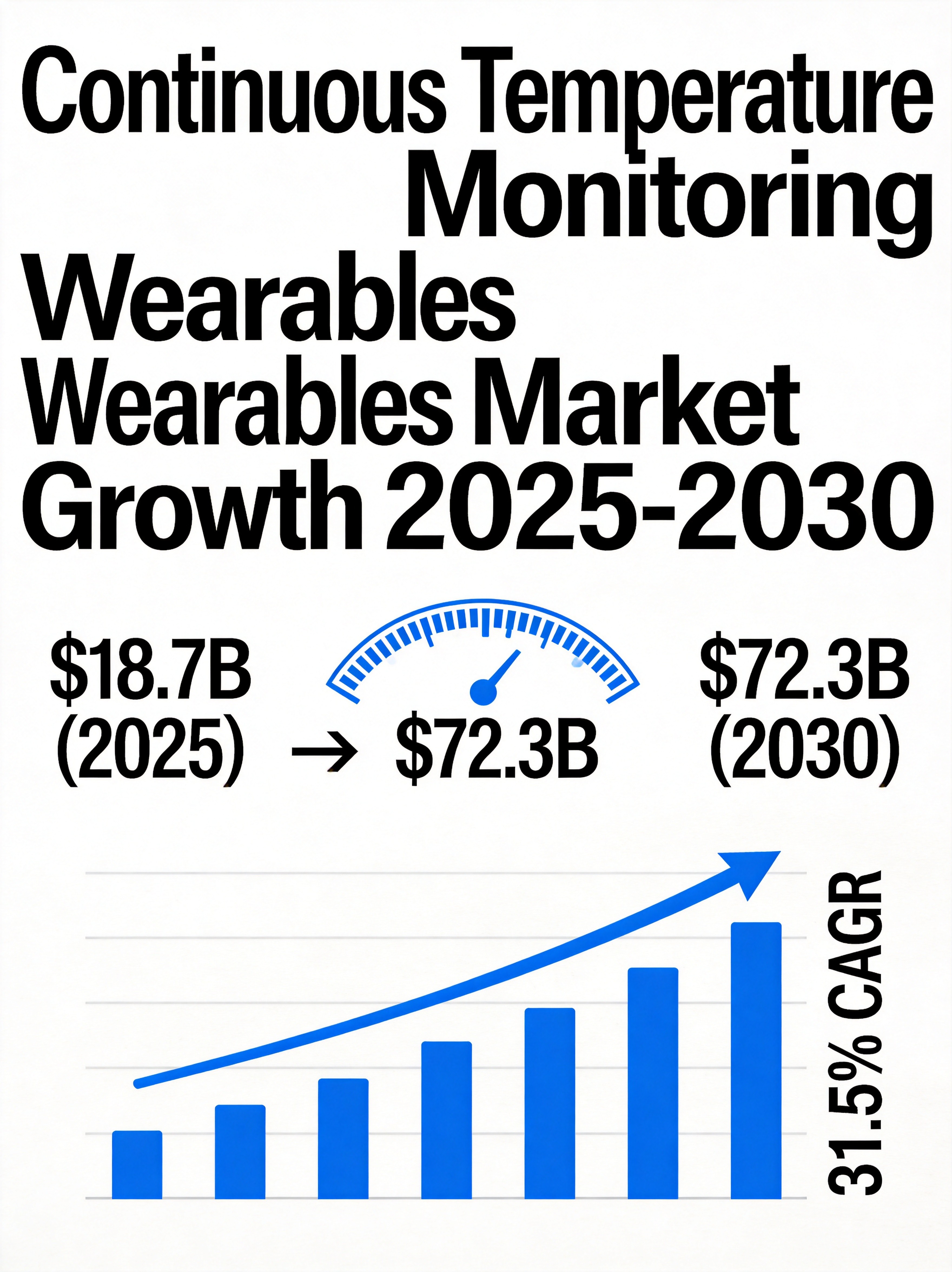
The numbers tell a compelling story. The global continuous core body temperature monitoring patch market reached $18.7 billion in 2025, marking a 34.2% year-over-year increase from 2024, with projections pointing to $72.3 billion by 2030 at a compound annual growth rate of 31.5% (Industry World, 2026). The broader temperature monitoring device market surpassed $47.2 billion in 2025, up from $38.6 billion in 2024 — a 22.3% annual expansion.
Several structural forces drive this growth. Remote patient monitoring (RPM) has become a permanent fixture of healthcare delivery. The IoT and Virtual Hospital market, valued at $26.46 billion in 2025, is forecast to reach $116.66 billion by 2033 (CAGR 18.6%), and temperature sensing is a core biometric within these platforms. Hospital procurement of wireless-connected temperature monitoring equipment crossed the 60% threshold for the first time in 2025, according to industry data.
The clinical evidence base continues to strengthen. The World Health Organization reports that approximately 489,000 heat-related deaths occurred annually between 2000 and 2019, with heat-related mortality among adults aged 65 and older increasing by approximately 85% between the 2000–2004 and 2017–2021 periods (WHO, 2024). Continuous temperature monitoring provides an early-warning infrastructure that spot-check measurements cannot match.
For B2B buyers, the regional breakdown matters. North America held 41.2% of the continuous temperature monitoring patch market in 2025, followed by Europe at 28.6%. Asia-Pacific is the fastest-growing region at 39.8% year-over-year expansion, driven by aging populations and chronic disease management programs across China, Japan, and South Korea. Latin America, the Middle East, and Africa are emerging markets where healthcare infrastructure investment is creating new procurement channels.
2. Technology Architecture: What Buyers Should Evaluate
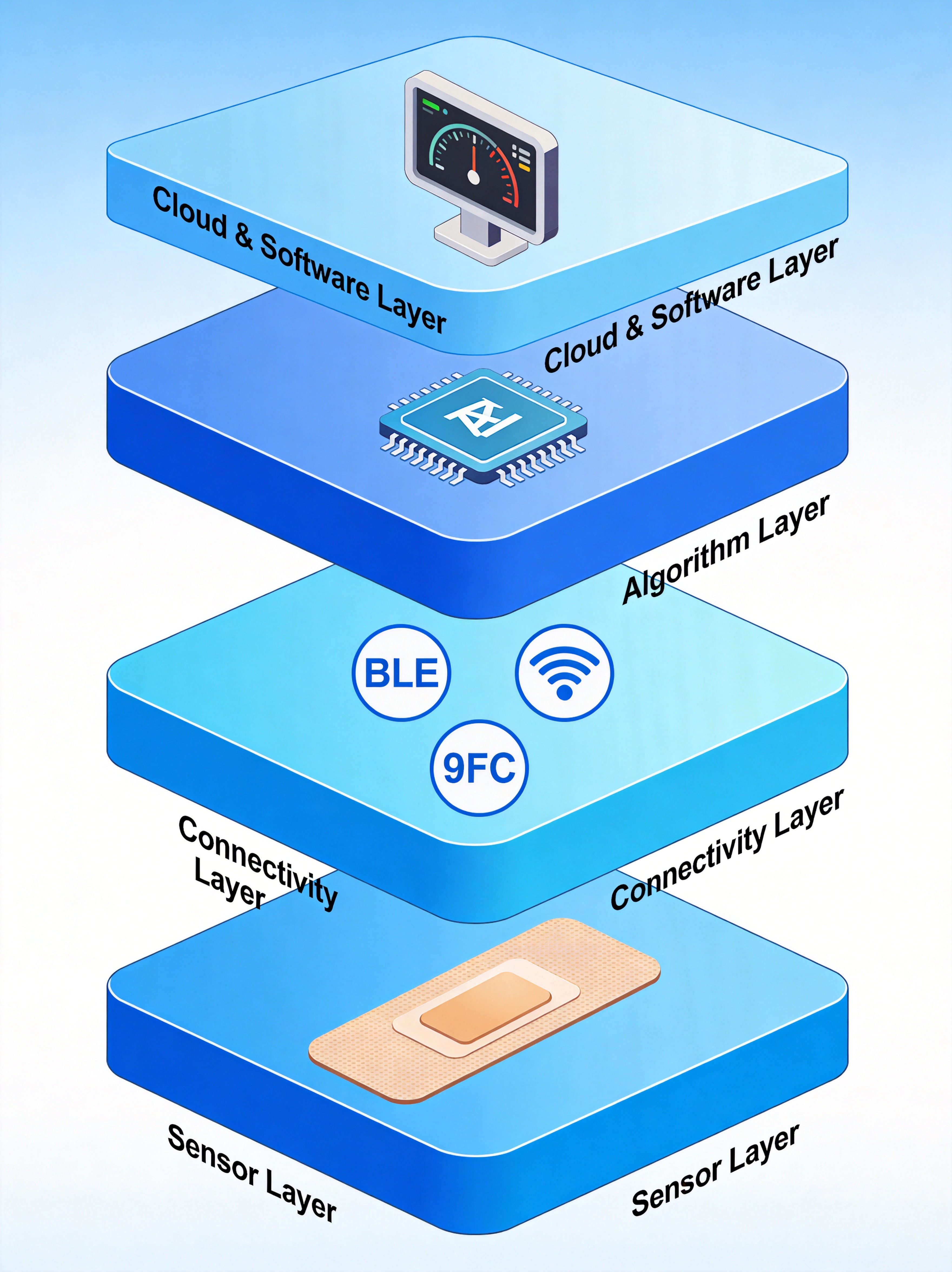
Understanding the technology stack helps procurement teams make informed sourcing decisions. Modern continuous temperature monitoring wearables operate across four interdependent layers:
Sensor Layer. The core sensing technology has advanced significantly. Flexible hybrid electronics and nanomaterial-based electrodes now achieve measurement accuracy of ±0.1°C across the physiological range. Medical-grade devices comply with ISO 80601-2-56, which specifies a maximum permissible error of ±0.3°C in the 34°C to 43°C range for clinical thermometers. Patch thickness has dropped below 0.8 mm in leading designs, and continuous monitoring battery life has extended to 14 days with Bluetooth Low Energy 5.4 chipset integration.
Connectivity Layer. BLE 5.4, NFC, and in some configurations Wi-Fi or cellular IoT (NB-IoT/LTE-M) provide the data pipeline. The choice of protocol affects deployment architecture — BLE suits bedside-to-nurse-station workflows, while cellular IoT enables direct-to-cloud architectures for home-based RPM programs. For OEMs developing these direct-to-cloud solutions, the 4G LTE smart watch provides standalone cellular connectivity to assist in transmitting continuous vital data directly to the cloud without requiring a paired smartphone.
Algorithm Layer. AI-driven heat flux compensation models now translate skin-surface readings into core body temperature estimates with clinical-grade accuracy. Deep learning algorithms trained on multi-subject datasets have improved core temperature inference accuracy by approximately 40% compared to 2024-era models. For OEM buyers, the algorithm layer is a critical differentiator: proprietary models with regulatory validation create defensible competitive advantages.
Software & Cloud Layer. Raw temperature data gains clinical value through analytics platforms. Dashboards that surface trend anomalies, fever pattern recognition, and sepsis early-warning scores (positive predictive value reaching 91.3% in some 2025-approved devices) transform continuous monitoring from a data stream into a clinical decision-support tool.
3. Key Application Verticals for B2B Distribution
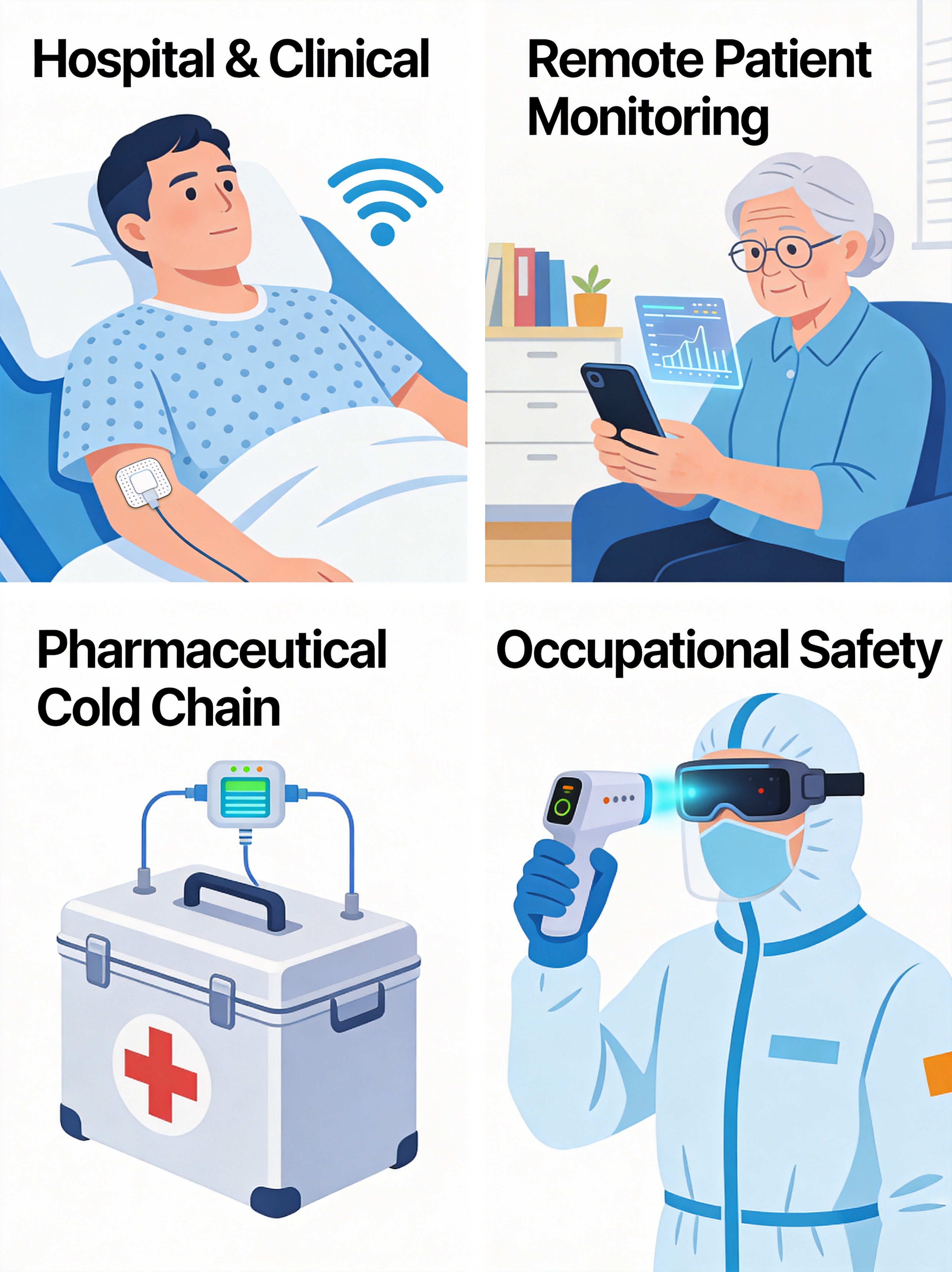
Continuous temperature monitoring wearables serve multiple B2B channels. Understanding the end-use requirements of each vertical helps distributors match product specifications to market needs.
3.1 Hospital & Clinical Settings
Hospital procurement of temperature monitoring equipment reached $22.1 billion globally in 2025. Perioperative temperature management is a primary driver — even mild perioperative hypothermia increases surgical site infection rates and prolongs recovery. Continuous wireless patches eliminate the workflow friction of intermittent spot-check measurements, integrating directly into electronic health record (EHR) systems.
Neonatal intensive care units represent another high-value application. Maintaining thermal stability in preterm infants is critical, and continuous skin-temperature monitoring with closed-loop incubator control reduces nursing workload while improving outcomes. Infection surveillance is the third major hospital use case: post-surgical temperature trending enables early detection of complications, and during infectious disease outbreaks, continuous temperature data at the ward level provides population-health insights that intermittent measurements cannot capture.
3.2 Remote Patient Monitoring & Home Healthcare
The home healthcare segment is projected to grow at 19.5% CAGR through 2035 for remote monitoring devices (Precedence Research). Home-based continuous temperature monitoring subscription services surpassed 54 million users globally in 2025, with cloud platform data storage and analytics revenue reaching $3.8 billion. For distributors, this channel requires devices designed for non-clinical users: simple application, clear visual indicators, and reliable connectivity without IT support. Devices targeting the elderly and pediatric segments need additional usability considerations — larger displays, caregiver-facing mobile apps, and alert thresholds configurable by healthcare providers.
3.3 Pharmaceutical Cold Chain & Logistics
Temperature-sensitive pharmaceutical logistics — vaccines, biologics, insulin — demands continuous monitoring throughout the supply chain. Wireless temperature sensor shipments for food safety and pharmaceutical cold chain applications grew 41.3% in 2025. This B2B vertical requires devices with extended battery life, wide temperature range coverage, and compliance with Good Distribution Practice (GDP) guidelines.
3.4 Occupational Health & Industrial Safety
Workers in high-heat environments — mining, construction, oil and gas, military operations — face heat stress risks that continuous monitoring can mitigate. The WHO identifies outdoor and manual laborers as a high-risk population for exertional heat stress. Wearable temperature monitors with real-time alerting provide a safety infrastructure layer for employers managing heat-exposure risk.
4. Regulatory & Certification Landscape for OEM Procurement
Regulatory compliance is the single most important factor in medical device procurement. Distributors who understand the certification landscape can qualify suppliers more efficiently and reduce time-to-market in target regions.
4.1 United States — FDA
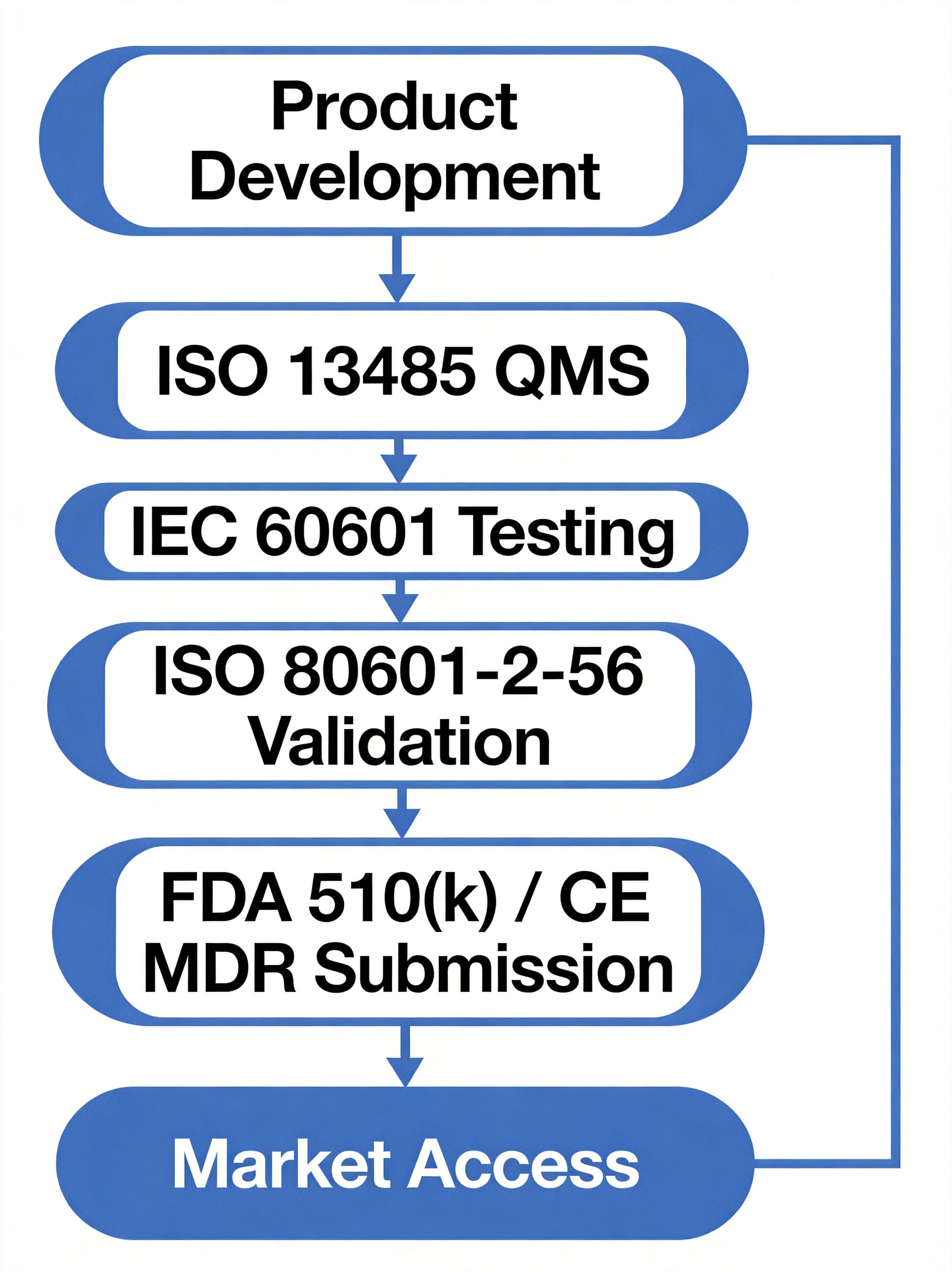
Most continuous temperature monitoring wearables are classified as Class II medical devices under FDA regulation, requiring a 510(k) premarket notification demonstrating substantial equivalence to a predicate device. The FDA updated its Digital Health Software Precertification (Pre-Cert) framework in 2025, streamlining the pathway for devices that incorporate AI-driven temperature analysis algorithms.
Key standards that OEM partners should support include: ISO 80601-2-56 (clinical thermometer performance requirements), IEC 60601-1 (medical electrical equipment safety), IEC 60601-1-2 (electromagnetic compatibility), and ISO 10993 series (biocompatibility evaluation for skin-contact materials).
4.2 European Union — CE Marking under MDR 2017/745
The EU Medical Device Regulation has raised the compliance bar for temperature monitoring wearables. Notified Body review is required for Class IIa and above devices. Technical documentation must demonstrate conformity with General Safety and Performance Requirements (GSPR), including clinical evaluation reports, risk management per ISO 14971, and post-market surveillance plans. The 2025 revision to MDR introduced specific provisions for wireless temperature monitoring devices regarding data privacy and cybersecurity. EUDAMED registration and Unique Device Identification (UDI) compliance are mandatory for market access.
4.3 Other Key Markets
China NMPA upgraded temperature patch products from Class II to Class III management in November 2025, increasing regulatory scrutiny on clinical accuracy validation. Japan PMDA requires compliance with JIS T4207 standards. Other markets including Health Canada (Medical Device Licence) and Australia TGA (ARTG inclusion) have their own classification frameworks. When evaluating OEM partners, procurement teams should verify which regulatory submissions the manufacturer supports, the status of technical documentation packages, and whether the partner maintains ISO 13485-certified quality management systems.
5. OEM Partnership Selection: Criteria for B2B Buyers
Selecting the right OEM partner for continuous temperature monitoring wearables requires a structured evaluation framework. The following criteria address the most common failure points in medical device outsourcing relationships.
5.1 Manufacturing Capability & Quality Infrastructure
A qualified OEM partner should demonstrate ISO 13485 certification for medical device quality management, cleanroom manufacturing capability (ISO Class 7 or 8), automated optical inspection (AOI) and X-ray inspection systems, batch traceability from component sourcing through finished device serialization, and capacity for both pilot production runs (200–500 units) and mass production (5,000+ units per run). Over 64% of medical EMS providers now use automated inspection systems, and 48% operate cleanroom-grade production environments.
5.2 R&D & Customization Capability
Beyond contract manufacturing, the strongest OEM partners provide design-for-manufacturability (DFM) input, rapid prototyping, and customization across sensor specifications, form factor, wireless protocol selection, firmware, mobile app and cloud dashboard integration, and private-label branding. Over 54% of medical device OEMs now require rapid prototyping capabilities from their EMS partners, and 62% of EMS companies collaborate with OEMs on co-development of next-generation devices.
5.3 Regulatory Support
The OEM partner’s regulatory capability directly impacts your time-to-market. Evaluate whether the manufacturer provides design history files and technical documentation packages aligned with FDA 510(k) or CE MDR requirements, biocompatibility testing coordination (ISO 10993), electrical safety and EMC pre-compliance testing, clinical validation study design support, and post-market surveillance infrastructure.
5.4 Supply Chain Resilience
Post-pandemic supply chain realities demand that OEM partners maintain multi-source component strategies for critical semiconductors, sensors, and adhesives. Regional manufacturing diversification has accelerated — Southeast Asian and Mexican production capacity expanded from 23% to 38% of global output in 2025. Inventory buffer policies and obsolescence management plans for components with limited lifecycle windows are essential evaluation criteria.
5.5 Total Cost of Ownership
Rather than evaluating unit price alone, B2B buyers should calculate total cost of ownership across tooling and NRE amortization, minimum order quantity requirements, regulatory certification costs, logistics and import duties, and post-market support obligations. The market has seen average selling prices decline approximately 18.2% year-over-year as core component localization rates improve and manufacturing scale increases. OEM partners with vertical integration into sensor fabrication and PCB assembly can offer competitive pricing structures without sacrificing margin.
6. Competitive Landscape & Differentiation Opportunities
The global temperature monitoring device market shows moderate concentration — the top 10 enterprises hold approximately 62.5% of market revenue — but new entrants using modular design approaches and open algorithms are reducing barriers to entry. Four major M&A transactions in 2025, totaling $12.6 billion, focused on integrating temperature data platforms with chronic disease management applications.
For B2B distributors, differentiation opportunities exist in several areas. Multi-parameter integration — devices that combine temperature with SpO₂, heart rate, respiratory rate, and movement sensing provide richer clinical datasets. The electronic skin patch market, encompassing multi-parameter wearables, is projected to grow from $17.6 billion in 2025 to $49.18 billion by 2033 (Business Market Insights). Niche clinical applications — fertility tracking through continuous basal body temperature monitoring, pediatric fever management, and oncology-related neutropenic fever detection are underserved segments. Regional certification readiness — distributors who enter markets with pre-certified devices gain first-mover advantages, particularly in Asia-Pacific markets growing at 39.8% annually. Data-as-a-service models — approximately 15% of hospital clients adopted “hardware + data platform” annual subscription models in 2025, with customer lifetime value increasing 2.3x. As these data-driven platforms increasingly rely on machine learning to interpret complex biometric streams, maintaining ongoing regulatory compliance is critical; for deeper analysis, see our guide on managing ML model drift and bias under ISO TS 24971-2:2026.
7. Partner with XDUN Medical for Continuous Temperature Monitoring OEM Solutions
XDUN Medical specializes in the research, development, and contract manufacturing of wearable medical devices for B2B distribution partners worldwide. Our continuous temperature monitoring platform supports:
- Clinical-grade accuracy compliant with ISO 80601-2-56 performance requirements
- Flexible form factor customization — patches, wrist-worn devices, and integrated multi-sensor wearables
- Regulatory documentation packages supporting FDA 510(k), CE MDR, and other regional submissions
- Private-label and white-label manufacturing with full branding, packaging, and accessory customization
- Competitive pricing structures designed for distributor margin requirements across volume tiers
- Dedicated engineering support from prototype through mass production, including firmware, mobile app, and cloud platform integration
Whether you are a hospital group seeking a direct procurement partnership, a regional distributor building a private-label product line, or a digital health platform integrating continuous temperature data into your ecosystem, our OEM team is ready to discuss your requirements.
Contact the XDUN Medical OEM Team
Email: jine@xdunmedical.com
Phone/WhatsApp: +86-13544254314
Website: www.xdunmedical.com
Sources: WHO (2024), Industry World Global Temperature Monitoring Devices Report (2026), MarketGenics Wearable AI Market Report (2025), Straits Research Medical Smart Textile Market Report (2026), Business Market Insights Electronic Skin Patch Market Report (2026), Precedence Research Remote Neurological Monitoring Market Report (2026), ISO 80601-2-56:2017, FDA 510(k) Premarket Notification Database, EU MDR 2017/745.