Pediatric & Neonatal Wearable Monitoring Devices: The Complete B2B OEM Guide for Medical Device Distributors
By
/ 2026 年 6 月 25 日
Category: News Tags: pediatric wearable monitoring, neonatal monitoring devices, medical device OEM, NICU monitoring, infant vital signs monitoring, wearable medical sensors, pediatric healthcare technology, medical device manufacturing
The global neonatal wearable systems market reached USD 2.85 billion in 2024, with projections pointing toward USD 29.3 billion by 2035—a compound annual growth rate of 23.6%, according to Metatech Insights. This figure tells a story far bigger than revenue. It reflects a fundamental shift in how healthcare systems approach one of medicine’s most vulnerable patient populations: newborns and infants in their first critical hours, days, and weeks of life.
For medical device distributors, procurement officers, and healthcare brands worldwide, the pediatric wearable monitoring segment represents arguably the most compelling growth opportunity in the broader medical device landscape. The convergence of miniaturized sensor technology, wireless connectivity, and mounting clinical evidence has created a market moment where demand consistently outpaces supply—particularly for OEM partners who can deliver reliable, regulatory-ready products at scale. To address this need for seamless remote monitoring, manufacturers are increasingly turning to standalone solutions like the 4G LTE pediatric smart watch, which leverages independent cellular connectivity and medical-grade sensors to support continuous vital sign tracking.
This guide examines the clinical drivers, device categories, regulatory landscape, and OEM selection criteria that define the pediatric and neonatal wearable monitoring market in 2025 and beyond.
our comprehensive guide on FDA 2023 wearable cybersecurity and B2B implementation.
Device Categories and Technology Architecture
The pediatric wearable monitoring segment encompasses several distinct device categories, each addressing specific clinical workflows and patient needs.
Wearable Vital Sign Monitors
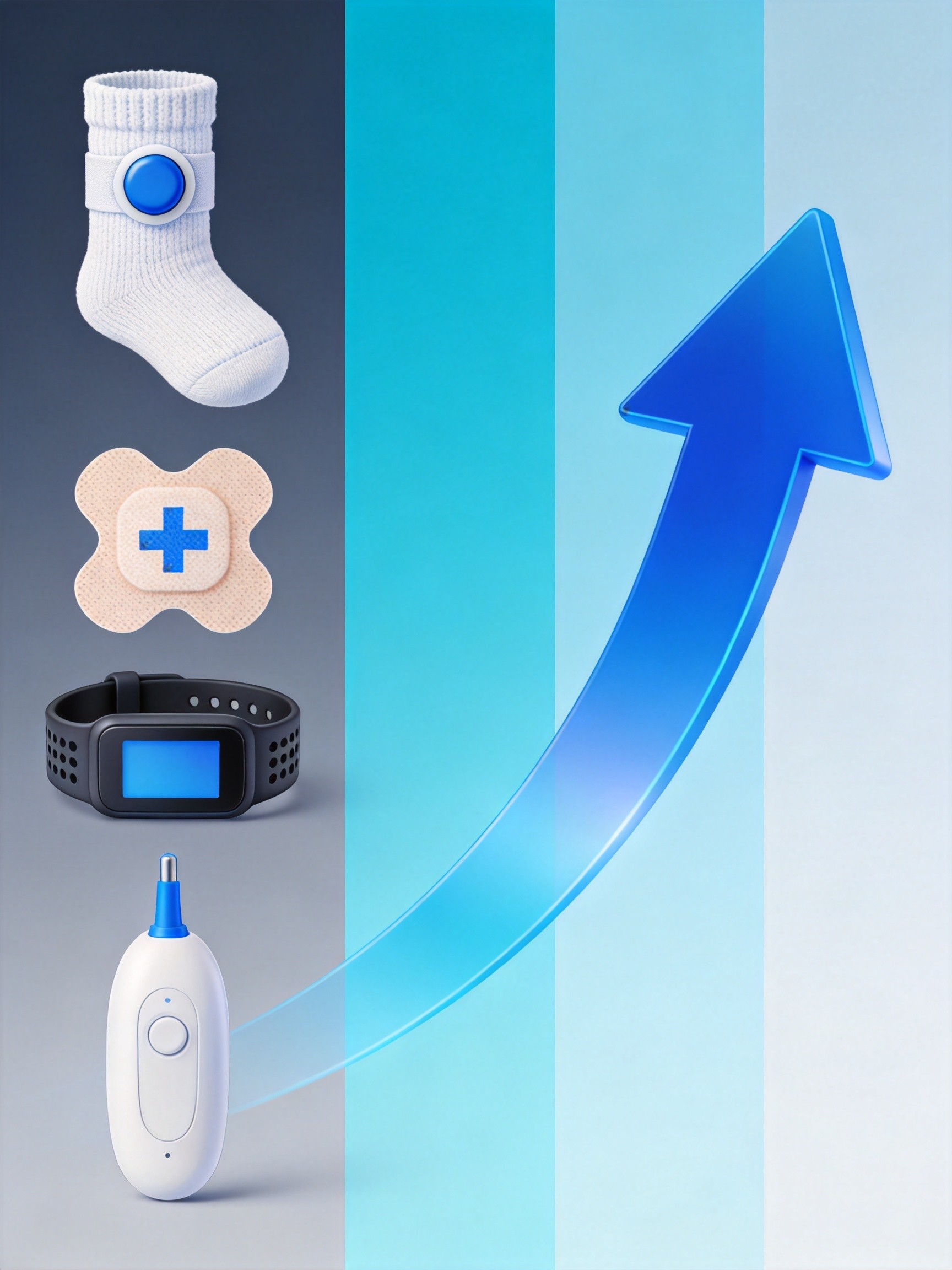
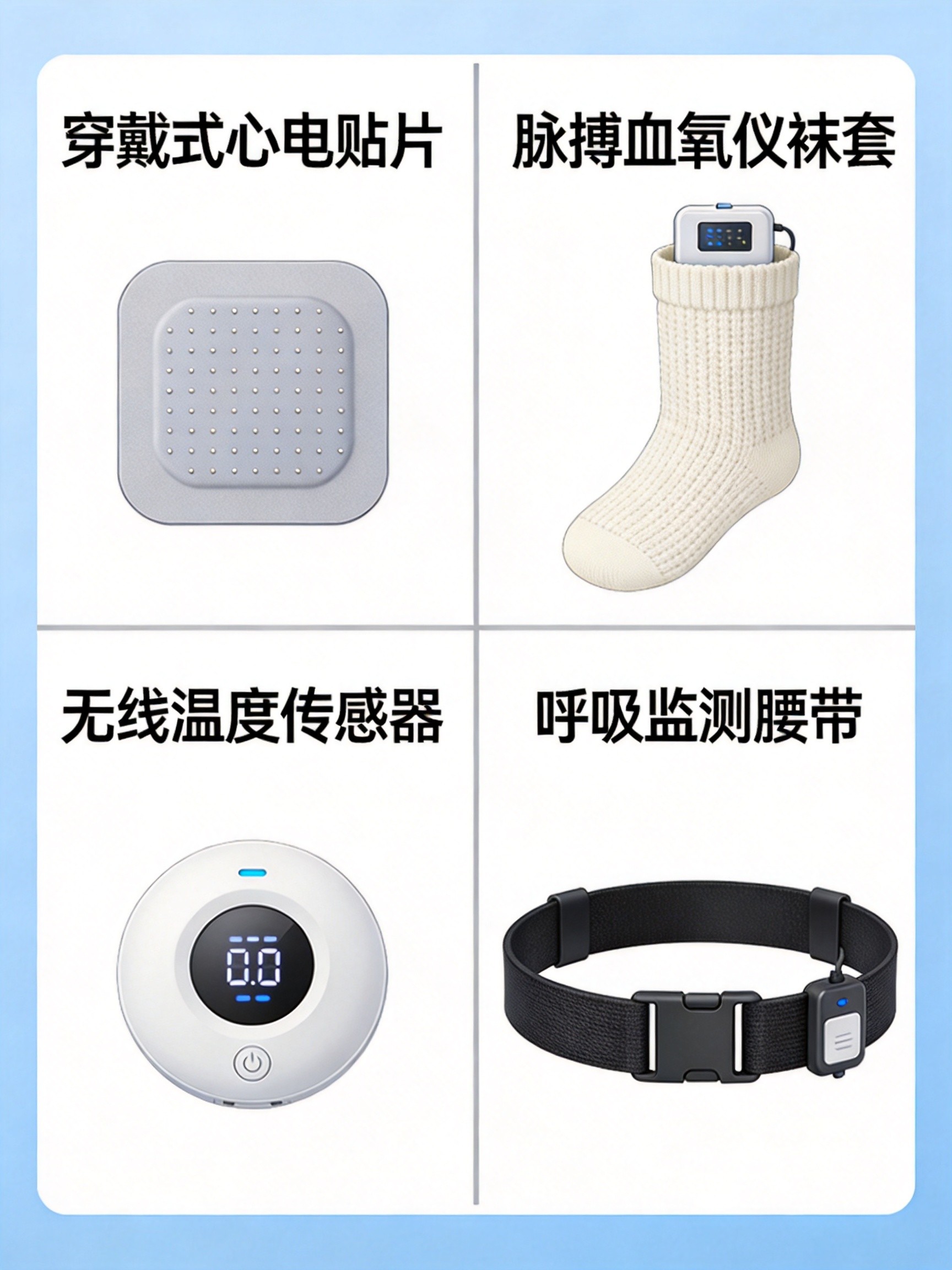
These devices track core physiological parameters—heart rate, respiratory rate, blood oxygen saturation (SpO2), and temperature—through skin-contact sensors integrated into soft, infant-safe form factors. Common configurations include foot-worn socks with embedded pulse oximetry, chest-worn patches with multi-parameter sensing, and wrist-worn bands optimized for pediatric anatomy. The sensor technology typically employs photoplethysmography for optical measurements, thermistors for temperature, and accelerometers for motion and respiratory rate derivation.
Neonatal ECG Monitors
Wireless ECG patches designed specifically for neonatal chest dimensions provide continuous cardiac rhythm monitoring without the tethering cables that complicate NICU care. These devices use hydrogel adhesives developed for premature infant skin, which is significantly thinner and more permeable than adult skin. Single-lead configurations dominate the wearable ECG segment, though multi-lead patches are emerging for more comprehensive arrhythmia detection.
Wearable Respiratory Monitors
Respiratory monitoring wearables employ multiple sensing modalities. Impedance pneumography measures chest wall expansion through electrode pairs. Acoustic sensors detect breath sounds and airflow patterns. Some newer designs incorporate stretch-sensitive fabrics that register thoracic and abdominal movement directly, eliminating the need for adhesive electrodes.
Wireless Temperature Sensors
Continuous temperature monitoring patches and bands provide real-time thermal surveillance without the interruptions of intermittent manual measurements. These devices are particularly valuable for detecting early signs of neonatal sepsis, where temperature instability often precedes other clinical indicators by hours.
Integrated Multi-Parameter Platforms
The most advanced segment combines multiple sensing modalities into a single wearable platform.
our guide on negotiating OEM RMA clauses and ensuring FDA CAPA compliance.
Regional dynamics favor new entrants. While North America accounted for approximately 35% of the global neonatal devices market in 2024, the fastest growth rates are concentrated in Asia-Pacific, the Middle East, and Sub-Saharan Africa—regions where healthcare infrastructure investment is outpacing mature markets and where established Western brands face pricing and localization challenges that agile OEM partnerships can address.
Regulatory Considerations for OEM Partners
Navigating the regulatory environment is arguably the most critical factor in pediatric wearable monitoring OEM success. The requirements vary significantly by target market.
FDA clearance for infant wearable monitoring devices typically follows the 510(k) pathway when a predicate device exists, or the De Novo classification pathway for novel devices without a suitable predicate. The FDA’s 2023 De Novo authorization for the Owlet Dream Sock established an important precedent: consumer-friendly form factors can achieve medical device clearance when they demonstrate clinical accuracy and appropriate alarm algorithms. OEM partners should be prepared to support the full Design History File, Risk Management File per ISO 14971, and software documentation per IEC 62304 requirements.
CE marking under the European Medical Device Regulation (EU MDR 2017/745) classifies neonatal monitoring wearables as Class IIa or IIb devices, depending on the monitoring function and clinical claims. The transition from MDD to MDR has raised the clinical evidence bar substantially, requiring post-market clinical follow-up plans and more rigorous technical documentation. Manufacturers with established MDR-compliant technical files provide significant time-to-market advantages for distributors entering the European market.
Beyond the major Western regulatory frameworks, market-specific requirements include China’s NMPA registration, Japan’s PMDA approval, Brazil’s ANVISA certification, and Saudi Arabia’s SFDA clearance. A capable OEM partner maintains familiarity with the documentation requirements across these jurisdictions and can structure the technical file to support parallel submissions.
For distributors and brands, the key distinction lies between OEM partners who hold their own regulatory certifications and those who operate purely as contract manufacturers. Partners with existing certifications can significantly compress the timeline from product specification to market entry, often reducing the regulatory phase by 12 to 18 months compared to starting from scratch.
What to Evaluate in a Pediatric Wearable OEM Partner
Selecting the right manufacturing partner for pediatric and neonatal wearable devices requires evaluation criteria that go beyond the standard OEM checklist.
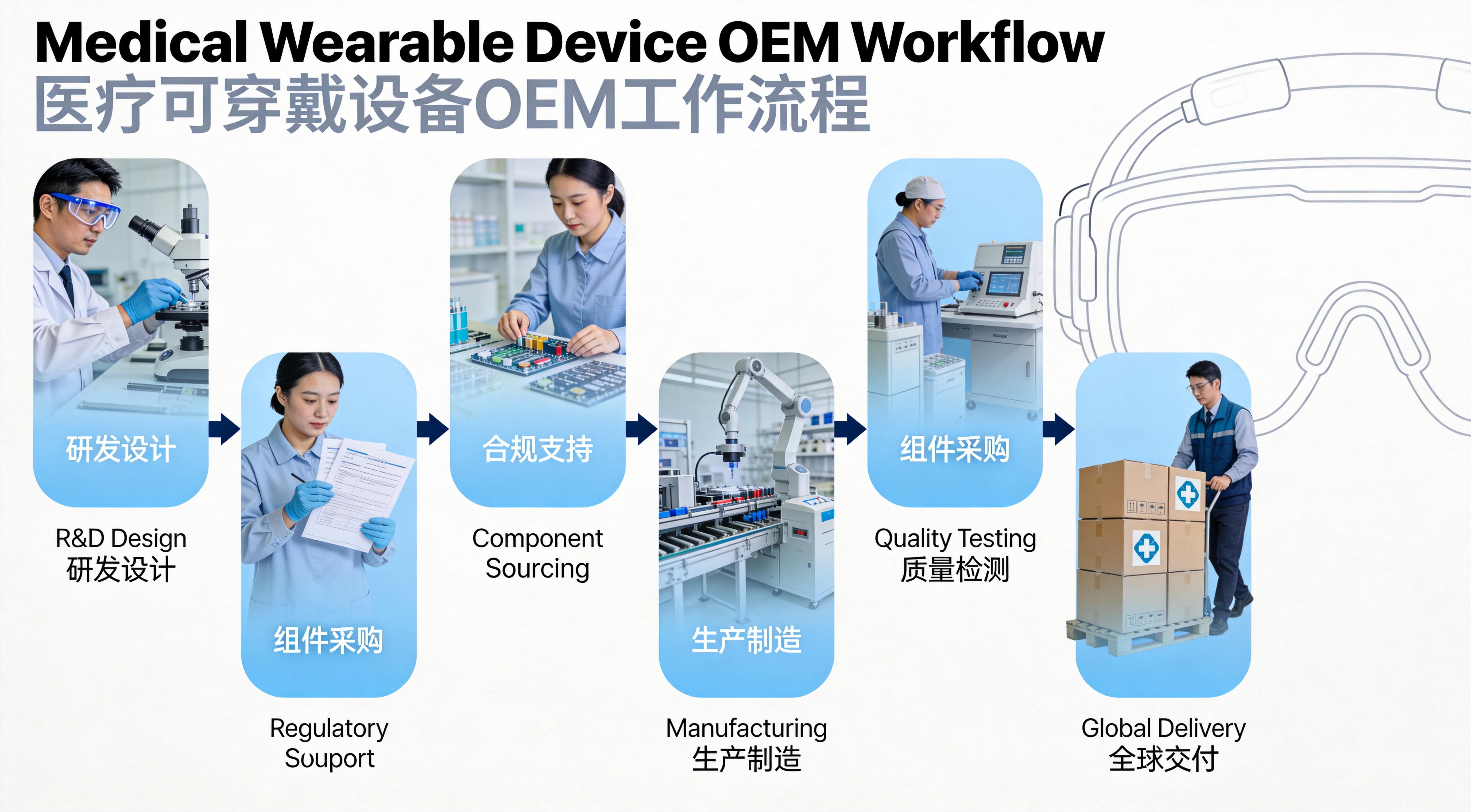
Medical-grade manufacturing certifications. ISO 13485:2016 certification is the baseline requirement. The facility should demonstrate experience with FDA QSR (21 CFR Part 820) compliance and maintain documented quality management systems that cover design controls, purchasing controls, production and process controls, and corrective and preventive actions.
Pediatric-specific design expertise. Infant and neonatal device design differs fundamentally from adult medical wearables. Materials must be biocompatible with premature infant skin, which has a stratum corneum only 40-60% as thick as adult skin. Sensor form factors must accommodate patients ranging from 500 grams to 5 kilograms. Battery systems must be sealed against fluid ingress. Alarm algorithms must distinguish clinically relevant events from motion artifacts in a population that cannot cooperate with measurement protocols.
Sensor and component sourcing capability. The global semiconductor supply chain remains volatile, and medical-grade sensors—particularly pulse oximetry components, medical-grade accelerometers, and certified Bluetooth Low Energy modules—require validated supply chains with full lot traceability. OEM partners should demonstrate stable, documented relationships with component suppliers and maintain buffer inventory for critical components.
Regulatory documentation support. The partner should be capable of providing complete technical documentation packages, including material biocompatibility test reports per ISO 10993, electrical safety test reports per IEC 60601-1, electromagnetic compatibility test reports per IEC 60601-1-2, and software validation documentation per IEC 62304. These documents form the backbone of regulatory submissions across all major markets.
Scalability and production flexibility. Pediatric wearable monitoring demand can fluctuate significantly based on seasonal respiratory illness patterns, NICU expansion projects, and tender-based procurement cycles. The manufacturing partner should demonstrate the ability to scale from pilot production runs to high-volume orders while maintaining consistent quality metrics.
IP protection and confidentiality. Medical device OEM relationships involve sensitive technical specifications, proprietary algorithms, and competitive positioning information. The partner should operate under robust confidentiality frameworks and demonstrate clear IP ownership protocols.
The XDUN Medical OEM Advantage
📋 Editorial Note This content was produced with AI assistance and reviewed by human editors for factual accuracy. All medical and health claims are verified against authoritative sources (WHO, CDC, FDA, peer-reviewed journals). Learn more about our content standards →
 our comprehensive guide on FDA 2023 wearable cybersecurity and B2B implementation.
 our guide on negotiating OEM RMA clauses and ensuring FDA CAPA compliance.
 📋 Editorial Note This content was produced with AI assistance and reviewed by human editors for factual accuracy. All medical and health claims are verified against authoritative sources (WHO, CDC, FDA, peer-reviewed journals). Learn more about our content standards →