Smart Ring vs Smart Watch: A Comprehensive Comparison of Medical-Grade Health Monitoring
The global wearable medical devices market reached USD 42.74 billion in 2024 and is projected to grow at a CAGR of 25.53% through 2030, according to Grand View Research. As healthcare institutions, elderly care facilities, and corporate wellness programs increasingly adopt remote patient monitoring (RPM) solutions, the choice between smart rings and smart watches has become a critical strategic decision.
This analysis provides B2B stakeholders—hospitals, senior care operators, health management enterprises, and OEM/ODM partners—with an evidence-based comparison of these two form factors across clinical accuracy, application suitability, wear compliance, and total cost of ownership.
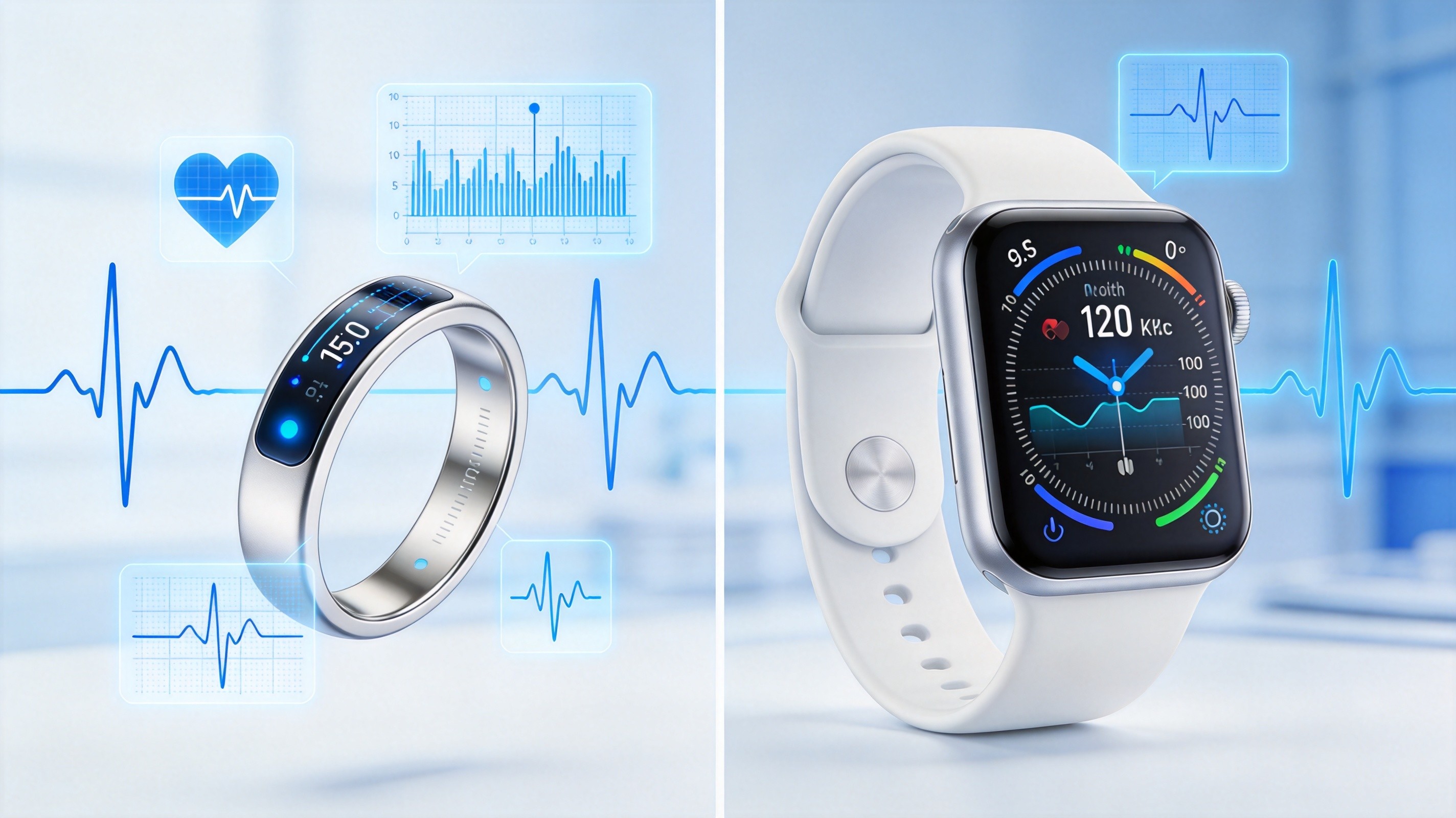
Technology Fundamentals: PPG Sensor Architecture and Signal Quality
Both smart rings and smart watches rely on photoplethysmography (PPG) sensors to measure vital signs, but their anatomical placement creates fundamental differences in signal quality and measurement reliability.
How Wrist-Based PPG Works
Smart watches use reflectance-mode PPG, where LED emitters and photodetectors sit on the same surface. Light penetrates 2–3 mm into subcutaneous tissue, sampling primarily superficial arterioles and capillaries. The wrist presents several engineering challenges:
- Lower perfusion index (PI): 0.5–2% AC/DC ratio, compared to 2–5% at the finger
- Greater motion artifact: Wrist movement during daily activities introduces significant signal noise
- Variable contact pressure: Strap tightness, sweat, and skin tone affect consistency
- Deeper vasculature: The radial artery lies beneath fascia and muscle, limiting optical access
Advanced smart watches mitigate these issues through multi-LED arrays (2–4 LEDs), dual photodetectors, and accelerometer-assisted motion cancellation. However, these algorithmic compensations remain approximations rather than direct measurements.
How Finger-Based Ring PPG Works
Smart rings leverage the unique physiology of the finger, where dense capillary networks and thinner skin create superior optical measurement conditions. Many ring devices use transmittance or semi-transmittance PPG geometry, where light passes through the finger tissue.
Key advantages of finger placement:
- 2–3x higher pulsatile signal amplitude compared to wrist PPG (Kinnunen et al., 2020)
- Reduced motion artifact during sleep: The finger remains relatively stable during nocturnal periods
- More accurate HRV detection: Stronger signal enables precise inter-beat interval measurement
- Consistent contact: Ring form factor maintains stable pressure against skin
A 2025 PMC systematic review of 107 studies found that finger-based PPG achieved heart rate accuracy correlations of r² = 0.996 versus clinical ECG reference, compared to r² = 0.97–0.98 for typical wrist devices.
Health Metric Accuracy Comparison
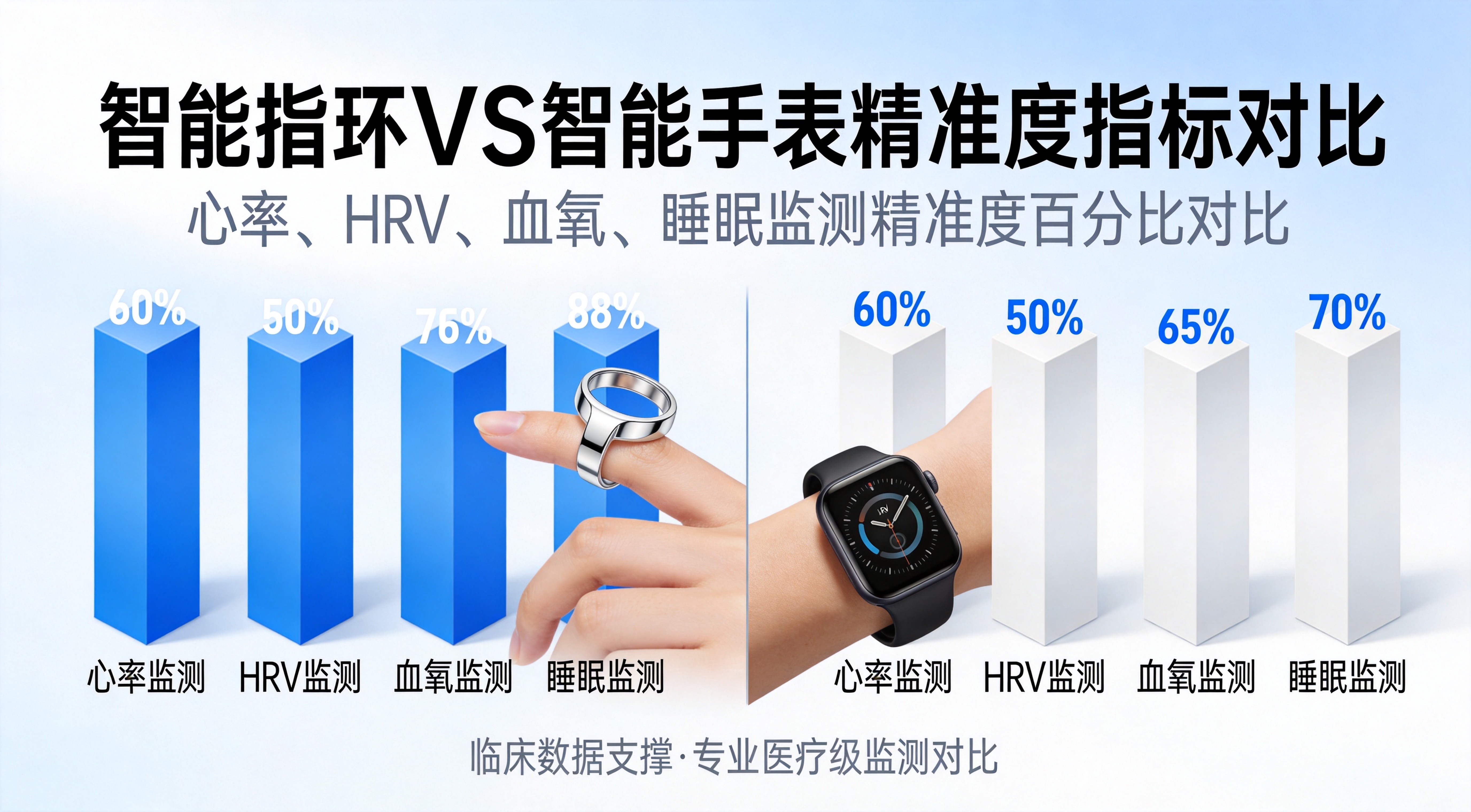
The following table summarizes clinical accuracy across key health monitoring parameters. Data is compiled from peer-reviewed studies, FDA-cleared device specifications, and independent third-party testing.
| Metric | Smart Ring Performance | Smart Watch Performance | Clinical Relevance |
|---|---|---|---|
| Resting Heart Rate | MAE 1.2–1.8 BPM; r² = 0.996 vs ECG | MAE 2.0–4.3 BPM; r² = 0.97–0.98 vs ECG | Baseline cardiovascular assessment, arrhythmia detection |
| Heart Rate Variability (HRV) | RMSSD error 5–12%; reliable for trends | RMSSD error 15–35%; limited clinical utility | Autonomic nervous system function, stress, recovery |
| Blood Oxygen (SpO₂) | ±1.0–1.5% error; FDA-cleared models available | ±2–3% error; most consumer devices wellness-only | Sleep apnea screening, respiratory condition monitoring |
| Sleep Staging | 85–92% agreement vs PSG; validated for sleep architecture | 65–78% agreement vs PSG; better for total sleep time | Sleep disorder diagnosis, recovery monitoring |
| ECG Measurement | Available on premium models; limited by form factor | Available on medical-grade watches; FDA-cleared for AFib detection | Atrial fibrillation screening, cardiac rhythm analysis |
| Blood Pressure | Estimation via PPG only; not clinically validated | Air-pump models achieve ±3 mmHg; FDA-cleared options exist | Hypertension management, cardiovascular risk assessment |
| Skin Temperature | ±0.1–0.2°C accuracy; continuous monitoring available | Less common; less reliable due to wrist exposure | Fever detection, menstrual cycle tracking, inflammation |
Heart Rate and HRV: The Ring’s Clinical Advantage
HRV measurement represents the most significant performance gap between rings and watches. Because HRV requires millisecond-accurate inter-beat interval detection, even small signal noise can dramatically skew results.
Research published in the Journal of Clinical Medicine (2017) demonstrated that finger PPG provided significantly more reliable time-domain HRV parameters (RMSSD, SDNN) than wrist PPG, particularly under stationary conditions like rest and sleep. For clinical applications requiring accurate autonomic nervous system assessment—such as stress management programs, cardiac rehabilitation, and neurodegenerative disease monitoring—this difference is clinically meaningful.
Blood Pressure: The Watch’s Domain
Blood pressure monitoring is where smart watches hold a clear advantage. Medical-grade smart watches with integrated air pumps and oscillometric measurement technology can achieve FDA-cleared accuracy of ±3 mmHg, making them suitable for hypertension management programs.
Smart rings, by contrast, are limited to PPG-based blood pressure estimation, which lacks sufficient validation for clinical use. While algorithmic advances continue to improve cuffless BP estimation, the physical constraints of the ring form factor prevent the inclusion of inflatable cuff technology. To overcome these physical limitations, larger wearables like the 4G LTE smart watch with integrated air pump can accommodate actual inflatable cuffs to deliver more reliable, standalone blood pressure readings.
Clinical Application Scenarios

The choice between ring and watch form factors depends heavily on the specific clinical use case. Below is a breakdown of key application areas and the optimal device type for each.
Chronic Disease Management
Cardiovascular Disease:
Smart watches with ECG and blood pressure capabilities are generally preferred for cardiac disease management. Their larger form factor allows for more comprehensive sensor arrays, including ECG electrodes and air-pump BP modules. However, for long-term heart rate variability trending and post-discharge monitoring where wear compliance is critical, smart rings offer advantages in patient adherence.
Diabetes and Metabolic Syndrome:
Neither device currently provides clinical-grade glucose monitoring. However, both can serve as adjunctive tools for tracking physical activity, heart rate patterns, and sleep quality—all of which impact glycemic control. Smart rings’ superior sleep monitoring may offer particular value for diabetes patients, given the established links between sleep quality and insulin sensitivity.
Respiratory Conditions (COPD, Sleep Apnea):
Smart rings with FDA-cleared SpO₂ monitoring and overnight oxygen desaturation index (ODI) calculation are the superior choice for respiratory disease management. A 2024 study in Sleep Medicine Reviews found that ring-based pulse oximetry achieved 85% sensitivity and 78% specificity for sleep apnea screening compared to full polysomnography, versus 60–75% for wrist-based devices.
Elderly Care and Fall Detection
For senior care facilities, the primary considerations are wear compliance, battery life, and ease of use. Smart rings offer several advantages:
- 24/7 wearability: No need to remove for charging (7+ day battery life)
- Discreet form factor: Reduces stigma compared to medical alert watches
- No screen complexity: Simple, intuitive operation for cognitively impaired users
- Continuous biometrics: Uninterrupted heart rate, HRV, and temperature monitoring
However, smart watches typically include built-in fall detection accelerometers and GPS localization, which are critical for emergency response. Many institutional care deployments use both form factors in tandem: rings for continuous health monitoring and watches for emergency response capabilities.
Post-Operative and Rehabilitation Monitoring
Post-surgical patients require continuous vital sign monitoring to detect early signs of complications. Smart rings excel in this scenario because:
- They can be worn continuously without interfering with wound care
- Their lightweight design avoids pressure points during bed rest
- Overnight monitoring provides early warning of cardiac or respiratory distress
- Temperature trending can detect post-operative fever earlier than periodic nursing checks
For physical rehabilitation tracking, smart watches are generally preferred due to their larger displays, real-time feedback, and exercise-specific motion tracking algorithms.
Corporate and Occupational Health Programs
Employee wellness programs face unique challenges: device adoption rates, user privacy concerns, and integration with existing health infrastructure.
Smart rings often achieve higher long-term engagement in corporate wellness programs because:
- Minimal lifestyle disruption (no notifications, no charging daily)
- Professional appearance suitable for office environments
- Focus on recovery metrics rather than performance pressure
- Lower risk of “quantified self” burnout
Conversely, smart watches offer more features (activity tracking, notifications, contactless payment) that may drive initial adoption, though engagement typically drops off after 3–6 months.
Battery Life and Wear Experience
Battery Performance Comparison
| Device Type | Typical Battery Life | Charging Time | Daily Charging Required |
|---|---|---|---|
| Smart Ring | 5–10 days | 60–90 minutes | No |
| Smart Watch (health-focused) | 2–4 days | 90–120 minutes | Sometimes |
| Smart Watch (full-featured) | 1–2 days | 60–90 minutes | Yes |
Battery life directly impacts data continuity. For clinical monitoring applications requiring uninterrupted data streams, smart rings’ 7+ day battery life eliminates the “charging gap” problem common with smart watches—where users forget to charge the device or remove it at night, creating data blind spots.
A 2024 analysis of remote patient monitoring programs found that devices with >7-day battery life achieved 23% higher data completeness and 18% lower patient dropout rates compared to devices requiring daily charging.
Wear Compliance and User Experience
Compliance is the most critical—and most overlooked—factor in wearable health program success. Even the most accurate sensor provides no clinical value if patients don’t wear it consistently.
Smart Ring Advantages:
- Minimal sensory profile: 3–6g weight, no screen, no vibration notifications
- 24/7 wearability: Can be worn during sleep, showering, and exercise
- Low psychological burden: “Invisible” monitoring reduces health anxiety
- No social stigma: Looks like regular jewelry, not a medical device
Smart Watch Advantages:
- Familiar form factor: Users already accustomed to wearing watches
- Real-time feedback: Display enables immediate data visualization
- Multi-functionality: Combines health tracking with notifications, payments, etc.
- Ecosystem integration: Syncs with smartphones and other devices
Real-world data from clinical wear studies shows that smart ring users maintain >90% daily wear rate after 6 months, compared to 55–65% for smart watch users in health monitoring contexts.
OEM/ODM Selection Guide for B2B Customers
For enterprises looking to deploy wearable health solutions at scale—whether for patient monitoring, employee wellness, or resale—several factors should guide the form factor decision.
Use Case Alignment
| Application | Recommended Form Factor | Key Selection Criteria |
|---|---|---|
| Chronic disease management (hypertension, AFib) | Smart Watch (medical-grade) | FDA/CE clearance, BP accuracy, ECG capability |
| Sleep disorder screening | Smart Ring | SpO₂ validation, sleep staging accuracy, battery life |
| Senior care facilities | Hybrid (Ring + Watch) | Fall detection, 24/7 monitoring, ease of use |
| Corporate wellness programs | Smart Ring | Engagement rate, privacy features, API integration |
| Post-operative monitoring | Smart Ring | Continuous vitals, comfort, data completeness |
| Fitness and rehabilitation | Smart Watch | Motion tracking, real-time feedback, exercise modes |
Regulatory and Compliance Considerations
Medical-grade wearables require appropriate regulatory clearances (FDA 510(k), CE marking, NMPA registration) depending on target markets. Key considerations:
- Software as a Medical Device (SaMD): Both form factors may be classified as SaMD depending on intended use and claims
- Data privacy: HIPAA, GDPR, and local health data regulations apply; ensure devices offer end-to-end encryption
- Interoperability: HL7 FHIR compatibility for EHR integration is critical for hospital deployments
- Validation data: Demand clinical validation studies demonstrating accuracy against reference standards
Total Cost of Ownership (TCO)
While upfront hardware costs are important, B2B buyers must consider full lifecycle costs:
| Cost Factor | Smart Ring | Smart Watch |
|---|---|---|
| Hardware unit cost | $80–$250 | $150–$500 |
| Battery replacement | 2–3 year lifespan; some models rechargeable | 1–2 year battery degradation |
| Software platform / licensing | $5–$15 per user / month | $8–$20 per user / month |
| Support and training | Lower (simpler device) | Higher (more features) |
| Replacement rate (annual) | 10–15% (loss/damage) | 20–30% (screen damage, battery failure) |
| 3-year TCO per user | $380–$790 | $600–$1,220 |
Xdun Medical Product Portfolio
Xdun Medical offers both smart ring and smart watch solutions, enabling healthcare and enterprise partners to select the optimal form factor for their specific use case. Our devices are designed with clinical accuracy, data security, and user compliance as core priorities.
Xdun R6 Smart Ring
The Xdun R6 represents our flagship health monitoring ring, engineered for 24/7 continuous vital sign tracking.
Key Specifications:
- Sensors: PPG heart rate, SpO₂ blood oxygen, 3-axis accelerometer, infrared temperature sensor
- Battery Life: 7+ days continuous monitoring, 60-minute magnetic charging
- Build: Titanium alloy body, IP68 waterproof, 5ATM water resistance
- Health Features: 24/7 heart rate monitoring, sleep staging analysis, HRV measurement, blood oxygen tracking, skin temperature monitoring
- B2B Capabilities: Open API/SDK for platform integration, white-label customization, bulk data export, multi-user management dashboard
Clinical Applications:
- Long-term vital sign trending for chronic disease management
- Sleep apnea screening programs
- Elderly care facility resident monitoring
- Corporate employee wellness and stress management
- Post-operative remote patient monitoring
Xdun Medical Smart Watch Series
Our smart watch portfolio includes three tiers to address different clinical and operational requirements:
1. ECG Health Watch
- Medical-grade ECG with 30-second single-lead measurement
- AFib detection algorithm (NMPA Class II certified)
- 5-day battery life for continuous monitoring
- Ideal for cardiology departments and cardiac rehabilitation programs
2. Air-Pump Blood Pressure Watch
- Oscillometric blood pressure measurement (±3 mmHg accuracy)
- 24-hour ambulatory BP monitoring (ABPM) mode
- FDA-cleared equivalent performance
- Essential for hypertension management and internal medicine departments
3. General Health Monitoring Watch
- PPG heart rate, blood oxygen, sleep tracking
- 7-day battery life, lightweight design
- Cost-effective for large-scale wellness deployments
- Suitable for corporate health programs and senior living communities
Why Choose Xdun Medical as Your OEM/ODM Partner
- Vertical integration: We control the entire supply chain from sensor design to final assembly
- Regulatory expertise: Established track record with FDA, CE, NMPA, and other global regulatory bodies
- Customization capability: Hardware modifications, software white-labeling, algorithm tuning
- Clinical validation: Partnerships with top teaching hospitals for research and validation
- Data security: HIPAA/GDPR compliant platform with end-to-end encryption
- Scalable production: 500K+ units monthly manufacturing capacity
Frequently Asked Questions
Q1: Are smart rings more accurate than smart watches for health monitoring?
A: It depends on the metric. Smart rings are generally more accurate for heart rate, HRV, SpO₂, and sleep monitoring due to the finger’s superior physiological characteristics for optical sensing. A 2025 PMC systematic review found ring-based heart rate achieved r² = 0.996 correlation versus ECG, compared to r² = 0.97–0.98 for typical wrist devices. However, smart watches offer superior ECG and blood pressure measurement capabilities due to their larger form factor accommodating more advanced sensors.
Q2: Which form factor is better for elderly care facilities?
A: Most senior care deployments use both form factors for different purposes. Smart rings are preferred for 24/7 continuous health monitoring due to their 7+ day battery life, comfortable wear, and high compliance rates. Smart watches are used for residents requiring fall detection, GPS location, and emergency call functionality. The combination provides comprehensive coverage while maintaining high user acceptance.
Q3: Can smart ring data be integrated with hospital EHR systems?
A: Yes, medical-grade smart rings from providers like Xdun Medical offer standard HL7 FHIR APIs for seamless electronic health record integration. Our B2B platform supports automated data ingestion into Epic, Cerner, and other major EHR systems, with configurable data mapping and clinical decision support triggers.
Q4: What regulatory clearances are required for medical wearables?
A: Requirements vary by market and intended use. In the United States, devices making medical claims require FDA 510(k) clearance or De Novo classification. The EU requires CE marking under the MDR (Medical Device Regulation). China requires NMPA registration. For general wellness use, less stringent requirements apply, but B2B healthcare deployments typically demand medical-grade regulatory status.
Q5: How do I choose between smart ring and smart watch for my B2B deployment?
A: Start with your primary use case. If sleep monitoring, long-term vital sign trending, or high user compliance is critical, smart rings are generally the better choice. If you need ECG, blood pressure, fall detection, or real-time display features, smart watches are more suitable. Many enterprise programs deploy both, using rings for continuous background monitoring and watches for interactive features and emergency response. Xdun Medical offers free pilot program consultations to help determine the optimal solution.
Conclusion and Next Steps
The smart ring vs smart watch decision is not a question of which is “better” overall, but which form factor optimally serves your specific clinical, operational, and financial objectives. Smart rings deliver superior physiological signal quality, higher wear compliance, and lower total cost of ownership for continuous monitoring applications. Smart watches offer more comprehensive sensor capabilities (ECG, BP) and interactive features at a higher price point and with lower long-term adherence.
For hospitals, senior care providers, health management companies, and distributors navigating this landscape, the most effective strategy often involves:
- Conducting a needs assessment across clinical stakeholders
- Running a 4–6 week pilot program with both device types
- Evaluating real-world data completeness, user satisfaction, and clinical utility
- Scaling the solution that delivers the best outcomes per dollar invested
Next Steps:
- Request a free Xdun Medical product catalog with full technical specifications
- Schedule a 30-minute consultation with our B2B solutions team
- Inquire about our pilot program with discounted pricing for initial deployments
- Explore our OEM/ODM capabilities for custom-branded solutions
Disclaimer: This article is for informational purposes only and does not constitute medical advice. Wearable device data should complement, not replace, professional medical diagnosis and treatment. Clinical decisions should always be made by qualified healthcare professionals.