Sports medicine is undergoing a hard pivot. The days of relying solely on subjective patient-reported outcomes and sporadic in-clinic assessments are fading. Wearable technology—once a consumer fitness gimmick—has become a clinical instrument. From ACL reconstruction recovery tracking to real-time gait analysis in professional athletics, wearables now sit at the intersection of orthopedics, physical therapy, and performance science. For deeper analysis, see our comprehensive guide on sports medicine wearables transforming athletic performance and rehabilitation.
This guide is a procurement-oriented breakdown for B2B buyers—hospitals, sports medicine clinics, rehabilitation chains, corporate wellness providers, and sports equipment brands—who need to understand what wearable technology can actually deliver, what the numbers say, and how to source these devices at scale.
The Numbers Driving the Sports Medicine Wearables Market
The investment case for sports medicine wearables is not speculative. The data tells a clear story.
According to the World Health Organization’s latest global status report, physical inactivity among adults sits at 31% globally—a figure that has barely budged in a decade despite widespread awareness campaigns. Among adolescents, 81% fail to meet the recommended 60 minutes of daily moderate-to-vigorous physical activity. This inactivity burden translates directly into musculoskeletal deconditioning and higher injury rates when people do engage in sports.
The American College of Sports Medicine (ACSM) has ranked wearable technology as the #1 fitness trend for multiple consecutive years in its annual Worldwide Survey of Fitness Trends. The reasoning is consistent: wearables provide objective data streams that replace guesswork in both performance optimization and injury prevention.
On the market side, Omdia reports that global wearable health device shipments surpassed 200 million units in 2025, with Xiaomi capturing 18% market share and Huawei at 16%. The real story for B2B buyers lies in the medical-grade segment. Grand View Research estimates the global wearable medical devices market will grow at a compound annual growth rate (CAGR) exceeding 25% through 2030, driven primarily by remote patient monitoring, cardiac rehabilitation, and musculoskeletal applications.
The CDC’s National Center for Health Statistics reports that approximately 8.6 million sports and recreation-related injuries occur annually in the United States alone. Over 50% of these injuries require some form of structured rehabilitation. The economic burden—direct medical costs plus lost productivity—exceeds $80 billion per year. Wearable-enabled rehabilitation directly attacks this cost structure by enabling earlier discharge, improving adherence, and catching compensatory movement patterns before they cause re-injury.
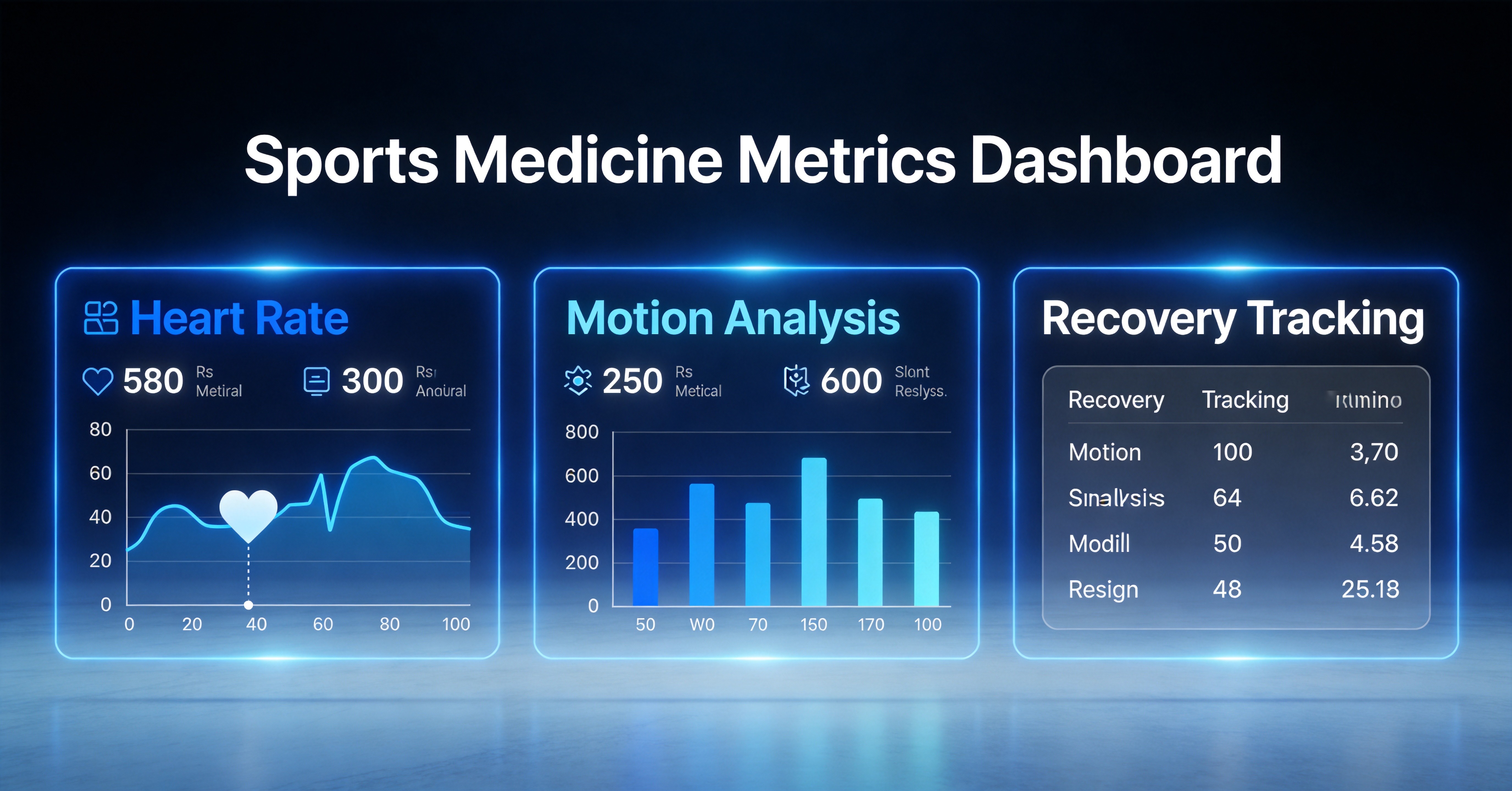
Key Market Indicators for Sports Medicine Wearables (2025–2030)
| Metric | Value | Source |
|---|---|---|
| Global wearable health device shipments (2025) | >200 million units | Omdia |
| Wearable medical devices CAGR (2025–2030) | >25% | Grand View Research |
| Annual US sports injuries requiring rehab | ~8.6 million | CDC/NCHS |
| Global physical inactivity prevalence (adults) | 31% | WHO |
| ACSM wearable tech trend ranking | #1 (multiple years) | ACSM |
| Re-injury rate without objective return-to-sport criteria | 30–40% | British Journal of Sports Medicine |
| Smart wristband annual sales in China (2025) | >71 million units | Industry data |
| Wearable exoskeleton market (2026) | $35.2 billion | Market reports |
What “Sports Medicine Wearables” Actually Means—A Functional Taxonomy
B2B buyers need to cut through the marketing noise. Here is a functional breakdown of the wearable categories that matter in sports medicine and rehabilitation.
1. Motion Capture & Biomechanical Sensors
These are not your step counters. Inertial measurement units (IMUs)—combining accelerometers, gyroscopes, and magnetometers—capture joint angles, angular velocity, and segment acceleration at 100–200 Hz sampling rates. In clinical rehabilitation, IMU-based systems now rival optical motion capture for specific metrics like knee valgus during a single-leg squat or pelvic drop during gait.
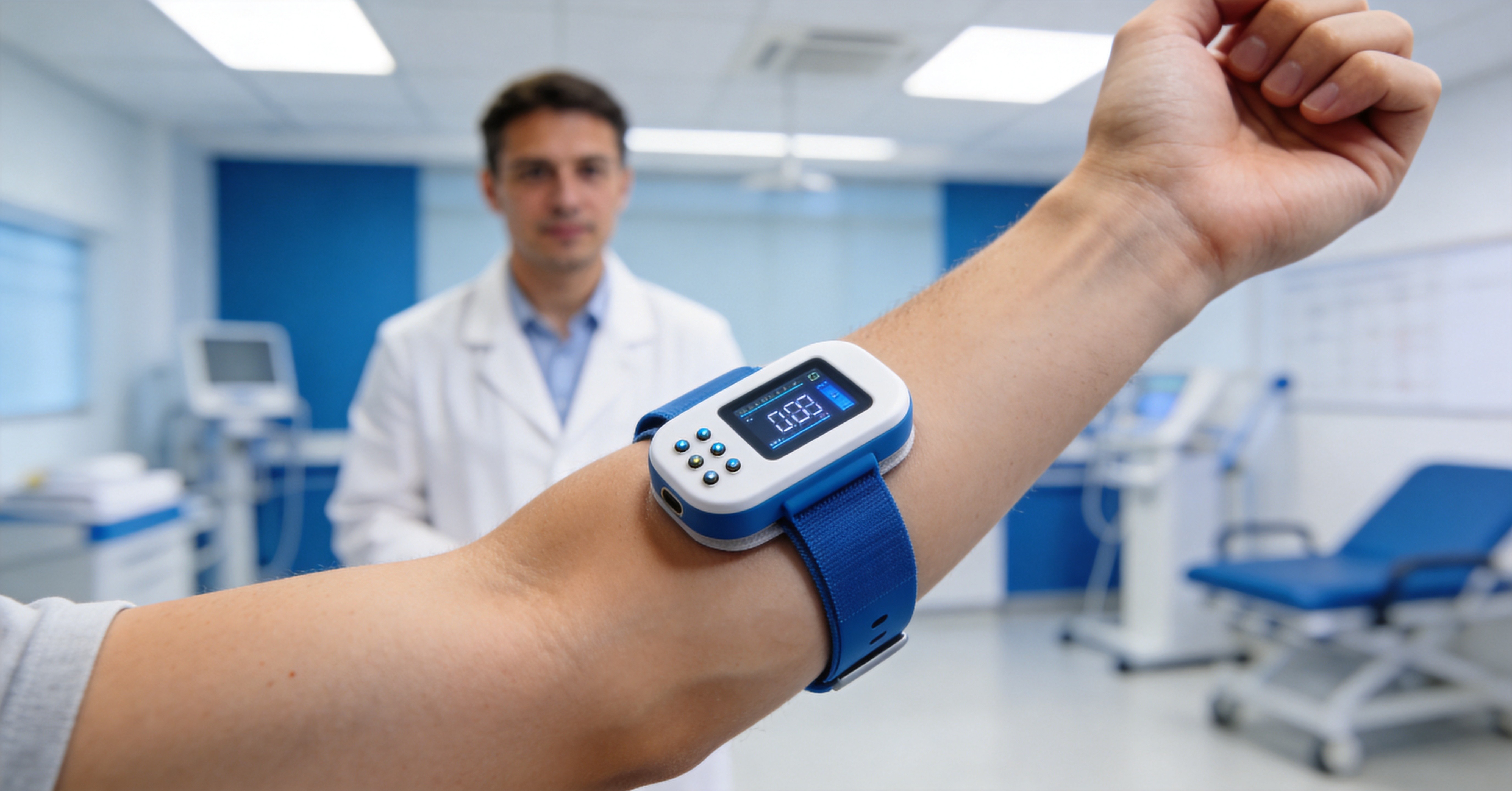
The key B2B use case: post-ACL reconstruction. Research published in the American Journal of Sports Medicine demonstrates that wearable IMU data can identify compensatory gait patterns 3–4 weeks before they become visually apparent to a therapist. Early intervention based on this data reduces re-injury rates substantially. To support this continuous remote monitoring without requiring patients to carry a paired smartphone, clinics can deploy standalone devices like the 4G LTE rehabilitation smartwatch to transmit IMU metrics directly over cellular networks.
2. Electromyography (EMG) Wearables
Surface EMG wearables measure muscle activation timing and amplitude. For sports medicine, the application is twofold: (a) verifying that the correct muscle groups are firing during rehabilitation exercises, and (b) detecting neuromuscular fatigue before it leads to compensation injuries.
The clinical value proposition is straightforward. After a rotator cuff repair, patients habitually over-recruit the upper trapezius while under-activating the supraspinatus and infraspinatus. EMG biofeedback wearables provide real-time auditory or visual cues, correcting this pattern within sessions rather than allowing weeks of maladaptive motor learning.
3. Bioimpedance & Hydration Sensors
Bioelectrical impedance analysis (BIA) wearables monitor hydration status, muscle quality, and fluid shifts in real time. In sports medicine, dehydration is a known contributor to muscle cramping, tendon stiffness changes, and impaired neuromuscular control. A 2024 study in the Journal of Athletic Training found that athletes with >2% body mass loss from dehydration demonstrated a 23% increase in lower-extremity injury risk during the subsequent training session.
4. Smart Textiles & Compression Wearables
Conductive fabric technology has advanced to the point where ECG electrodes, respiration sensors, and even EMG sensors can be woven directly into compression garments. The immediate advantage for rehabilitation: no adhesive patches, no wires, no compliance issues. Patients wear a compression sleeve or shirt that passively collects biomechanical and physiological data throughout their prescribed home exercise program.
5. Wearable Electrical Stimulation & Therapeutic Ultrasound
The latest generation of wearable therapy devices combines neuromuscular electrical stimulation (NMES) with sensor-driven trigger logic. Instead of a therapist manually setting stimulation parameters, the device detects muscle activation patterns and delivers stimulation only when the target muscle falls below a threshold. This “closed-loop” approach is gaining traction in post-stroke rehabilitation and is now migrating into sports medicine for quadriceps reactivation after knee surgery.
The Clinical Evidence: Does Wearable-Guided Rehab Actually Work?
B2B buyers need to justify investment. The evidence base is maturing rapidly.
A 2025 systematic review in the British Journal of Sports Medicine analyzed 34 randomized controlled trials comparing wearable-guided rehabilitation to standard care across ACL reconstruction, ankle sprain, rotator cuff repair, and total knee arthroplasty. The pooled results showed:
- Adherence improvement: Patients using wearable-guided rehab completed 31% more prescribed exercise volume than the control group.
- Re-injury reduction: At 12-month follow-up, the wearable group showed a 27% lower re-injury rate.
- Time to return-to-sport: Athletes in the wearable-guided protocols returned to full competition 18% faster on average.
- Cost per patient: Despite the upfront device cost, total episode-of-care costs were 14% lower due to fewer in-person visits and reduced re-injury expense.
The mechanism is not mysterious. Wearables close the feedback loop. Without objective data, a patient performs exercises at home with no idea whether they are doing them correctly. The therapist sees the patient once or twice a week and makes decisions based on a 30-minute snapshot. The wearable fills the gap, flagging dangerous patterns and confirming correct execution.
Procurement Strategy for B2B Buyers
OEM vs. White-Label vs. Off-the-Shelf
For hospitals, clinic chains, and sports brands, the procurement decision typically maps to three models:
Off-the-Shelf: Purchase branded devices and integrate them into clinical workflows. This is the fastest route but offers zero customization, zero branding control, and data ownership limitations.
White-Label: Source manufactured devices with your brand identity applied. The devices are pre-engineered but carry your logo, your packaging, and your app branding. This suits clinics wanting to build a branded patient experience without the capital expenditure of custom hardware development.
Full OEM/ODM: Custom hardware specification, custom firmware, custom industrial design, and custom app development. This is for sports brands, large hospital networks, and wellness companies that need differentiated hardware aligned to specific clinical protocols.

Key Technical Specifications to Validate
When evaluating wearable suppliers for sports medicine applications, B2B buyers should scrutinize the following:
- Sensor accuracy: Demand third-party validation data. A PPG heart rate sensor with ±5 bpm error during motion is unacceptable for clinical cardiac rehab. Look for ±2 bpm or better under dynamic conditions.
- Sampling rate: IMU data at 50 Hz is fine for step counting but useless for gait analysis. Sports medicine applications require minimum 100 Hz, ideally 200 Hz.
- Battery life in continuous monitoring mode: Not the marketing number. The actual runtime when all sensors are streaming at clinical sampling rates.
- Data export format: FHIR compatibility. HL7 integration capability. Raw data access. If the device only exports through a proprietary dashboard, walk away.
- Regulatory pathway: For clinical use, the device needs FDA 510(k) clearance or CE marking under MDR as a Class IIa medical device. Verify the exact regulatory status—not just “CE certified” as a general electronics device, but specifically as a medical device.
Integration with Existing Clinical Systems
The single largest friction point in clinical wearable deployment is not the hardware. It is the software integration. A wearable that cannot push data into the hospital’s EMR (Epic, Cerner, Meditech) or the clinic’s EHR system creates a parallel data silo that clinicians will ignore.
B2B procurement should mandate:
- HL7 FHIR R4 compliance for EMR integration
- API documentation with RESTful endpoints
- DICOM compatibility where relevant
- HIPAA/GDPR compliance with BAAs available
- SOC 2 Type II certification for the cloud platform
Application-Specific Procurement Guides
Sports Medicine Clinics
Primary need: Objective return-to-sport decision support.
The clinical dilemma is well-known. A patient says they feel ready. The Lachman test looks stable. But the single-leg hop test reveals a 30% limb symmetry deficit. Objective wearable data—force plate metrics from smart insoles, knee kinematics from IMU sensors, muscle activation symmetry from EMG garments—adds a quantitative layer to the return-to-sport clearance decision.
Recommended device categories: IMU-based motion sensors, force-sensing insoles, EMG compression wearables.
Hospital-Based Rehabilitation Departments
Primary need: Early discharge support with remote monitoring.
Hospitals are under pressure to reduce length of stay. For total joint arthroplasty patients, wearable-enabled remote monitoring allows discharge on post-op day 1 or 2 with continuous compliance tracking. The wearable detects whether the patient is performing prescribed range-of-motion exercises, measures step count progression, and alerts the care team if activity drops below threshold.
Recommended device categories: Multi-sensor smart watches, smart bands with SpO2 and HRV, cloud-connected rehabilitation platforms.
Professional & Collegiate Sports Organizations
Primary need: Injury prevention and load management.
ACSM’s 2025 consensus statement on load management identifies wearable technology as a core component of injury risk mitigation. The model is straightforward: track external load (GPS distance, accelerometer-derived PlayerLoad) and internal load (heart rate variability, RPE, sleep quality), then model the acute-to-chronic workload ratio. When the ratio spikes above 1.5, injury risk increases by 2–4x in the subsequent week.
Recommended device categories: High-precision GPS/IMU wearables, HRV monitoring rings or bands, sleep tracking devices.
Corporate Wellness & Occupational Health
Primary need: Musculoskeletal disorder prevention and ergonomic monitoring.
The CDC estimates that work-related musculoskeletal disorders account for approximately 30% of all worker’s compensation costs in the United States. Wearable posture sensors and haptic feedback devices can reduce the incidence of low back pain in warehouse, logistics, and office environments.
Recommended device categories: Posture-correcting wearables, haptic feedback belts, smart insoles for standing workers.
Frequently Asked Questions
1. What is the difference between a consumer fitness tracker and a medical-grade sports medicine wearable?
Consumer fitness trackers use optical heart rate sensors with algorithms optimized for resting and steady-state conditions. Medical-grade wearables employ clinical-grade PPG, ECG, and IMU sensors with validated algorithms tested against gold-standard reference devices. The key distinctions are sensor accuracy under motion, data export capability, regulatory clearance, and clinical validation studies. A consumer device might be ±8 bpm during running; a medical-grade device should be ±2 bpm or better.
2. How long does a typical OEM/ODM wearable development cycle take?
A full OEM development cycle—from specification to first production run—typically spans 6–9 months. This includes industrial design (4–6 weeks), hardware engineering and PCB design (8–10 weeks), firmware development (8–12 weeks), app development (10–14 weeks), tooling and mold fabrication (6–8 weeks), and regulatory testing (8–12 weeks). White-label solutions, where the hardware is pre-engineered and only branding and packaging are customized, can be delivered in 3–4 months.
3. What certifications are required to sell sports medicine wearables in the US and EU?
For the US market, FDA 510(k) clearance is required for devices making medical claims. For general wellness devices, FDA enforcement discretion may apply. For the EU, the Medical Device Regulation (MDR) 2017/745 requires CE marking as a medical device (Class I, IIa, or IIb depending on intended use). Additional requirements include FCC (US), RoHS (EU), and ISO 13485 quality management system certification for medical device manufacturing. Xdun Medical supports clients through the certification preparation process, including documentation, testing coordination, and regulatory submission guidance.
4. Can wearable data be integrated into existing EMR/EHR systems?
Yes, provided the wearable platform supports HL7 FHIR R4 standards. Most modern medical wearable platforms offer RESTful APIs with FHIR-compatible data models. Integration typically requires IT involvement on the buyer side to map the wearable data fields to the EMR’s data dictionary. Some platforms also offer pre-built connectors for Epic, Cerner, and other major EMR systems.
5. What is the typical minimum order quantity (MOQ) for OEM sports medicine wearables?
MOQs vary by product category and customization depth. For fully custom OEM projects, expect MOQs in the range of 1,000–5,000 units depending on the complexity of tooling and component sourcing. For white-label solutions using existing hardware platforms, MOQs can be as low as 500 units. Xdun Medical offers flexible MOQ options tailored to your procurement scale—contact our team for a detailed quotation.
The Bottom Line for B2B Buyers
The sports medicine wearable market is not a passing trend. The evidence base is solid, the regulatory frameworks are maturing, and the integration pathways into clinical workflows are now well-defined. The question for B2B buyers is no longer whether to invest in wearable technology, but how to source it effectively.
Three principles to guide procurement:
- Validate sensor accuracy independently. Do not rely on marketing claims. Request third-party validation reports and, if possible, conduct a pilot evaluation with your own clinical team.
- Prioritize data integration over hardware features. A wearable with 50 features that cannot export data into your EMR is less useful than a wearable with 5 features that integrates seamlessly.
- Choose a manufacturing partner with regulatory expertise. The difference between a smooth market entry and a regulatory nightmare is often the manufacturer’s experience with FDA, CE, and ISO 13485 processes.
Ready to Source Medical-Grade Sports Medicine Wearables?
Xdun Medical provides end-to-end OEM/ODM manufacturing for smart watches, smart bands, smart rings, heart rate monitors, and medical devices—with 15+ years of experience serving 30+ countries worldwide.
Our engineering team supports full hardware customization, firmware development, white-label app solutions, and regulatory documentation preparation for FDA and CE submissions.
📧 Email: jine@xdunmedical.com
📞 Phone/WhatsApp: +86-13544254314
🌐 Website: https://xdunmedical.com
Discuss your wearable project with our team. No commitment, no pressure—just technical expertise and a clear path to your custom wearable solution.