Sleep Monitoring Wearables: How Medical-Grade Sleep Tracking Devices Are Transforming Sleep Medicine
By Xdun Medical Editorial Team | June 2026
The Global Sleep Health Emergency
Sleep disorders have quietly become one of the most underdiagnosed public health crises of our time. According to the American Academy of Sleep Medicine (AASM), roughly 12% of American adults—approximately 1 in 8—have been diagnosed with chronic insomnia. The World Health Organization estimates that 27% of the global population experiences some form of sleep disturbance. Perhaps most alarming is obstructive sleep apnea (OSA): a landmark Lancet Respiratory Medicine analysis estimated nearly one billion people worldwide suffer from OSA, with approximately 80% of cases remaining undiagnosed. For deeper analysis on how OEMs are developing targeted wearable interventions for these specific conditions, see our B2B OEM guide on medical wearables for insomnia, sleep hygiene, and circadian rhythm disorders.
The economic toll is staggering. Undiagnosed OSA alone costs the U.S. healthcare system an estimated $149.6 billion annually when accounting for indirect expenses, lost productivity, and accident-related costs. In China, a 2018 study calculated that short sleep duration was linked to economic losses reaching $628.15 billion, equivalent to 4.62% of the nation’s GDP.
For sleep clinics, hospital respiratory departments, corporate wellness programs, and senior care facilities, the message is clear: traditional diagnostic pathways cannot scale to meet this demand. The in-lab polysomnography (PSG) model—while still the gold standard—requires specialized facilities, trained technicians, overnight stays, and costs that limit access. This is precisely where medical-grade sleep monitoring wearables are reshaping the clinical landscape.
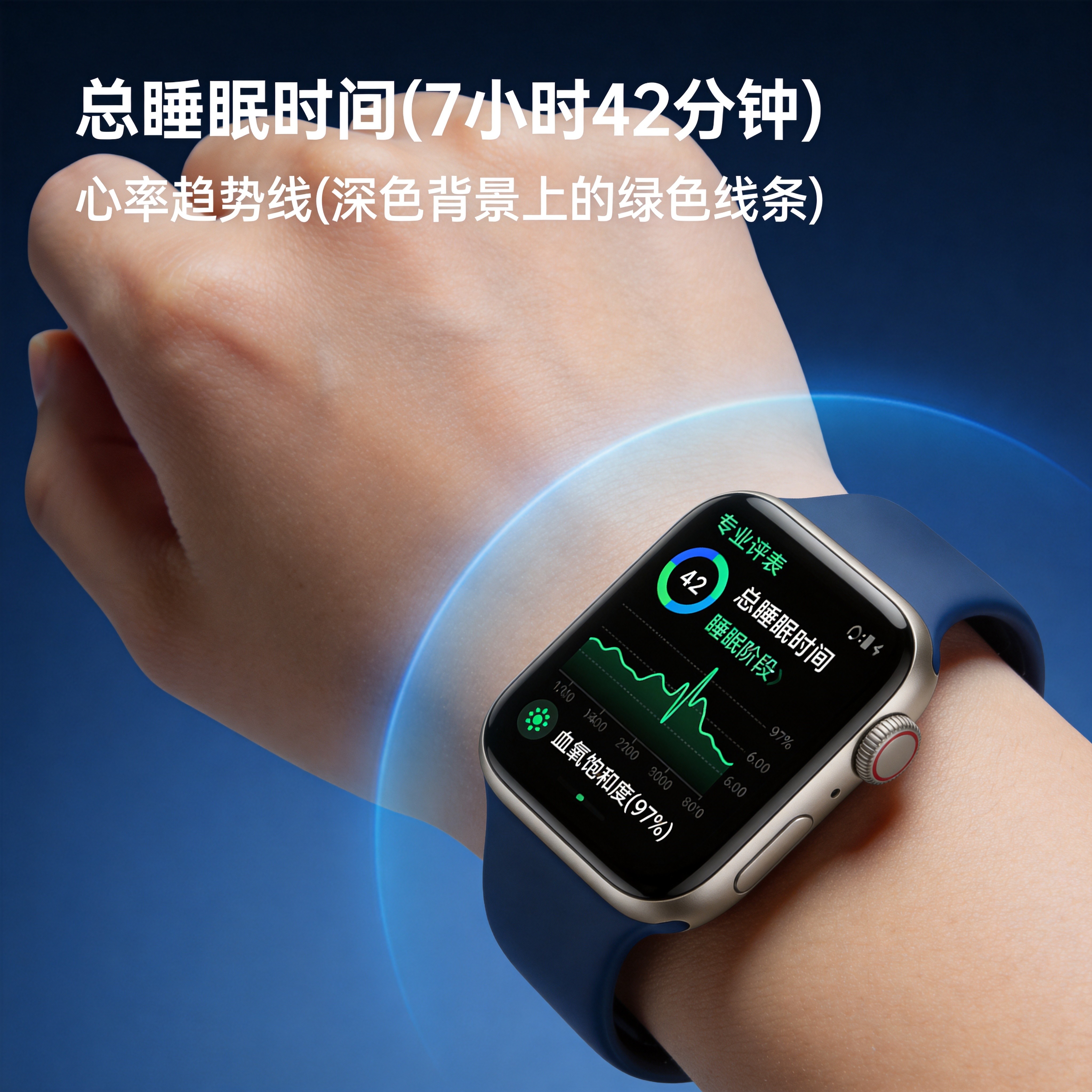
From PSG to Home: The Evolution of Sleep Diagnostics
Polysomnography has been the cornerstone of sleep medicine since the 1960s. A full PSG setup captures electroencephalography (EEG), electrooculography (EOG), electromyography (EMG), electrocardiography (ECG), respiratory effort, airflow, oxygen saturation, body position, and audio/video—a comprehensive but cumbersome array of sensors. The patient sleeps in an unfamiliar clinical environment tethered to dozens of electrodes, a scenario that often produces the “first-night effect,” where sleep architecture differs markedly from the patient’s typical patterns at home.
The home sleep apnea testing (HSAT) category emerged as a practical middle ground. Devices like the ResMed ApneaLink Air and Philips Alice NightOne reduced sensor count and allowed patients to test in their own beds. But these early HSAT systems remained single-night snapshots—useful for OSA screening but incapable of capturing night-to-night variability or tracking treatment response longitudinally.
Then came the wearable revolution. Between 2019 and 2023, the U.S. Food and Drug Administration cleared nine novel OSA-detecting wearables for home use. Devices like the NightOwl fingertip sensor (using peripheral arterial tonometry), the ANNE Sleep dual-patch system (combining ECG, accelerometer, and temperature sensing), and the AcuPebble acoustic sensor demonstrated that clinically meaningful sleep data could be captured with radically simplified hardware. Multi-night assessment became possible, revealing variability that single-night PSG simply cannot capture.
Yet these FDA-cleared devices were still designed for episodic diagnosis, not continuous monitoring. The next frontier—and the one with the greatest commercial potential for B2B buyers—is the medical-grade wrist-worn wearable that combines continuous sleep tracking with everyday wearability.
Sensor Fusion: The Three Pillars of Wearable Sleep Monitoring
What separates a medical-grade sleep wearable from a consumer fitness tracker? The answer lies in sensor architecture, signal quality, and algorithmic rigor. Three core sensing modalities work in concert:
Photoplethysmography (PPG)
PPG uses green, red, and infrared LED light directed at the skin to measure blood volume changes in the microvascular bed. From the raw PPG waveform, sophisticated algorithms extract heart rate (HR), interbeat intervals (IBI), heart rate variability (HRV), respiration rate, and—with multi-wavelength configurations—blood oxygen saturation (SpO₂).
The autonomic nervous system (ANS) modulates cardiovascular function differently across sleep stages. During non-REM deep sleep, parasympathetic tone dominates, producing lower and more regular heart rates with pronounced high-frequency HRV. During REM sleep, sympathetic activation creates higher heart rates with irregular patterns resembling wakefulness. PPG captures these autonomic signatures with sufficient fidelity that, when paired with movement data, sleep-wake detection accuracy can reach 92–97% against PSG-scored reference data.
The engineering challenge for OEM manufacturers is maintaining signal integrity across diverse skin tones, ambient temperatures, and motion conditions. This requires multi-channel PPG sensor arrays with dynamic LED current adjustment, optimized photodiode placement, and proprietary motion artifact rejection—areas where experienced manufacturers differentiate themselves from commodity suppliers.
Accelerometer and Gyroscope
Movement is the most intuitive sleep indicator: when a person stops moving for sustained periods, they are likely asleep. But accelerometer data serves a far more sophisticated role in modern sleep algorithms.
A triaxial accelerometer captures body position, gross motor activity, and subtle movements that correlate with sleep stage transitions. During REM sleep, for example, the body enters a state of muscle atonia punctuated by brief twitches—patterns distinctly different from the occasional repositioning movements of light sleep or the near-total stillness of deep slow-wave sleep.
Critically, the accelerometer also serves as the primary motion artifact reference for PPG signal processing. When the algorithm detects movement exceeding a calibrated threshold (typically 0.1 g), it flags the corresponding PPG segment for exclusion or weighted de-emphasis. This sensor fusion approach—using one sensor to quality-control another—is a hallmark of medical-grade systems that consumer-grade trackers often implement with less rigor.
Pulse Oximetry (SpO₂)
Nocturnal oxygen desaturation is the defining feature of OSA and a critical vital sign in its own right. Medical-grade wearables incorporate reflectance pulse oximetry using red (660 nm) and infrared (940 nm) wavelengths, with typical accuracy of ±3.5% RMSE in the 70–100% range during rest and sleep conditions.
The SpO₂ signal enables oxygen desaturation index (ODI) calculation—the number of times per hour that blood oxygen drops below a threshold (typically 3% or 4%). When combined with PPG-derived autonomic arousal markers and accelerometer-based body position, the system can flag suspected respiratory events for clinical review. Some advanced platforms, such as the Withings ScanWatch, have incorporated overnight breathing disturbance tracking validated against PSG in clinical studies conducted at institutions including Beclere Hospital in France and a sleep laboratory in Mannheim, Germany.
Beyond the Core Triad
Forward-looking medical wearables are expanding the sensor suite. Skin temperature sensors track circadian rhythm shifts and can indicate illness onset. ECG electrodes—whether integrated into watch cases or chest patches like the ANNE Sleep system—provide gold-standard cardiac rhythm data and enable pulse transit time measurement for blood pressure estimation. Even acoustic sensing, pioneered by AcuPebble, shows that breathing sounds captured at the suprasternal notch can derive airflow patterns without nasal cannulas. Complementing these diverse modalities, the GE500 4G ECG smart health watch utilizes medical-grade sensors to support continuous cardiac monitoring across connected care environments.
The integration imperative for B2B buyers: a wearable platform should support modular sensor configuration, allowing different clinical applications to activate different sensor combinations without redesigning the hardware from scratch.
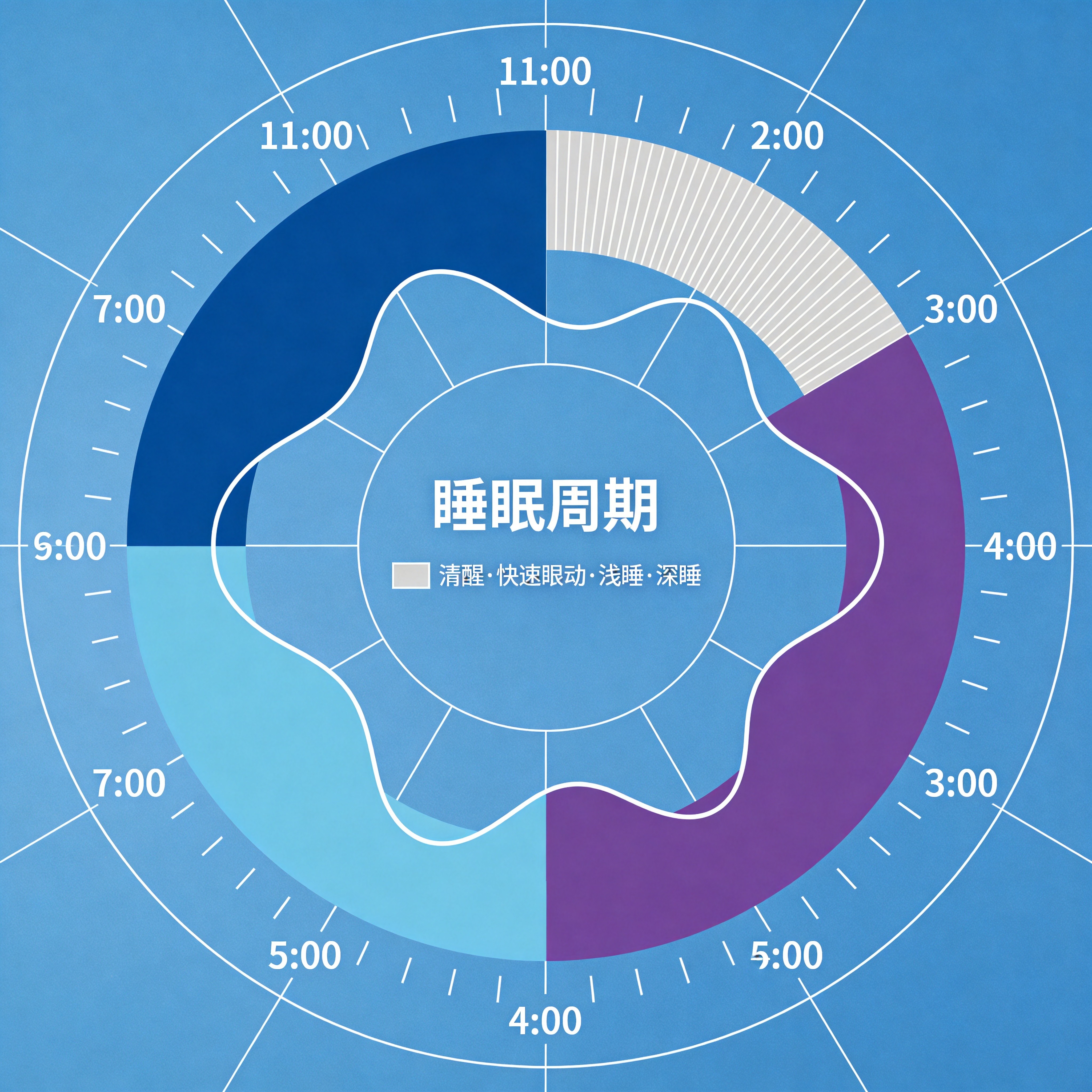
Sleep Staging Algorithms: The Brain Inside the Device
Hardware captures raw biosignals. Algorithms transform them into clinically actionable sleep architecture reports. This is where the gap between consumer wearables and medical-grade devices widens most dramatically.
The Classification Problem
Sleep staging—classifying each 30-second epoch of the night into Wake, Light Sleep (N1+N2), Deep Sleep (N3), or REM—is a sequence-to-sequence machine learning problem. The input is a multivariate time series of PPG-derived IHR (instantaneous heart rate), accelerometer activity counts, and optionally SpO₂ values. The output is a hypnogram: a timeline of sleep architecture.
Google Research demonstrated in 2024 that a convolutional neural network (CNN) with 70 hidden layers, trained on raw PPG and 3D accelerometer data from 1,654 MESA (Multi-Ethnic Study of Atherosclerosis) sleep records, achieved four-stage sleep classification accuracy of 79% with a Cohen’s kappa of 0.66—approaching the 0.70–0.75 kappa range of human scorers. SleepPPG-Net, developed by researchers using 2,374 patients and 23,055 hours of PPG data, pushed performance further to a kappa of 0.75 using a residual CNN combined with a temporal convolutional network (TCN) for long-range context modeling.
Algorithmic Approaches in Practice
Three broad strategies dominate the field:
- Feature Engineering + Classical ML: Extracting 100–200 handcrafted HRV features (time-domain, frequency-domain, nonlinear) and feeding them into support vector machines (SVMs) or random forests. Achieves reasonable accuracy (~66% kappa) but depends heavily on domain expertise and clean beat detection.
- End-to-End Deep Learning: Convolutional neural networks learn feature representations directly from raw PPG and accelerometer waveforms, bypassing manual feature engineering. The SleepPPG-Net architecture exemplifies this approach, with residual blocks extracting hierarchical features and TCN layers capturing sleep stage transition dynamics across epochs.
- Multimodal Fusion: Combining EEG (even simplified, single-channel configurations) with PPG dramatically improves staging accuracy. Recent research from 2025 achieved kappa of 0.798 and accuracy of 86.9% using Mamba-enhanced cross-attention fusion of scalp EEG and PPG signals—performance that approaches inter-rater reliability between human PSG scorers.
Why Algorithm Quality Matters for Procurement
For a sleep clinic evaluating wearable solutions, algorithm performance isn’t an abstract metric—it directly affects diagnostic decisions. A device that systematically underestimates deep sleep may lead clinicians to miss slow-wave sleep deficiencies linked to cognitive decline. One that confuses REM with Wake may inflate arousal indices and trigger unnecessary follow-up testing.
B2B buyers should inquire about:
- Validation dataset size, demographics, and clinical diversity (age, BMI, comorbidities)
- Whether the algorithm was tested on the target population (e.g., elderly patients for a senior care deployment)
- Performance stratification by OSA severity, medication use (beta blockers alter HRV), and skin tone
- Whether the manufacturer provides ongoing algorithm updates and real-world performance monitoring
OEM Differentiation: What to Look for in a Sleep Wearable Partner
Not all wearable manufacturers are equipped to deliver medical-grade sleep monitoring. The difference between a consumer-grade fitness tracker and a clinically viable sleep diagnostic tool resides in several layers of the product stack.
Sensor Hardware Quality
Medical-grade PPG requires carefully selected LED wavelengths, high-sensitivity photodiodes with low dark current, and optimized optical spacing between emitter and detector. The difference shows up in signal-to-noise ratio under challenging conditions: darker skin tones, cold ambient temperatures (causing peripheral vasoconstriction), and motion-heavy sleepers.
Firmware-Level Signal Processing
Raw PPG signals are noisy. Before any sleep algorithm touches the data, the firmware must perform: DC offset removal, bandpass filtering (typically 0.5–5 Hz for heart rate), adaptive gain control, and real-time motion artifact detection using accelerometer cross-referencing. These preprocessing steps are invisible to end users but decisive for downstream accuracy.
Algorithm Ownership and Customization
Many OEM manufacturers license third-party algorithm SDKs with limited tuning capability. A true medical-grade partner offers algorithm co-development: adapting sleep staging models to specific sensor configurations, calibrating against PSG reference data from the client’s target population, and supporting regulatory submission with validation documentation.
Certification Pathway Support
While the final medical device registration belongs to the brand owner, an experienced OEM partner provides the technical documentation—biocompatibility test reports, electrical safety certifications, software validation records, clinical accuracy studies—that regulatory bodies require. CE marking (EU Medical Device Regulation), FDA 510(k) clearance (U.S.), and NMPA registration (China) each demand specific evidence packages that a manufacturer with regulatory experience can accelerate.
Cloud and Data Infrastructure
Sleep monitoring generates gigabytes of data per patient per night. A complete solution includes: HIPAA/GDPR-compliant cloud storage, HL7 FHIR APIs for EHR integration, clinician dashboards with automated report generation, and patient-facing apps with longitudinal trend visualization. White-label capability—where the entire platform carries the client’s branding—is essential for healthcare organizations building their own digital health ecosystem.
Production Scalability and Quality Systems
A manufacturer producing 50,000 units daily under ISO 9001 quality management demonstrates the process control required for medical device consistency. Batch-level sensor calibration, burn-in testing, and waterproofing validation should be standard, not optional.
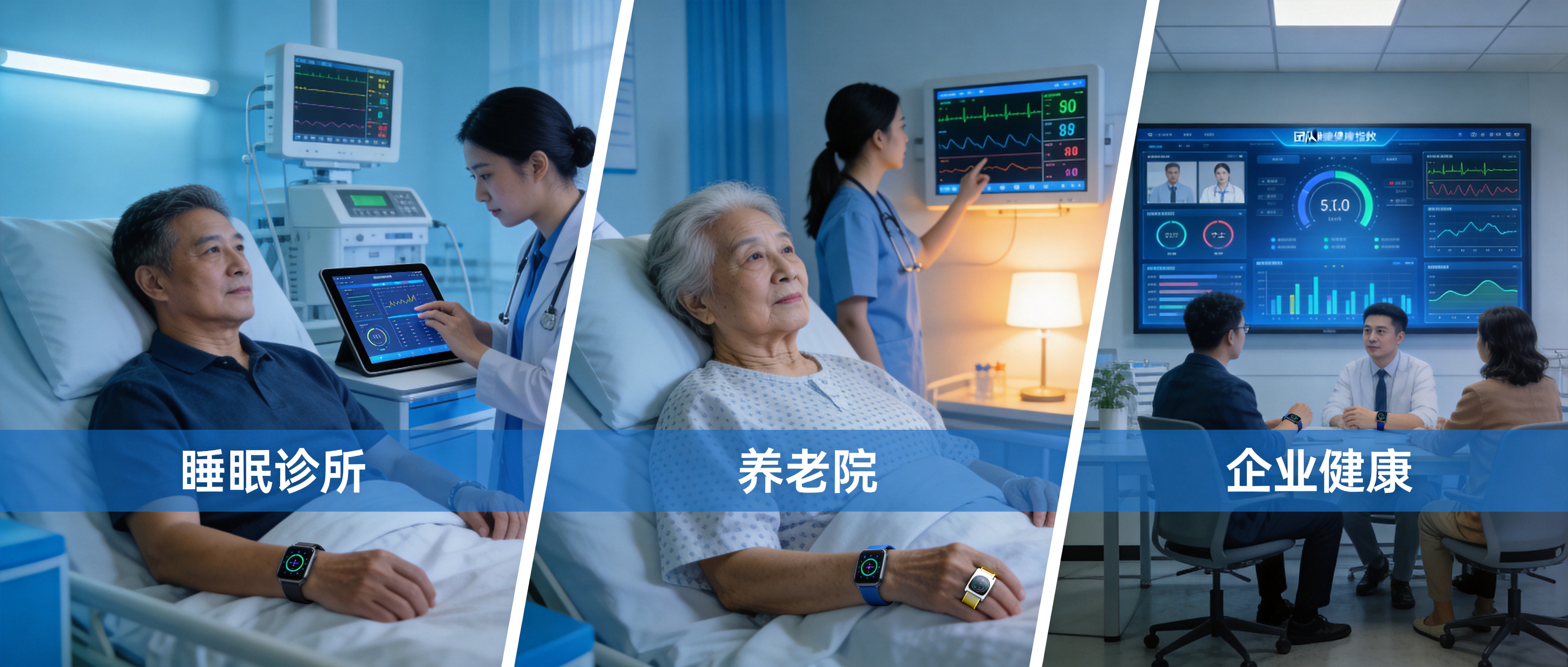
Clinical Applications Across Healthcare Settings
 jine@xdunmedical.com
📞 Phone/WhatsApp: +86-13544254314
🌐 Website: xdunmedical.com
Xdun Medical: 15+ years of OEM/ODM expertise. 30+ countries served. 50,000+ units daily production capacity. Your partner in medical-grade wearable sleep technology.
References
- American Academy of Sleep Medicine. Survey on Chronic Insomnia Prevalence. June 2024.
- Benjafield AV, et al. “Estimation of the global prevalence and burden of obstructive sleep apnoea.” Lancet Respir Med. 2019;7(8):687-698.
- Sleep Health Foundation. “Are Sleep and Circadian Problems Common?” 2024.
- Canever JB, et al. “Worldwide prevalence of sleep problems in community-dwelling older adults.” Sleep Med. 2024;119:118-134.
- Chiang AA, et al. “OSA diagnosis goes wearable: are the latest devices ready to shine?” J Clin Sleep Med. 2024;20(11):1823-1839.
- Gillard R, et al. “Sleep staging classification from wearable signals using deep learning.” Google Research. 2024.
- SleepPPG-Net. arXiv:2202.05735v2. “A deep learning algorithm for sleep staging from continuous photoplethysmography.”
- Chen KW, et al. “Validation of a fingertip home sleep apnea testing system using deep learning AI.” Sleep. 2025;48(5):zsae317.
- Ross M, et al. “Autonomic arousal detection and cardio-respiratory sleep staging improve the accuracy of home sleep apnea tests.” Front Physiol. 2023;14:1254679.
- ResMed. “NightOwl Home Sleep Apnea Test Now Available Across the US.” Press Release. April 2025.