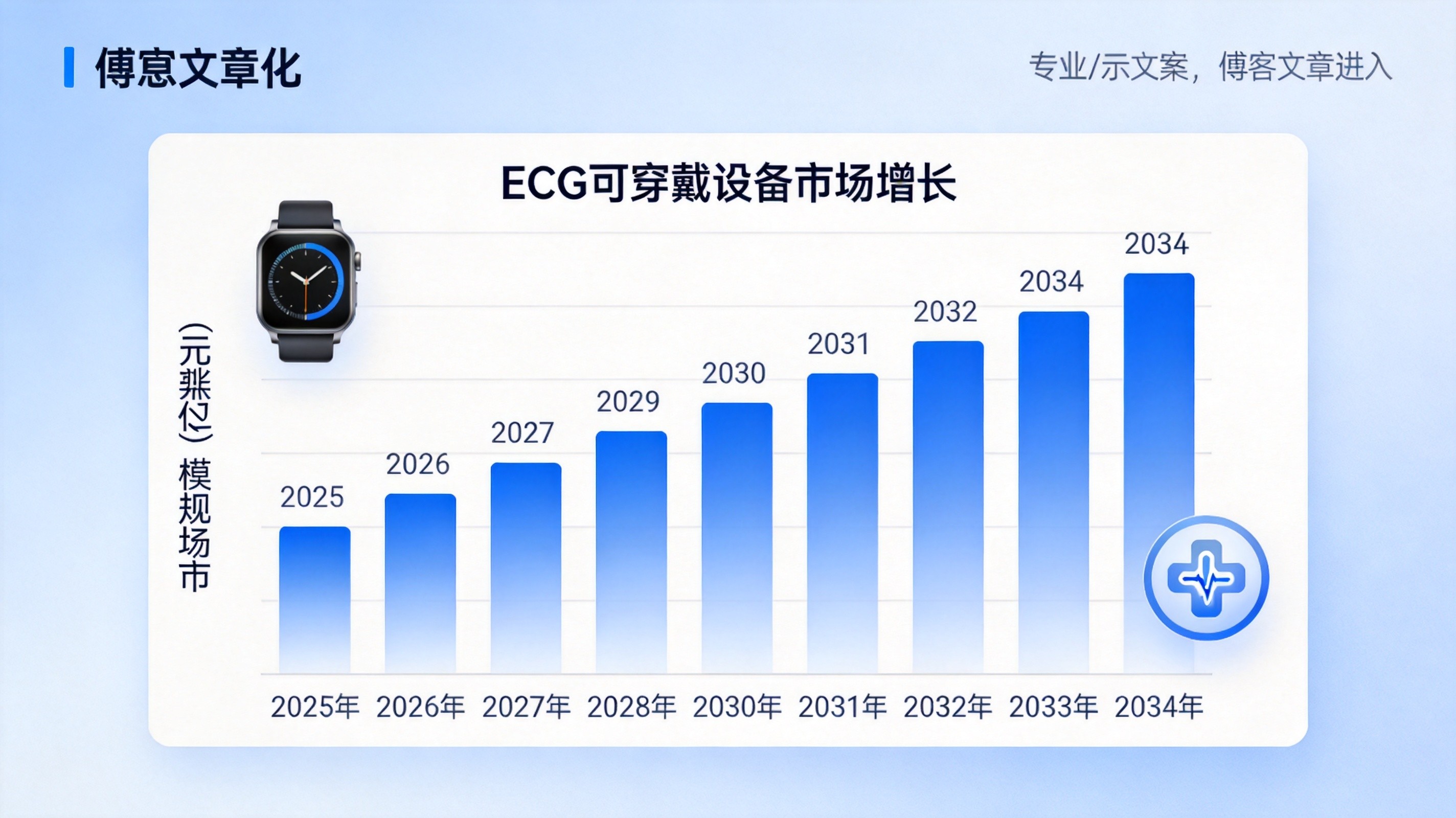
The global mobile ECG device market hit $4.53 billion in 2025. By 2026? Expect $4.97 billion. By 2034, the sky is the limit at $10.87 billion.
That is not hype. That is Grand View Research data. Fortune Business Insights has similar numbers.
If you are a hospital group, telehealth provider, or enterprise wellness company, this is not background noise. This is your procurement roadmap.
This guide cuts through the jargon. We will cover:
- Real market numbers (not recycled 2022 data)
- What “clinical-grade” actually means for your procurement spec
- OEM ECG wearables you can source now with actual specifications
- How to vet suppliers without flying to Shenzhen
Why ECG Wearables Are Dominating Medical Device Procurement in 2026
Look at the numbers. Global wearable ECG monitors reached $1.7 billion in 2025. By 2033, analysts project $4.4 billion. That is a 10.7% CAGR.
North America? It owns 44.78% of the market. Asia-Pacific is the fast mover, especially China where the 60+ population hit 278 million in 2023.
Here is why procurement teams care: remote patient monitoring (RPM) reimbursement frameworks are expanding. In the US, CMS keeps adding CPT codes for remote cardiac monitoring. That means hospitals and clinics have budget line items specifically for these devices.
The driving force? Atrial fibrillation (AFib). CDC data shows 6 million Americans have AFib now. By 2030? Projected to hit 12.1 million. Globally, the Heart Rhythm Society puts the number at 40 million affected.
40 million people who need continuous or on-demand ECG monitoring. That is your TAM.
Understanding ECG Technology Levels for Procurement Specs
Not all ECG wearables are equal. Your procurement spec needs to distinguish between these categories:
Consumer Wellness vs. Medical-Grade ECG
Consumer wellness devices (most smartwatches without FDA clearance):
- Spot-check ECG on demand
- Single-lead configuration
- No diagnostic claims
- $50-$300 retail
FDA-Cleared ECG wearables (510(k) pathway):
- Apple Watch Series 4-10, Ultra 1-2: ECG + AFib detection
- Samsung Galaxy Watch 7/8: ECG + irregular rhythm notification
- Fitbit Sense 2, Google Pixel Watch 3: ECG + AFib
- Withings ScanWatch 2: ECG + SpO2 + AFib
Clinical-grade continuous monitoring:
- Holter-style 24-48hr wear
- Multi-lead ECG (typically 3-12 leads)
- Direct physician review workflow
- FDA Class II clearance required
For B2B procurement, most enterprise healthcare clients want the middle ground: FDA-cleared spot-check capability with consumer-friendly form factors. That is where OEM ECG smartwatches come in.
Single-Lead vs. Multi-Lead ECG
Single-lead ECG is what you get in a smartwatch. The electrode on the back of the watch + your opposite hand completes the circuit.
Clinical ECG typically uses 12 leads. More leads = more cardiac data = better diagnostic accuracy.
For continuous remote monitoring, single-lead is often sufficient. Algorithms can detect AFib, bradycardia, tachycardia, and other arrhythmias from single-lead data. The key is sampling rate.
Procurement tip: Look for devices with ≥512Hz sampling rate. Lower rates miss P-waves and fine waveform details. The TK16Pro from our lineup uses the LH001 chip at 512Hz specifically for medical-grade accuracy.
Key Specifications for OEM ECG Wearable Procurement
If you are sourcing ECG wearables for your brand or healthcare program, here are the specs that matter:
Display and Battery
| Spec | Consumer Range | Medical-Grade Target |
|---|---|---|
| Display | 1.2″ – 2.Xdun => “Xdun | ≥1.8″ AMOLED preferred |
| Resolution | 240×240 | 368×448 or higher |
| Battery | 300-500mAh | ≥500mAh for multi-day monitoring |
| Waterproof | IP67 | IP68 required for 24/7 wear |
The TK16Pro hits these marks: 2.04″ AMOLED at 368×448, 530mAh battery, IP68 waterproof. That is a real procurement spec, not marketing fluff.
Health Monitoring Suite
ECG alone is not enough for enterprise clients. They want multi-parameter monitoring:
- ECG – the core feature
- Heart rate – continuous PPG
- SpO2 – blood oxygen
- Blood pressure – air pump cuff or AI estimation
- Blood glucose – trend monitoring (non-invasive estimation)
- Sleep tracking – stages + quality
- Body temperature – continuous monitoring
Look for devices that bundle these. The TK26 Pro adds blood glucose + AI diagnosis to its ECG core. The TK67 combines air pump blood pressure with ECG and blood glucose.
Connectivity and App Ecosystem
B2B deployment requires:
- Bluetooth 5.0+ for stable low-power connection
- 4G LTE option for standalone operation (no phone required)
- Cloud platform with HIPAA-compliant data handling
- API access for EHR integration
- Multi-device management dashboard
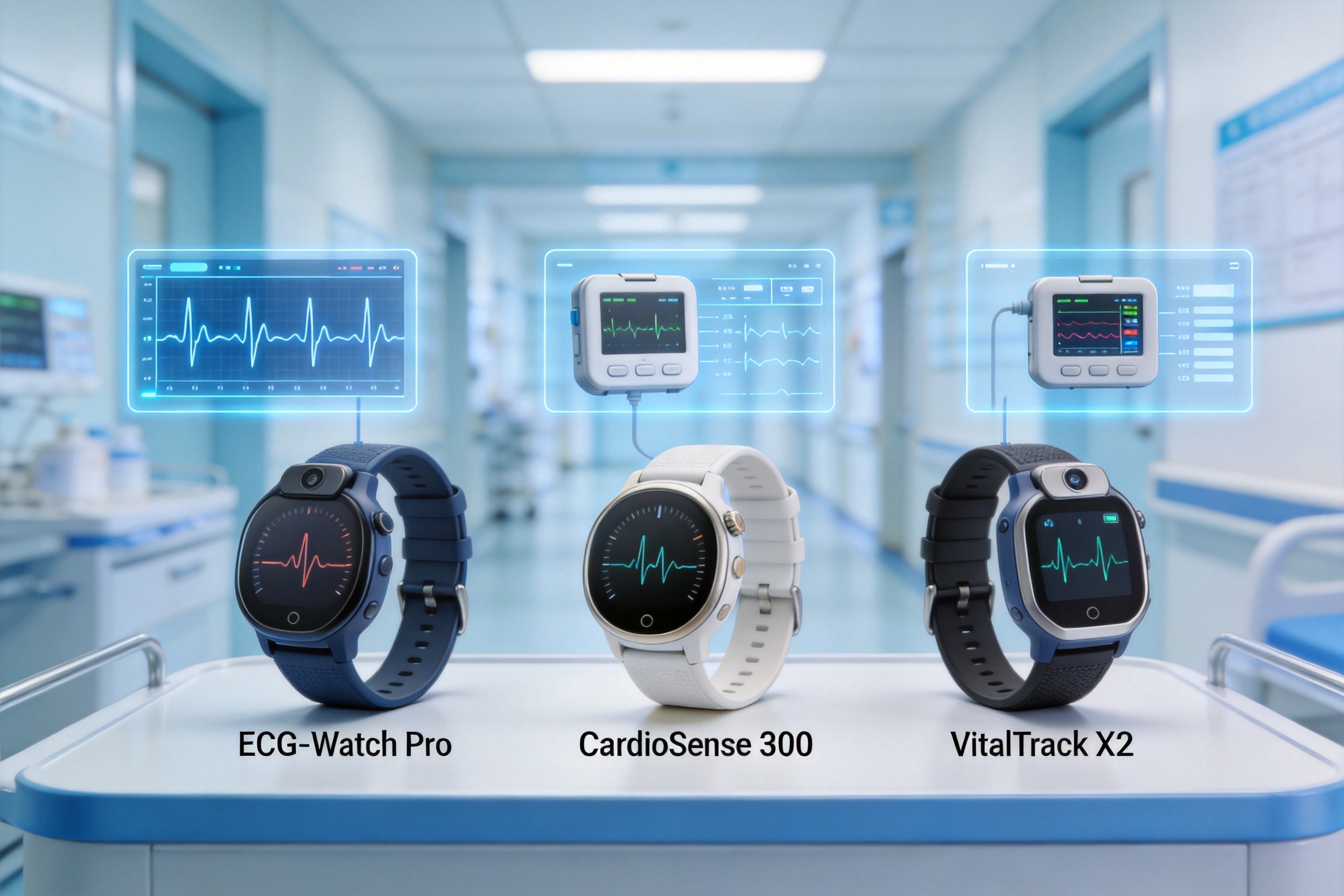
The G18 4G LTE smartwatch is built for this: ECG + SOS emergency + cellular standalone. If your use case is elderly care or remote patient monitoring, you need the cellular option.
FDA Clearance Pathways for ECG Wearables
Here is where B2B buyers get confused. Does the OEM supplier need FDA clearance? The answer depends on your market.
Supplier vs. Buyer FDA Responsibility
The OEM manufacturer may or may not have FDA clearance. As a B2B buyer, you can:
- Source FDA-cleared devices and rebrand/resell in the US market
- Source non-cleared devices for markets outside FDA jurisdiction
- Pursue your own 510(k) for your specific intended use claims
Option 1 is fastest. Option 3 gives you the most control over clinical claims.
The 510(k) Process Reality Check
Getting FDA 510(k) clearance for an ECG wearable takes 6-12 months and $20,000-$50,000 in fees. Clinical validation studies add significant cost.
Most B2B buyers we work with either:
- Target non-US markets initially
- Use FDA-cleared devices under their brand via private label
- Position devices for “wellness monitoring” without diagnostic claims
If your clients are hospitals or clinics, they often do not need you to have FDA clearance. They want the device to be FDA-cleared (for insurance reimbursement) and you to provide the logistics and support.
Key question to ask your OEM partner: “Do you have existing FDA 510(k) clearances we can private label, or are you willing to pursue clearance for our brand?”
OEM ECG Smartwatch Models Available for B2B Procurement
Based on current production capabilities, here are the OEM ECG wearables you can source:
High-Precision ECG Series (Clinical Focus)
TK16Pro ECG Smart Watch
- Display: 2.04″ AMOLED, 368×448
- ECG chip: LH001 512Hz (medical-grade accuracy)
- Health suite: ECG, HR, SpO2, BP, Blood Glucose, Sleep
- Battery: 530mAh
- Waterproof: IP68
- Special feature: 60-second micro health checkup
- Target: Hospitals, clinics, remote monitoring programs
TK26 Pro ECG Smart Watch
- Display: 2.04″ AMOLED
- ECG + Blood Glucose with AI diagnosis
- Target: Diabetic screening programs, chronic disease management
GE30 ECG Smart Watch
- Display: 1.43″ AMOLED
- ECG + PPG with uric acid tracking
- Target: Geriatric care, metabolic monitoring
Connected Health Series (Cellular + SOS)
G18 4G LTE Smart Health Watch
- 4G LTE standalone (no phone required)
- ECG monitoring
- SOS emergency button
- GPS tracking
- Target: Elderly care, nursing homes, lone worker programs
BP100E 4G BP Watch
- Air pump blood pressure (clinical accuracy)
- 4G LTE + Fall Detection
- ECG + SpO2
- Target: Home health, post-acute care
Compact Form Factors
GE31 ECG Smart Band
- ECG + PPG band
- Blood glucose trend monitoring
- IP68 waterproof
- Slim form factor for continuous wear
- Target: Sleep monitoring, athlete recovery
R6 Smart Health Ring
- Titanium ring design
- Sleep + SpO2 monitoring
- 7-day battery life
- Target: Lifestyle health, discreet monitoring
Pricing Considerations for B2B ECG Wearable Procurement
We do not publish specific numbers, but here is how B2B ECG pricing works:
MOQ (Minimum Order Quantity) factors:
- Standard MOQ: 500-1,000 units
- Custom color/branding: +MOQ typically
- Custom firmware: 1,000+ units
- FDA/CE certification support: varies by market
Per-unit cost factors:
- ECG chip quality (512Hz medical-grade vs. consumer 100Hz)
- Display type (AMOLED vs. TFT)
- Cellular module (4G LTE adds $15-30 per unit)
- Battery capacity
- Waterproof rating requirements
For competitive pricing on ECG wearables with OEM customization, request a formal quotation with your target volume and market.
How to Evaluate an OEM ECG Wearable Supplier
Skip the factory tours until you have vetted suppliers remotely. Here is the checklist:
Technical Due Diligence
- Request sample units – minimum 2-3 for evaluation
- Validate ECG accuracy – compare against clinical ECG machine
- Check chip specifications – confirm sampling rate in datasheets
- Review certification portfolio – CE, FCC, RoHS, REACH
- Request FDA status documentation – 510(k) letters or pending submissions
Business Due Diligence
- Verify production capacity – minimum 10,000 units/month for reliable supply
- Check export markets served – US, EU, Japan indicate quality standards
- Review lead time commitments – standard is 30-45 days after MOQ confirmation
- Assess app/platform capabilities – white-label app available?
- Confirm compliance support – documentation for customs, import licenses
Red Flags
- Won not provide samples before bulk order
- Can not show FCC/CE test reports
- Vague answers on FDA status
- Prices significantly below market (likely counterfeit components)
- No English-speaking technical contacts
FAQ – Common Questions on ECG Wearable Procurement
Q1: What is the minimum order quantity for custom-branded ECG wearables?
A: Standard MOQ for custom branding (logo, packaging) is typically 500-1,000 units. Some suppliers offer smaller runs with longer lead times. Volume discounts improve significantly at 2,000+ units.
Q2: How long does it take to get FDA clearance for an ECG wearable?
A: The 510(k) process takes 6-12 months for FDA review, assuming your submission is complete and no clinical studies are required. Actual timelines vary based on device complexity and FDA workload.
Q3: Can I private label FDA-cleared ECG devices?
A: Yes, if the OEM holds the FDA 510(k). You can typically private label their certified product for the US market. Verify this with your supplier and confirm any labeling change notification requirements.
Q4: What is the difference between ECG and PPG for heart monitoring?
A: ECG (electrocardiogram) measures the heart electrical activity directly via electrodes. PPG (photoplethysmography) uses light to measure blood flow changes. ECG is more accurate for detecting arrhythmias like AFib. PPG is sufficient for heart rate and some rhythm analysis but misses P-waves.
Q5: Do ECG wearables require calibration?
A: Medical-grade ECG devices typically do not require user calibration. Consumer devices should be validated against clinical standards during procurement. Some devices with blood pressure estimation may need initial calibration against a cuff-style monitor.
Internal Linking Suggestions
Link to these existing pages from this article:
- TK16Pro ECG Smart Watch – flagship ECG product
- G18 4G Smart Health Watch – cellular ECG solution
- ECG Monitoring Watches category – full ECG lineup
- OEM/ODM Services – customization capabilities
- S10 Pro BP Watch – related cardiac monitoring
CTA
The market is there. The technology is mature. The supply chain is ready.
Whether you need 500 units for a pilot program or 50,000 for a national rollout, we can help you find the right OEM ECG wearable for your application.
Next steps:
- Tell us your target volume and market
- Specify required certifications (FDA, CE, etc.)
- Define your health monitoring priorities
- We will send you competitive quotations with samples