Cardiovascular diseases (CVDs) remain the single largest cause of mortality worldwide. WHO data confirms that CVDs claim an estimated 17.9 million lives annually, accounting for roughly 32% of all global deaths. Ischemic heart disease alone affected 254.3 million people globally in 2021, according to the Global Burden of Disease (GBD) study—and China alone shoulders 63.3 million IHD cases, the highest absolute count of any nation.
The American Heart Association (AHA) projects that by 2035, 45% of the U.S. adult population will live with some form of cardiovascular condition, with associated costs exceeding $1.1 trillion. The CDC’s Behavioral Risk Factor Surveillance System consistently flags hypertension as a primary modifiable risk factor—yet roughly 1 in 3 adults with hypertension remain undiagnosed because conventional screening relies on episodic clinic visits.
This is the structural gap that cardiovascular health monitoring wearables are designed to close. Continuous, passive, non-invasive biometric capture shifts the detection paradigm from “snapshot in a clinic” to “stream across daily life.” For B2B buyers—distributors, healthcare networks, insurance carriers, and corporate wellness platforms—the question is not whether to source cardiovascular wearables, but how to evaluate sensor architecture, clinical validation pathways, and manufacturing credentials.
Sensor Technologies That Power Cardiovascular Wearables
Modern cardiovascular wearables operate on a multi-modal sensor stack. Understanding the hardware layer is essential for any OEM procurement decision.
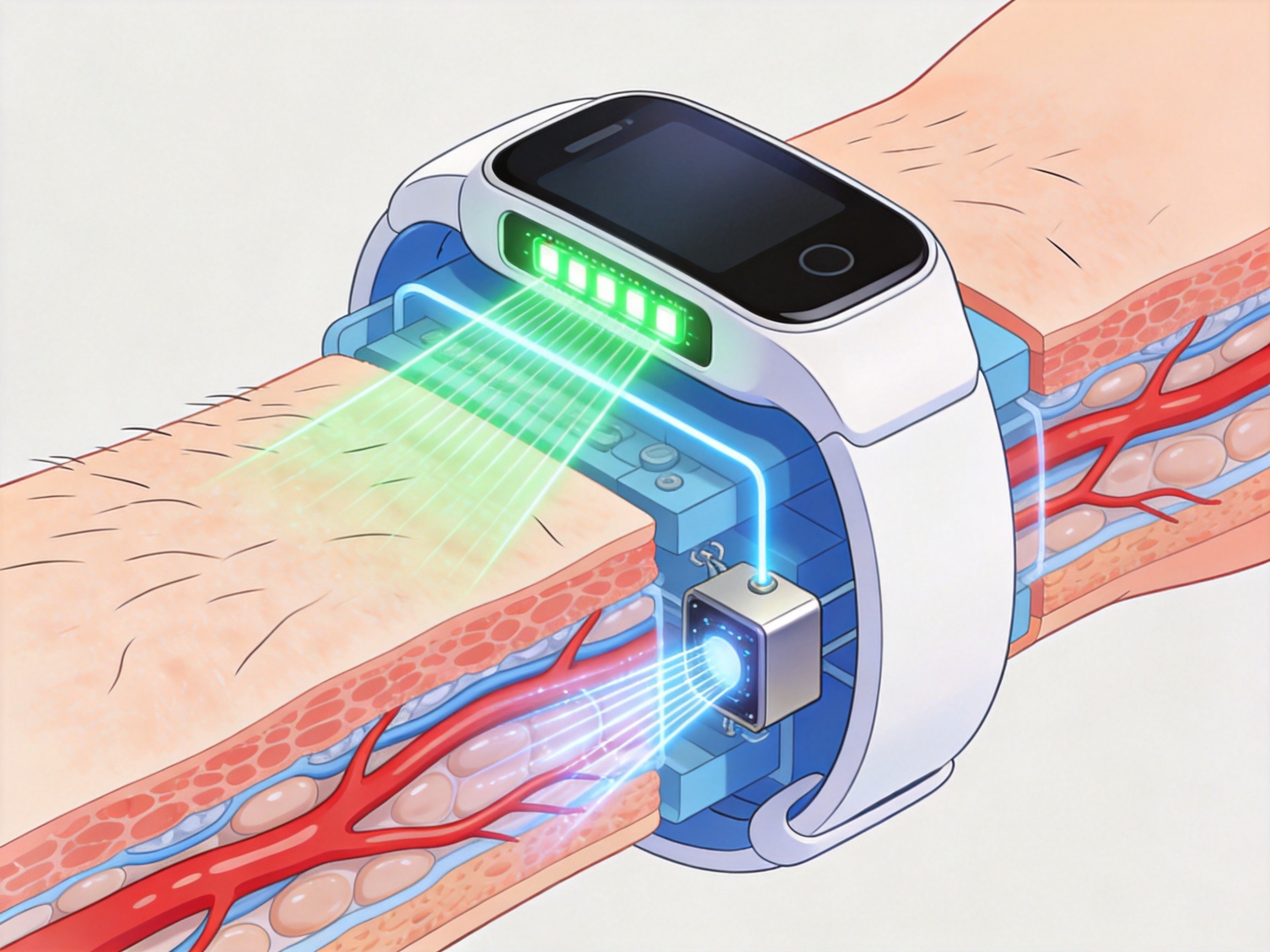
PPG (Photoplethysmography): The Optical Baseline
PPG uses green/red/infrared LED light directed into the skin and a photodetector measuring reflected light intensity. Blood volume changes in the microvascular bed modulate light absorption with each cardiac cycle. The resulting waveform yields heart rate (HR), heart rate variability (HRV), SpO₂ estimation, and—with algorithmic refinement—blood pressure trends.
According to the 2026 Chinese Expert Consensus on Smart Wearable Devices in Cardiovascular Applications (published at the Northeast Cardiovascular Conference), PPG-based resting heart rate monitoring achieves a mean absolute percentage error (MAPE) of ≤3%. CNET Labs’ 2026 testing of the latest in-ear PPG sensors demonstrated an average error of just 1.23% against a Polar H10 chest strap ECG reference.
From an OEM sourcing standpoint, PPG module selection hinges on three parameters: LED wavelength mix (multi-wavelength arrays reduce motion artifact), sampling rate (≥100 Hz for HRV extraction), and photodiode sensitivity (low-light performance for darker skin tones remains a well-documented challenge across the industry).
ECG (Electrocardiography): The Rhythm Gold Standard
Single-lead ECG on wearables—typically implemented via a dry electrode on the bezel or caseback paired with a fingertip contact on the opposing hand—enables atrial fibrillation (AFib) screening. The same Expert Consensus reports that smartwatch-based single-lead ECG achieves both sensitivity and specificity of approximately 95% for AFib detection when compared against 12-lead clinical reference. For OEMs looking to integrate these high-accuracy capabilities, the GE500 4G ECG monitoring watch utilizes medical-grade sensors to support continuous cardiac monitoring.
The eBRAVE-AF trial demonstrated that PPG-based AFib screening more than doubled the detection rate of asymptomatic paroxysmal AFib, leading to subsequent oral anticoagulation initiation. For B2B buyers targeting the 65+ demographic or cardiac rehab programs, ECG capability is a non-negotiable feature.
Key OEM considerations: electrode material (stainless steel vs. titanium nitride coating affects signal-to-noise ratio), analog front-end (AFE) chip selection (Texas Instruments ADS129x series, Analog Devices AD8232/AD8233), and firmware-level QRS detection algorithms.
Cuffless Blood Pressure: The Next Frontier
Cuffless BP estimation using PPG + ECG (pulse transit time, PTT) or PPG alone (pulse wave analysis, PWA) is the most technically demanding and commercially significant wearable modality. Huawei’s WATCH D2 received NMPA Class II medical device certification as a “wrist dynamic blood pressure recorder” using an integrated micro-airbag—a hybrid approach that bridges traditional oscillometry and optical sensing.
The Expert Consensus explicitly notes that PPG-only BP estimation, while convenient, requires individual calibration against a cuff-based reference and does not yet match the accuracy of validated upper-arm oscillometric devices for diagnostic use. Omdia’s 2026 market outlook identifies blood pressure and blood glucose monitoring breakthroughs as the primary catalysts for the next major smartwatch upgrade cycle. For deeper analysis, see our technology guide on PPG estimation versus air pump measurement for BP wearables.
For OEMs, cuffless BP development involves a complex interplay of sensor fusion, machine learning models trained on diverse populations, and regulatory strategy.
Market Dynamics: The 200-Million-Unit Opportunity
Omdia reports that global wearable band shipments surpassed 200 million units in 2025, growing 6% year-on-year. The top five vendors—Xiaomi (18%), Apple (17%), Huawei (16%), Samsung (9%), and Garmin (5%)—collectively command 65% of unit volume. The market exhibited a pronounced premiumization trend: Q3 2025 average selling price hit $225, up 9% YoY, driven by 5G connectivity and medical-grade health features.
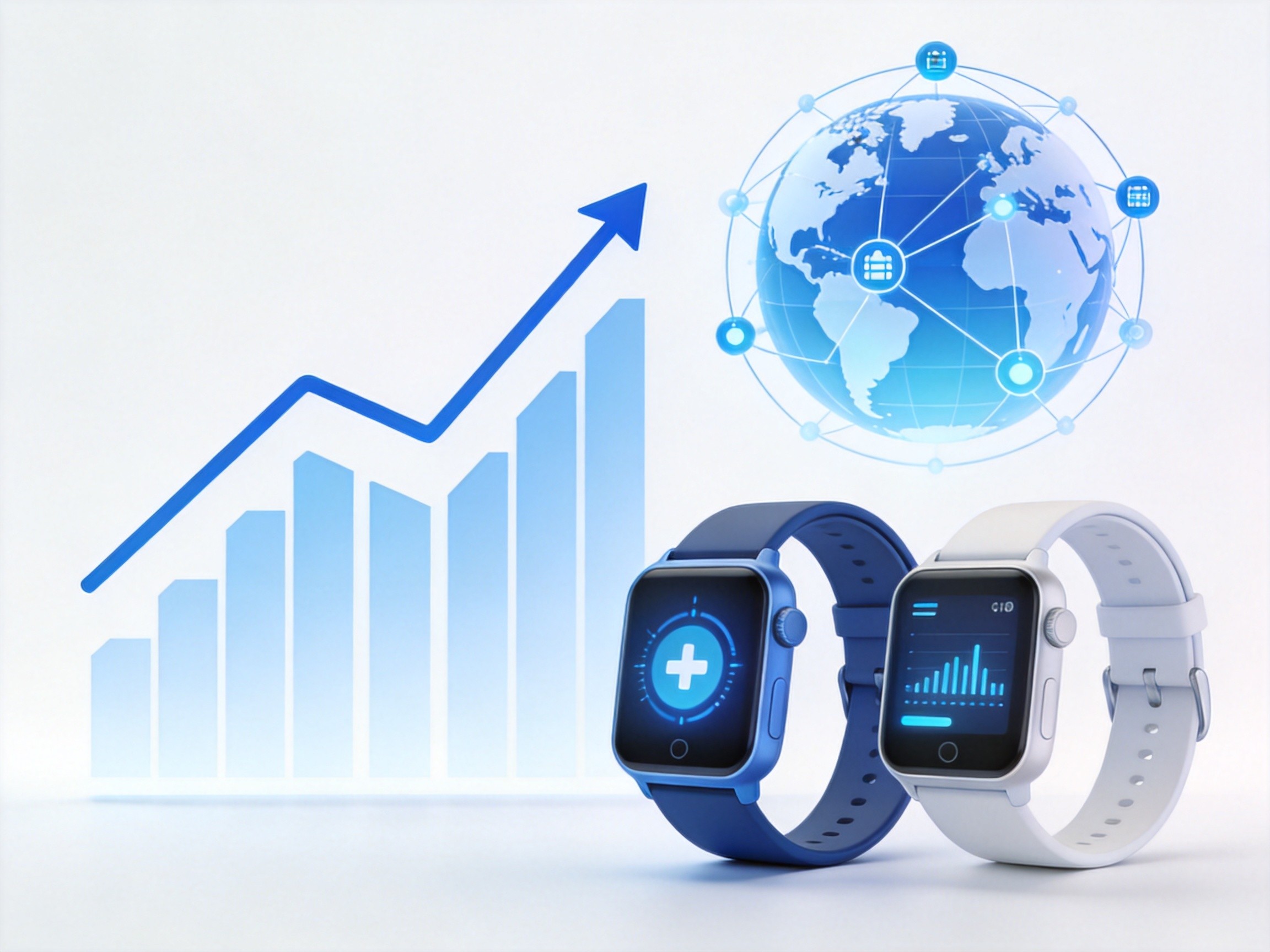
Below is a structured comparison of the clinically relevant sensor modalities across major wearable form factors:
| Sensor Modality | Form Factor | Key Vital Signs | Clinical Validation Status | OEM Complexity |
|---|---|---|---|---|
| PPG (optical HR) | Wristband, watch, ring, earbud | HR, HRV, SpO₂, RR | MAPE ≤3% (resting HR); SpO₂ ±2% typical | Low–Medium |
| Single-lead ECG | Smartwatch, chest patch | AFib detection, QTc interval | Sensitivity ~95%, Specificity ~95% | Medium |
| Cuffless BP (PTT/PWA) | Smartwatch, wristband | SBP, DBP trends | Requires calibration; NMPA/FDA Class II path | High |
| Bioimpedance | Smartwatch, chest strap | Thoracic fluid, respiratory rate | Emerging; limited large-scale validation | High |
| Continuous Temperature | Ring, wristband, patch | Core temp trend, circadian rhythm | ±0.2°C typical accuracy | Low |
Sources: Omdia Wearable Band Market Pulse 2025; 2026 Chinese Expert Consensus on Smart Wearable Devices in Cardiovascular Applications; CNET Labs 2026.
The B2B opportunity extends beyond consumer retail. Corporate wellness programs, remote patient monitoring (RPM) platforms, clinical trial data collection, and insurance-linked health incentives represent high-volume, recurring-revenue channels. The CPT codes for RPM (99453, 99454) in the U.S. already reimburse for device-supplied physiologic data, creating a clear reimbursement framework for medical-grade wearables.
Regulatory Landscape: Navigating NMPA, FDA, and CE Pathways
Regulatory strategy should be mapped before the PCB layout is finalized—not retrofitted after production.
China: NMPA Class II
Cardiovascular wearables with diagnostic or monitoring claims fall under NMPA Class II medical device registration. The 2026 Expert Consensus, co-authored by cardiologists from multiple Chinese tertiary hospitals, provides a de facto framework for clinical validation expectations. Key requirements include:
- PPG-based HR monitoring: MAPE ≤3% in resting state, ≤10% during moderate exercise
- Single-lead ECG: AFib detection sensitivity and specificity both ≥90% vs. 12-lead reference
- Cuffless BP: Mean error ≤5 mmHg, standard deviation ≤8 mmHg vs. auscultatory reference
Xdun Medical supports OEM partners through the NMPA registration process, including technical documentation preparation, clinical trial protocol design, and quality management system (ISO 13485) compliance.
United States: FDA 510(k)
The FDA’s 2025 relaxation of requirements for low-risk wellness wearables created a clearer demarcation between “general wellness” devices (no 510(k) required) and “medical device” claims (510(k) required). ECG and BP monitoring features nearly always trigger the latter. De Novo classification may apply for novel sensor combinations without a predicate device.
European Union: CE Mark under MDR
The EU Medical Device Regulation (EU MDR 2017/745) classifies cardiovascular monitoring wearables as Class IIa or higher. GDPR Article 9 imposes additional requirements since health data is “special category” data. Data minimization at the sensor level, on-device processing where feasible, and end-to-end encryption for cloud transmission are baseline expectations—not differentiators.
Data Table: Cardiovascular Wearable Sensor Performance Benchmarks
| Vital Sign | Sensor Technology | Clinical Benchmark | Standard | Validation Context |
|---|---|---|---|---|
| Resting Heart Rate | PPG (green LED) | MAPE ≤3% | ANSI/AAMI EC13 | Seated, 5-min resting |
| Heart Rate Variability | PPG / Single-lead ECG | RMSSD correlation r≥0.90 vs. chest strap | — | Supine, 5-min recording |
| SpO₂ | PPG (red/IR dual wavelength) | Arms ≤3.5% vs. ABG co-oximetry | ISO 80601-2-61 | 70–100% SpO₂ range |
| AFib Detection | Single-lead ECG | Sensitivity ≥90%, Specificity ≥90% | — | vs. 12-lead ECG reference |
| AFib Screening | PPG (irregular rhythm algorithm) | Sensitivity 87.8–94.2%, PPV 84–98.2% | — | At-risk population |
| Cuffless SBP/DBP | PPG + ECG (PTT) / PPG (PWA) | Mean error ≤5±8 mmHg | ISO 81060-2 | Calibrated, resting |
| Core Temperature | NTC thermistor / IR thermopile | ±0.2°C vs. oral reference | — | Steady-state ambient |
Sources: 2026 Chinese Expert Consensus; AHA Scientific Statements; ISO/IEC standards; published clinical validation studies.
How Cardiovascular Wearables Serve the Clinical Pipeline
Remote Patient Monitoring (RPM) and Hospital-at-Home
The CDC estimates that 6 in 10 U.S. adults live with at least one chronic disease; 4 in 10 have two or more. Cardiovascular wearables enable post-discharge monitoring for CHF, post-MI, and post-ablation patients, reducing 30-day readmission rates. Key metrics: weight trends (via bioimpedance), HR variability, arrhythmia logs, and activity levels.
Clinical Trial Data Collection
Pharmaceutical and medical device sponsors increasingly rely on wearable-derived endpoints in cardiovascular trials. Continuous ECG monitoring captures arrhythmia burden with greater sensitivity than intermittent Holter. PPG-based activity and sleep metrics provide objective functional status data. The FDA’s Digital Health Center of Excellence actively encourages wearable-derived digital endpoints in regulatory submissions.
Population Health and Insurance
Insurers in the U.S., Europe, and Asia are piloting wearable-linked health incentive programs. John Hancock’s Vitality program ties premium adjustments to verified activity data. For B2B insurance partners, cardiovascular wearables represent a risk stratification tool—enabling early intervention for high-risk members and reduced claims cost over the policy lifecycle.
OEM Manufacturing: What to Evaluate in a Cardiovascular Wearable Partner
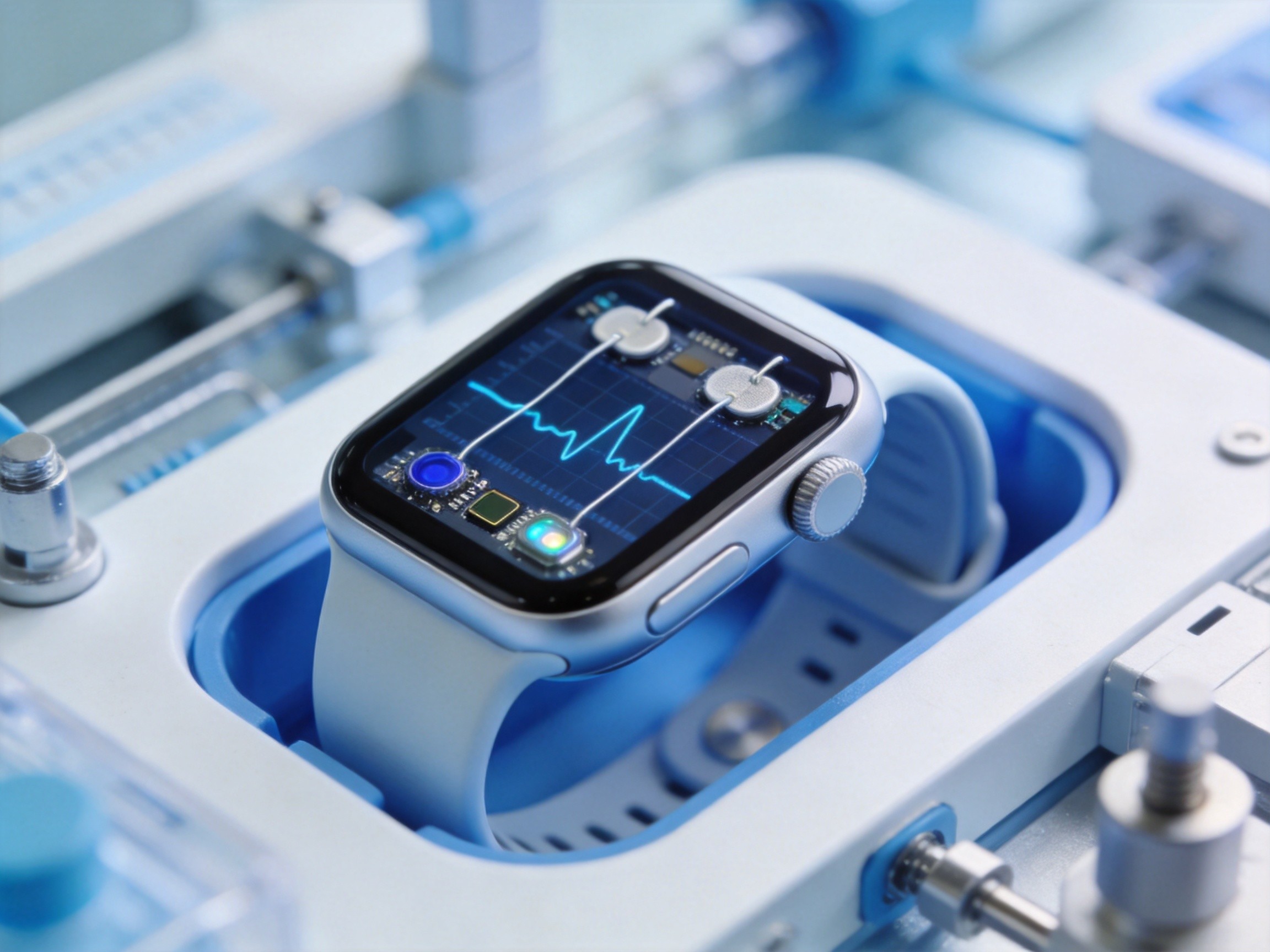
When sourcing a B2B cardiovascular wearable, the following checklist separates contract manufacturers who can deliver medical-grade product from those who assemble consumer-grade fitness trackers.
1. Sensor Supply Chain and Calibration
PPG sensor modules from Maxim Integrated (MAX8614x), ams-OSRAM, and Texas Instruments (AFE49xx) dominate the supply chain. ECG analog front-ends from TI and Analog Devices are widely used. The differentiator is not the chipset itself but the optical design (LED-photodiode spacing, light shielding, lens geometry) and the factory calibration protocol. Ask potential partners: what is your inter-device PPG signal variance across a 1,000-unit batch?
2. Firmware and Algorithm Ownership
Many OEMs license PPG/ECG algorithms from third-party IP vendors. While this accelerates time-to-market, it creates dependency. Xdun Medical maintains in-house algorithm development capability for HR, HRV, SpO₂, and BP trending, allowing customization for specific population demographics (e.g., elderly, athletes, specific skin tone ranges).
3. Certification Support
A credible OEM partner should provide a certification support package including IEC 60601-1 (electrical safety), ISO 10993 biocompatibility, ISO 13485 QMS, IEC 60601-1-2 EMC/EMI, IEC 62304 software lifecycle, and clinical validation study protocols. Xdun Medical supports partners through the full certification lifecycle—from design review to notified body submission.
4. Form Factor Flexibility
The wearable form factor is not a one-size-fits-all decision. Smartwatches offer the richest sensor payload but require daily charging. Smart rings enable continuous PPG and temperature tracking with week-long battery life but limit ECG capability. Chest patches deliver clinical-grade multi-lead ECG for 72-hour to 14-day continuous monitoring. Earbuds are emerging as a sleep and HR monitoring platform. Xdun Medical’s ODM portfolio spans wrist-worn, ring-form, and chest-patch form factors.
Frequently Asked Questions
Q1: What is the minimum order quantity (MOQ) for OEM cardiovascular wearables?
MOQ varies by form factor and customization depth. Wrist-worn devices with standard PPG typically start at 1,000–3,000 units for ODM (white-label) and 5,000–10,000 for full custom industrial design. Chest patches and rings may have different minimums. Contact the Xdun Medical sales team for a product-specific quotation.
Q2: How long does NMPA Class II certification take for a cardiovascular wearable?
The typical timeline is 12–18 months from submission, assuming complete technical documentation and clinical validation data. Pre-submission preparation (design dossier, biocompatibility testing, EMC testing, clinical protocol) accounts for roughly 6–9 months. Xdun Medical’s regulatory team can manage the process end-to-end.
Q3: Can a single wearable device combine PPG, ECG, and BP monitoring?
Yes. Multi-modal sensor integration is the industry standard for premium smartwatches. The primary engineering challenge is power management. Xdun Medical’s latest platform achieves 7-day battery life with continuous PPG HR and SpO₂, plus on-demand ECG and BP.
Q4: What data privacy certifications should I expect from an OEM partner?
At minimum: ISO 27001 (information security management), GDPR readiness documentation, and a HIPAA-compliant data architecture. SOC 2 Type II certification is increasingly requested by enterprise and insurance buyers. Xdun Medical maintains ISO 27001 and provides GDPR/HIPAA compliance documentation as part of the standard OEM package.
Q5: How do I validate the clinical accuracy of a wearable before placing a bulk order?
Request the following: (1) bench-test reports per applicable ISO/IEC standards; (2) clinical validation study protocol and results including demographic distribution; (3) inter-device variability data from production batches; (4) third-party validation reports from independent labs. Xdun Medical provides all four as standard pre-sale documentation.
The Xdun Medical Advantage: OEM Partnership for Cardiovascular Wearables
Xdun Medical operates at the intersection of Shenzhen’s manufacturing ecosystem and global medical device regulatory expertise. Our cardiovascular wearable platform delivers:
- Multi-modal sensor integration: PPG (multi-wavelength optical array), single-lead ECG, cuffless BP trending, SpO₂, and skin temperature in a single device
- In-house algorithm development: Proprietary HR, HRV, AFib screening, and BP estimation algorithms—no third-party IP dependency
- Regulatory support: NMPA Class II, FDA 510(k), and CE MDR certification pathway management, including clinical trial design and technical documentation
- Form factor flexibility: Smartwatch, smart ring, and chest patch ODM/OEM options
- Data compliance architecture: GDPR-ready, HIPAA-compatible firmware with on-device processing and AES-256 encryption
- Flexible branding: White-label, co-branded, and full-custom industrial design available
Whether you are a healthcare network scaling remote patient monitoring, a corporate wellness platform building a device ecosystem, or a regional distributor entering the medical wearable market, Xdun Medical provides the manufacturing backbone to bring your cardiovascular wearable product to market—on spec, on time, and on budget.
Contact Xdun Medical
Ready to discuss your cardiovascular wearable project? Reach out to our B2B OEM team:
- Email: jine@xdunmedical.com
- Phone/WhatsApp: +86-13544254314
- Website: xdunmedical.com
Request a product specification sheet, arrange a factory visit, or schedule a technical consultation with our engineering team.