Introduction: The Case for Pediatric-Specific Health Wearables
Every 43 seconds, a child under five dies from pneumonia — a disease that is largely preventable and treatable when detected early. According to UNICEF DATA, pneumonia alone claims over 700,000 young lives annually, with nearly 190,000 of those occurring in the newborn period. The United Nations Inter-agency Group for Child Mortality Estimation (UN IGME) reported in its 2025 Levels & Trends report that 4.9 million children under five died in 2024, with infectious diseases accounting for 54% of these deaths in sub-Saharan Africa. These numbers are not merely statistics; they represent a systemic gap in pediatric health surveillance that continuous monitoring technology is uniquely positioned to address.
Health wearables have transformed adult chronic disease management over the past decade. Yet the pediatric segment has lagged behind — not because the need is smaller, but because the engineering, regulatory, and clinical requirements are far more stringent. A sensor designed for a 70-kilogram adult cannot simply be miniaturized and strapped onto a 7-kilogram infant. Children are not small adults. Their physiology, skin structure, activity patterns, and clinical risk profiles demand purpose-built solutions. For hospitals, school health programs, and pediatric telemedicine platforms evaluating wearable integration, understanding these distinctions is the difference between a clinically useful tool and an expensive gadget.
Why Pediatric Wearables Require Fundamentally Different Sensor Architecture
Designing a wearable sensor for pediatric use involves navigating constraints that rarely intersect in the adult market. Three factors stand out as particularly consequential for procurement and clinical engineering teams.
Skin Physiology and Contact Materials
Neonatal epidermis measures approximately 0.5 mm — roughly 60% thinner than adult skin. The stratum corneum, the body’s primary barrier, is not fully developed until at least 12 months of age. Any adhesive-based sensor contact carries elevated risk of epidermal stripping, pressure injury, and contact dermatitis. Reusable sensors with rigid housings cause pressure injuries at three times the frequency of purpose-built pediatric sensors in NICU settings. Medical-grade silicone with ISO 10993 biocompatibility certification is not optional; it is a baseline requirement.
Signal Acquisition in Low-Perfusion and High-Motion Conditions
Children under five present two challenges that push conventional PPG (photoplethysmography) sensor designs to their limits. First, peripheral perfusion is often weaker than in adults, particularly in premature infants. A sensor optimized for a strong adult pulse may fail to detect a weak neonatal signal, leading to missed hypoxic events. Clinical evidence suggests that more than 70% of false-positive alarms in NICU environments stem from motion artifacts when non-specialized sensors are used. Second, children are rarely still — a three-year-old recovering from bronchiolitis will move, roll, and tug at attached devices. Motion-tolerant algorithms incorporating accelerometer-based adaptive filtering and multi-wavelength reflectance correction are now standard in pediatric-grade wearable modules, distinguishing genuine desaturation from transient movement artifacts.
Size, Weight, and Anatomical Fit
An adult smartwatch typically weighs 40–70 grams. For a newborn weighing 2.5 kilograms, that ratio is physiologically absurd. Pediatric wearable modules must target sub-10-gram weights for neonatal applications, with form factors that accommodate sites beyond the wrist: the ankle, upper arm, chest, or even sole of the foot for certain SpO₂ monitoring configurations. The optical alignment between LED emitters and photodetectors must be recalibrated for smaller anatomical distances; a sensor gap that works for an adult finger will introduce ambient light noise when applied to an infant’s toe.
Xdun Medical’s pediatric wearable product line addresses these constraints through a modular sensor platform that scales across age groups — from neonatal adhesive patches to wrist-worn devices for school-age children — while maintaining a unified data architecture for hospital information system integration. For instance, the 4G LTE vital signs watch utilizes standalone cellular connectivity and medical-grade sensors to assist schools and parents in continuously monitoring older children without requiring a paired smartphone.

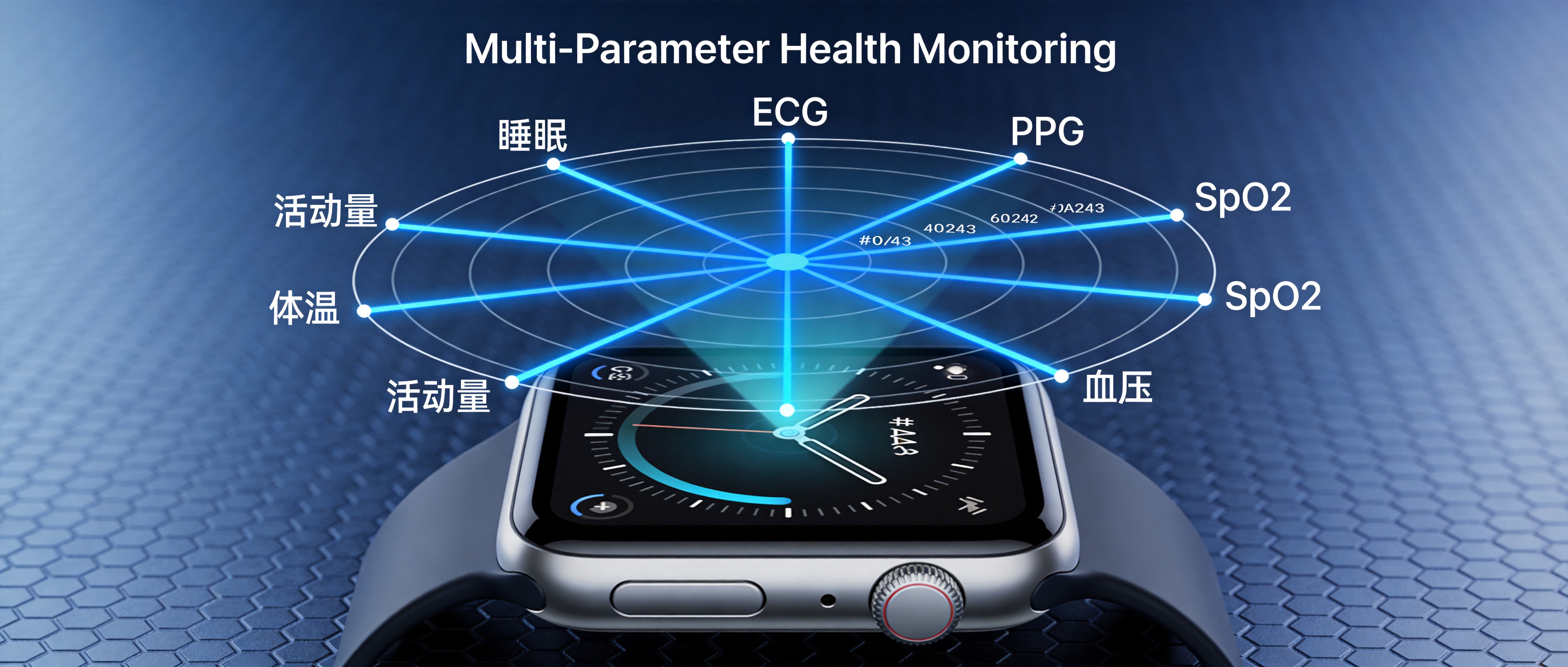
Core Monitoring Parameters: What Pediatric Wearables Should Measure
For B2B buyers — whether a pediatric hospital CIO, a school district health director, or a telehealth platform operator — the value of a wearable device is determined by the clinical relevance of the parameters it tracks. The following four metrics form the evidence-based core of pediatric continuous monitoring.
Body Temperature: Continuous vs. Spot-Check
Fever is the most common presenting symptom in pediatric acute care, yet traditional temperature monitoring in hospitals relies on intermittent spot-checks — typically every four to six hours. A child can spike from 37.5°C to 39.5°C between nursing rounds, particularly in the first 24 hours post-admission. Continuous temperature-sensing wearables — using either skin-surface thermistors or axillary patch sensors — enable real-time fever trending and automated threshold alerts. The clinical value extends beyond the inpatient setting: for immunocompromised children managed at home, a continuous temperature feed transmitted to a remote monitoring dashboard can trigger early intervention before a febrile episode escalates to sepsis. For healthcare systems looking to scale these remote monitoring capabilities, our procurement guide details the complete OEM/ODM procurement process for RPM wearables. Additionally, the continuous vital sign monitoring architectures developed for these clinical settings are increasingly adapted for other secure, highly regulated environments; for a deeper analysis of these specialized applications, see our B2B OEM guide on medical wearables for correctional healthcare.
Heart Rate: Beyond the Numeric Value
Pediatric heart rate interpretation is age-dependent. A resting heart rate of 140 bpm is normal for a neonate but tachycardic for an eight-year-old. Wearable algorithms must incorporate age-stratified reference ranges — and ideally, trend analysis that detects deviations from each child’s individual baseline rather than triggering alerts solely on absolute thresholds. In hospital wards, heart rate variability (HRV) metrics are emerging as early indicators of clinical deterioration, sometimes preceding changes in other vital signs by 6–12 hours. A wearable that captures beat-to-beat interval data, rather than a simple averaged pulse rate, provides richer clinical decision-support material.
SpO₂: The Parameter That Demands Pediatric Calibration
Oxygen saturation monitoring is particularly consequential in pediatric care. Respiratory conditions — pneumonia, bronchiolitis, RSV, asthma exacerbation — are the leading causes of pediatric hospitalization globally. The WHO estimates that RSV alone causes approximately 100,000 deaths and 3.6 million hospitalizations among children under five each year, with 97% of infant RSV deaths concentrated in low- and middle-income countries where access to pulse oximetry is limited. A pediatric SpO₂ sensor must deliver accuracy within ±2% across the 70–100% saturation range, with specific validation in low-perfusion conditions that mimic the vasoconstricted state of a critically ill child. The sensor’s LED wavelength pair (typically 660 nm red and 940 nm infrared) must be calibrated against pediatric blood gas reference data, not extrapolated from adult calibration curves.
Activity and Movement: Clinical Context, Not Just Step Counting
In pediatric monitoring, activity data serves a different purpose than consumer fitness tracking. Reduced movement detected by a triaxial accelerometer can be an early behavioral marker of clinical deterioration. Conversely, normalized activity levels signal recovery. In school health programs, activity monitoring supports population-level screening, identifying children whose movement patterns may indicate underlying conditions such as anemia, untreated asthma, or psychosocial distress. B2B buyers should verify that the wearable’s activity algorithms are validated against pediatric movement norms, not adult exercise datasets.

Application Scenario 1: Pediatric Hospital Remote Monitoring
The most immediate clinical application for pediatric wearables is in-hospital continuous monitoring with remote surveillance capability. Traditional bedside monitoring tethers a child to a wall-mounted display via cables — a configuration that restricts mobility, disrupts sleep, and generates alarm fatigue among nursing staff. Wireless wearable solutions enable a different care model: the child can move freely within the ward (or even the hospital campus) while vital signs stream continuously to a central monitoring station. When a parameter deviates from the child’s personalized baseline, the system escalates the alert to the appropriate clinician’s mobile device — not by sounding a loud alarm at every bedside.
For hospital procurement teams, integration capability is the critical evaluation criterion. The wearable must communicate via HL7 or FHIR standards with the hospital’s existing electronic health record (EHR) system. Data must be timestamped, patient-matched, and audit-trailed to the same standard as conventional bedside monitoring data. Xdun Medical’s pediatric wearable platform supports standard hospital interface protocols, enabling seamless data ingestion into existing clinical workflows without requiring a parallel IT infrastructure.
Application Scenario 2: School Health Screening Programs
Schools represent an under-leveraged node in the pediatric health surveillance network. In many regions, a child’s only contact with the healthcare system occurs during acute illness episodes. Routine school-based health screening — vision, hearing, BMI — is well established, but continuous physiological screening remains rare. Wearable-based school health programs can fill this gap.
A practical implementation model involves wearable devices deployed during school hours, capturing heart rate, temperature, SpO₂, and activity data. The data feeds into a school health dashboard accessible to the school nurse or designated health coordinator. Anomalies — such as persistent low-grade fever across a cohort, suggesting an infectious disease cluster — can trigger early public health notification. For individual students, longitudinal data can identify patterns that warrant referral: a child with consistently elevated resting heart rate may benefit from a cardiac evaluation; a child whose activity levels have declined over several weeks may be experiencing an undiagnosed respiratory or psychological issue.
Privacy and data governance are paramount in the school context. Any wearable deployment must comply with applicable student data protection regulations (such as FERPA in the United States or GDPR in the European Union), with health data segregated from educational records and accessible only to authorized health personnel. Xdun Medical’s data architecture is designed to support role-based access control and regulatory-compliant data partitioning for school deployments.
Application Scenario 3: Pediatric Telemedicine and Home-Based Care
The COVID-19 pandemic accelerated telehealth adoption across all age groups, but pediatric telemedicine faces a unique challenge: the clinician cannot physically examine the patient. A parent’s description of “my child feels warm” or “she’s breathing a bit fast” lacks the quantitative precision needed for clinical decision-making. A pediatric wearable that transmits temperature, heart rate, respiratory rate (derived from PPG and accelerometer signals), and SpO₂ to the consulting physician transforms a subjective remote consultation into a data-supported clinical encounter.
For children with chronic conditions — congenital heart disease, asthma, cystic fibrosis, type 1 diabetes — home-based wearable monitoring can reduce the frequency of in-person clinic visits while maintaining clinical surveillance. The economic case for healthcare payers is compelling: early detection of deterioration through continuous monitoring can prevent expensive emergency department visits and inpatient admissions. UNICEF data indicates that less than 60% of children with acute respiratory infection symptoms globally are taken to a healthcare provider — a gap that remote monitoring could materially narrow, particularly in regions with limited healthcare access.
Navigating the FDA Regulatory Landscape for Pediatric Devices
For any organization procuring pediatric wearable devices for clinical use, understanding the applicable regulatory framework is essential. The U.S. Food and Drug Administration (FDA) classifies pediatric medical devices under the same risk-based system as adult devices — Class I, II, or III — but applies additional scrutiny to the pediatric indication.
510(k) Clearance and the Pediatric Predicate Challenge
Most pediatric wearable monitors fall under Class II, requiring 510(k) premarket notification demonstrating substantial equivalence to a legally marketed predicate device. The challenge is that suitable pediatric-specific predicates are often scarce. Manufacturers may need to reference an adult predicate device and provide supplementary data — including age-stratified performance testing, biocompatibility documentation, and human factors validation involving pediatric users — to bridge the gap. The FDA’s 2025 guidance on medical device cybersecurity further requires that networked wearable devices include a Software Bill of Materials (SBOM) and a plan for post-market security updates throughout the device’s total product lifecycle.
Pediatric-Specific Design Controls
Under FDA Quality System Regulations (21 CFR Part 820), design controls must address the specific needs of the intended pediatric population: material selection validated for prolonged skin contact with developing epidermis; electrical safety testing at the lower body weight and higher surface-area-to-volume ratio characteristic of children; mechanical design that eliminates small parts hazards for devices intended for children under three; and labeling comprehensible to caregivers with varying health literacy levels. For wearable devices with software algorithms for clinical decision support, the FDA may require clinical validation data specific to the pediatric age range — not extrapolated from adult datasets.
Xdun Medical supports its B2B partners with comprehensive technical documentation packages that facilitate regulatory review, including biocompatibility test reports, electrical safety certifications, and clinical performance validation data across the relevant pediatric age ranges.
Selecting a Pediatric Wearable Partner: Key Evaluation Criteria
For hospitals, school systems, and telehealth platforms evaluating pediatric wearable vendors, we recommend structuring the procurement decision around the following criteria:
- Sensor modularity across age groups. A single-platform architecture that scales from neonatal adhesive sensors to child wrist-worn devices reduces training overhead and simplifies data integration.
- Clinical validation by pediatric population. Performance data should reference pediatric — not adult — validation cohorts, with published accuracy metrics for each monitored parameter at each age range.
- Data interoperability. HL7 FHIR compliance, configurable API endpoints, and documented integration pathways with major EHR platforms (Epic, Cerner, Meditech) are essential for hospital deployments.
- Regulatory documentation readiness. The vendor should provide a complete technical file including biocompatibility (ISO 10993), electrical safety (IEC 60601-1), and software validation (IEC 62304) documentation.
- Data security architecture. End-to-end encryption, role-based access control, and compliance with HIPAA (U.S.), GDPR (EU), and relevant local data protection regulations.
- Pediatric usability engineering. Devices should be validated through human factors studies involving children and caregivers, not extrapolated from adult usability testing.
Conclusion: The Pediatric Wearable Opportunity
The global health data tells a clear story: millions of children die each year from conditions detectable and treatable when identified early. Continuous physiological monitoring — deployed in hospitals, schools, and homes — is not a replacement for skilled clinical assessment, but a powerful force multiplier. It extends the clinician’s reach between bedside visits, surfaces early warning signs that intermittent spot-checks miss, and brings quantitative rigor to remote consultations.
For organizations ready to explore pediatric wearable solutions, Xdun Medical offers a comprehensive product line spanning neonatal, child, and adolescent monitoring applications, supported by the technical documentation, regulatory expertise, and integration capability that B2B deployments require.
Contact Xdun Medical — Pediatric Wearable Solutions
To discuss pediatric wearable integration for your hospital, school health program, or telemedicine platform, please reach out to our B2B team:
📧 Email: jine@xdunmedical.com
📞 Phone/WhatsApp: +86-13544254314
🌐 Website: xdunmedical.com
Our team provides product specifications, clinical validation documentation, integration technical guides, and regulatory support materials tailored to your deployment requirements.